
If your holly has gotten away from you, here’s the answer you actually clicked for: late winter to early spring, just before new growth starts, is the safest window to prune almost any holly bush, hedge, or tree. For most of the country, that lands somewhere between February and April; in the Deep South or Gulf Coast, it can start as early as January, while colder regions like the Upper Midwest or New England may need to wait until late March or April.
That’s the short version. The full answer depends on what kind of holly you’ve got, whether it’s kept as a hedge or grown out into a tree shape, and what you’re trying to accomplish: light shaping, serious size control, or just clipping a few branches for a wreath. Here’s the full picture.
Holly Bush or Holly Tree? Why It Changes How You Prune
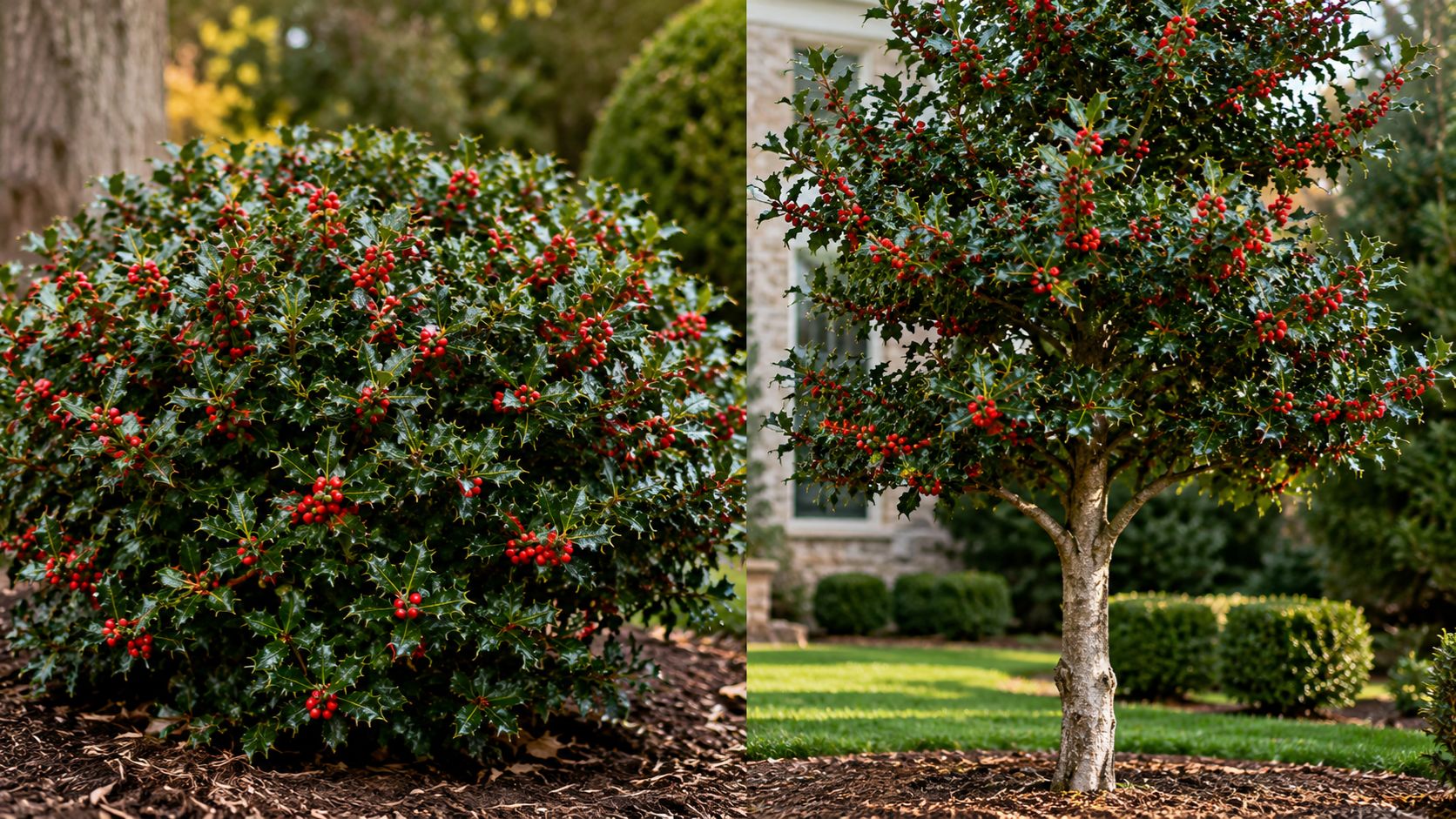
Two things matter more than the size of your plant right now.
Evergreen or Deciduous
Most landscape hollies (American, English, Chinese, often sold as Burford, Japanese, yaupon) are evergreen and bloom on old wood, meaning this year’s flowers and berries form on growth from last season. Prune too late, and you cut off next winter’s berry display. Winterberry, the common deciduous holly, blooms on new wood instead, so it has the whole growing season ahead of it and tolerates an earlier, more dormant cut.
Hedge-Form or Tree-Form
This usually isn’t even a different variety; it’s a different pruning history. The same holly kept sheared and full from the ground up is a hedge. Left natural, or deliberately limbed up over a few seasons, that same plant becomes a small tree with a visible trunk. The timing rule below applies either way; only the technique changes. If you’re unsure whether your plant needs shaping or something more structural, it helps to understand the difference between tree trimming and tree pruning before you pick up any tool.
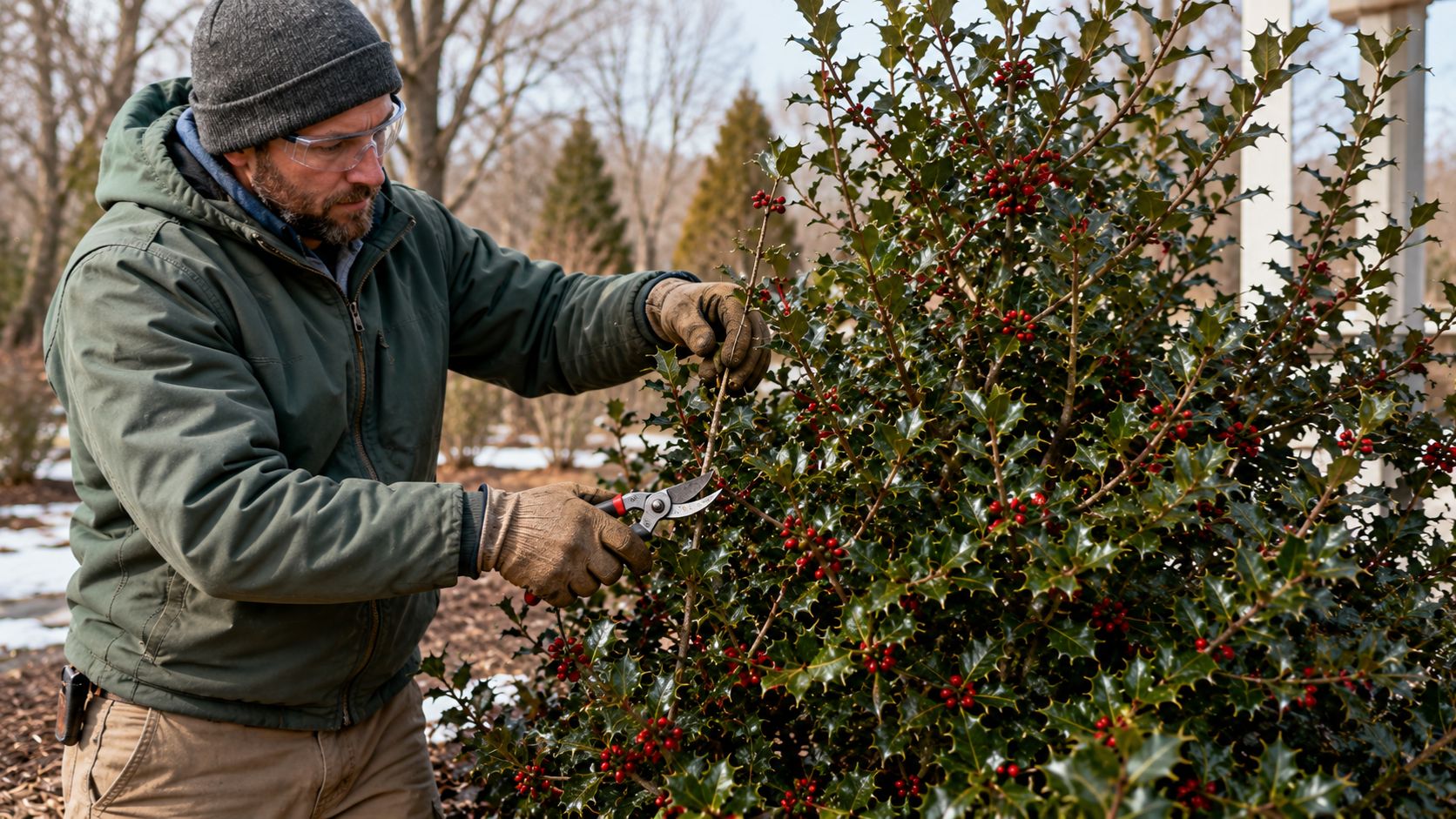
The Best Time to Prune Holly (Quick Reference)
| Holly type | Best time to prune | Why |
| Evergreen hedge or shrub | Late winter to early spring, before new growth (roughly Feb–Apr) | Blooms on old wood, so pruning right before spring growth protects next season’s flowers and berries |
| Tree-form holly (mature, free-standing) | Same dormant window, late winter | Less stress on the plant, faster wound healing, easier to see the structure |
| Deciduous holly (e.g., winterberry) | Dormant winter, before bud break | Blooms on new wood, so it has the full season to regrow and flower |
| Light shaping or touch-ups | Early to mid-summer, after spring growth hardens | Avoids triggering tender new growth that frost will kill |
| Snipping branches for wreaths or garlands | Late fall through December | Fine in small amounts; follow the one-third rule below |
Avoid heavy cuts in late summer or fall. It pushes soft new growth that winter kills, and on berry types, it can remove next year’s flower buds before they’ve even formed. According to NC State Extension, improper pruning timing is one of the leading causes of reduced berry production in Ilex species.
A Month-by-Month Holly Pruning Calendar
- Jan: Deciduous types (winterberry) can be pruned now, while fully dormant.
- Feb–Apr: Prime window for evergreen hollies. Do your heaviest structural work here, before new growth appears.
- May: Last reasonable window for bigger cuts; ease off after this.
- Jun–Jul: Light shaping only, once spring growth has hardened.
- Aug–Sep: Hold off. Next year’s flower buds are setting, and new growth won’t harden before frost.
- Oct: Still a no.
- Nov–Dec: Fine for light harvesting of branches for decor, not major reshaping.
“Before new growth starts” matters more than the exact month. Warmer climates shift this earlier, colder ones later.
When to Trim Holly Bushes and Hedges for Shape
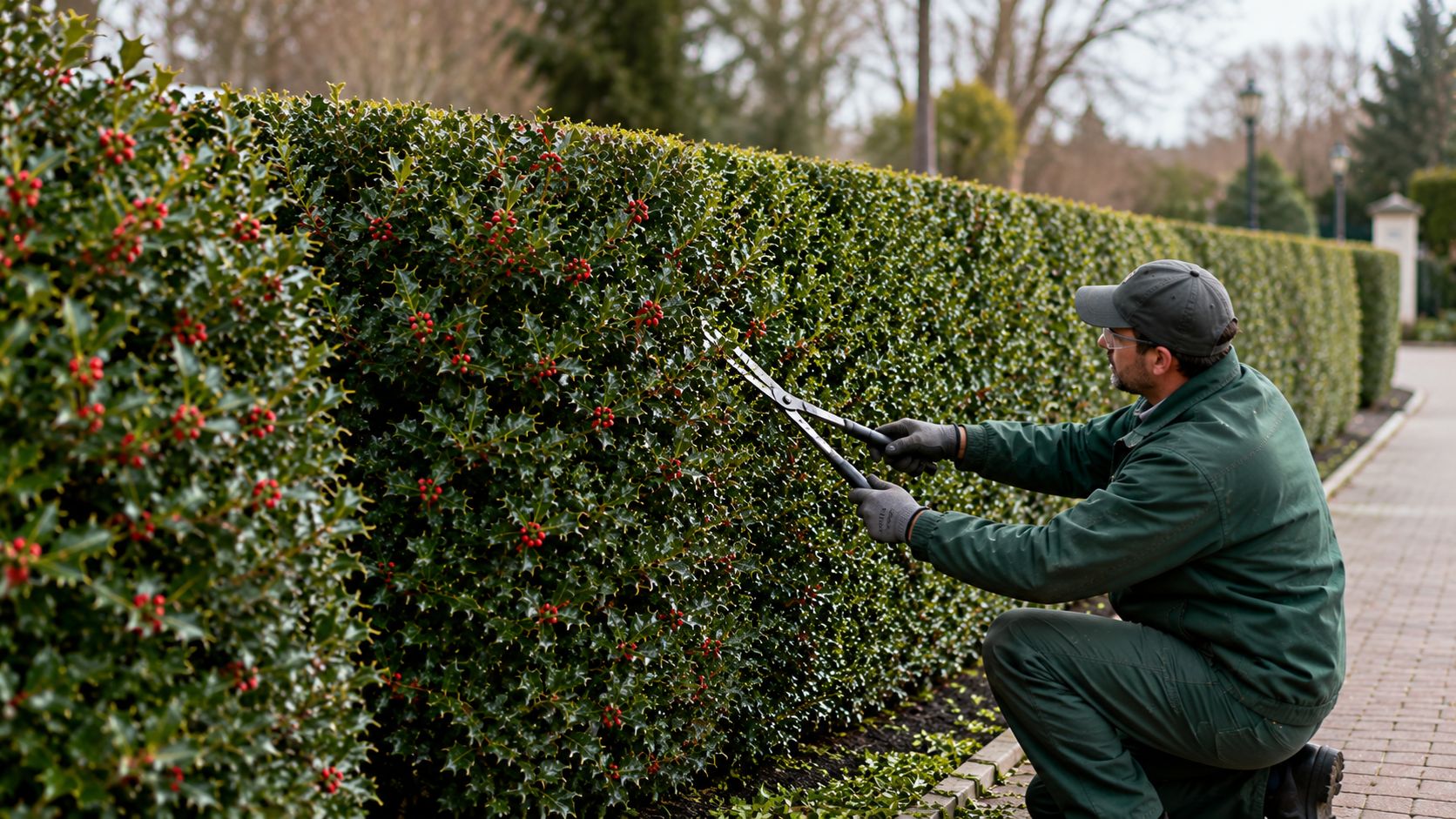
If your holly is doing hedge duty, the goal is fullness from the ground up, not just height control. Do the main shaping cut in that same late-winter window, and keep the base of the hedge a few inches wider than the top. That slight taper, sometimes called a “batter,” lets light reach the lower branches so the hedge doesn’t go bare underneath. A light follow-up trim in early summer, once the spring flush has hardened, keeps the shape crisp without stressing the plant.
For a less formal, natural-shaped shrub, skip the hedge shears in favor of hand pruners or loppers, and make selective cuts rather than an even all-over shave. Shearing creates a dense outer shell that traps moisture and gives pests somewhere to hide. This same principle is why regular pruning is essential for healthy trees across species, not just holly.
When to Cut Holly Trees Back (And How Much)
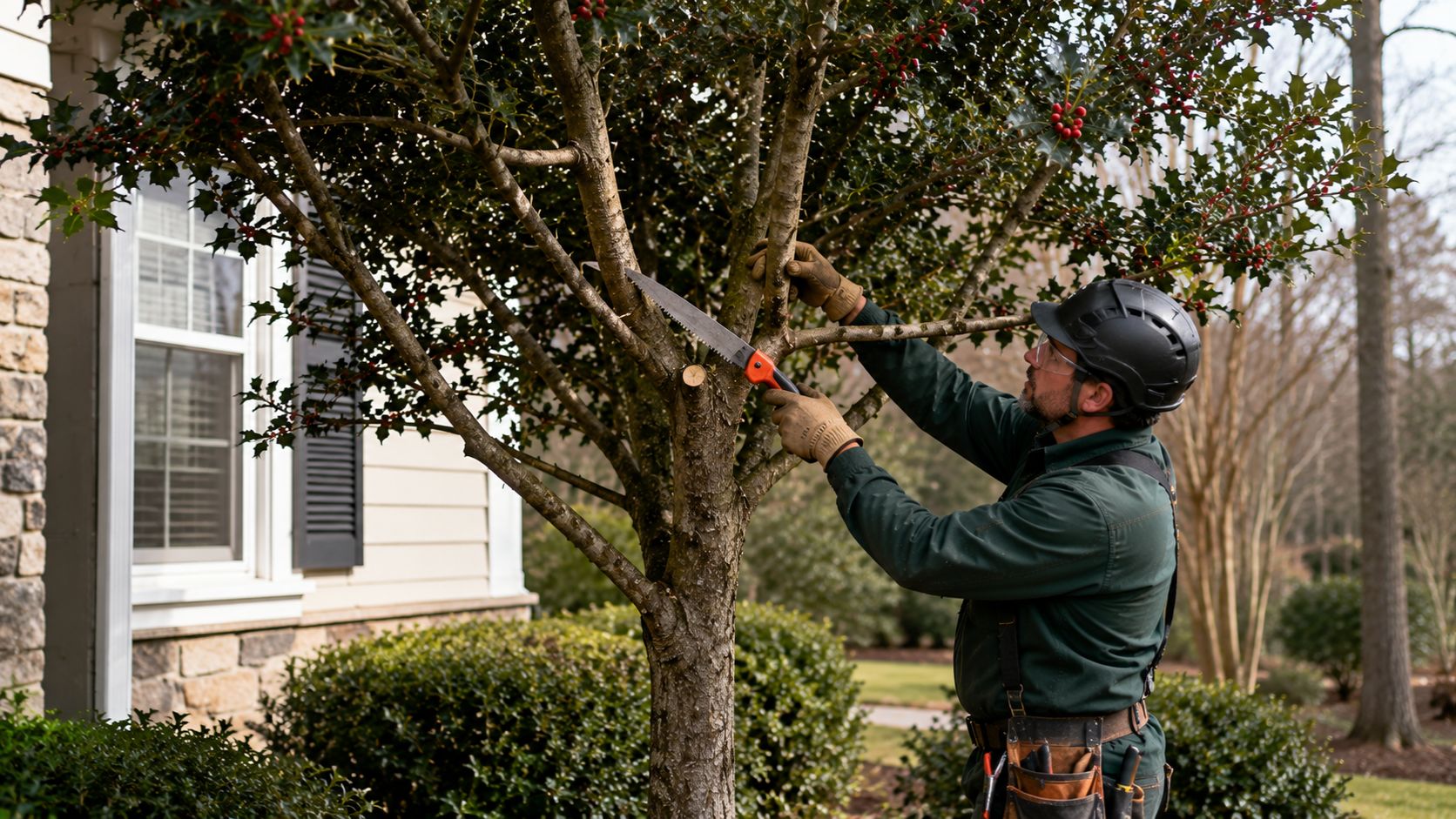
Tree-form holly gets the same late-winter timing, but the job is usually structural rather than cosmetic: removing lower branches gradually to expose more trunk, thinning crowded growth so air and light reach the interior, or reducing an oversized canopy. Spread bigger reductions over two or three seasons instead of taking it all at once. A holly that’s been left alone for years won’t tolerate a single drastic cut any better than it would tolerate years of neglect.
The University of Florida IFAS Extension notes that pruning wounds on holly close most efficiently when cuts are made just before the active growth period begins in spring, which is another reason the dormant-season window matters so much structurally.
If you’re cutting back a tree because it’s encroaching on a structure, power line, or walkway, that’s also best handled in the dormant season. The plant heals faster and you can see exactly what you’re removing without a full canopy of leaves in the way.
Tools You’ll Need
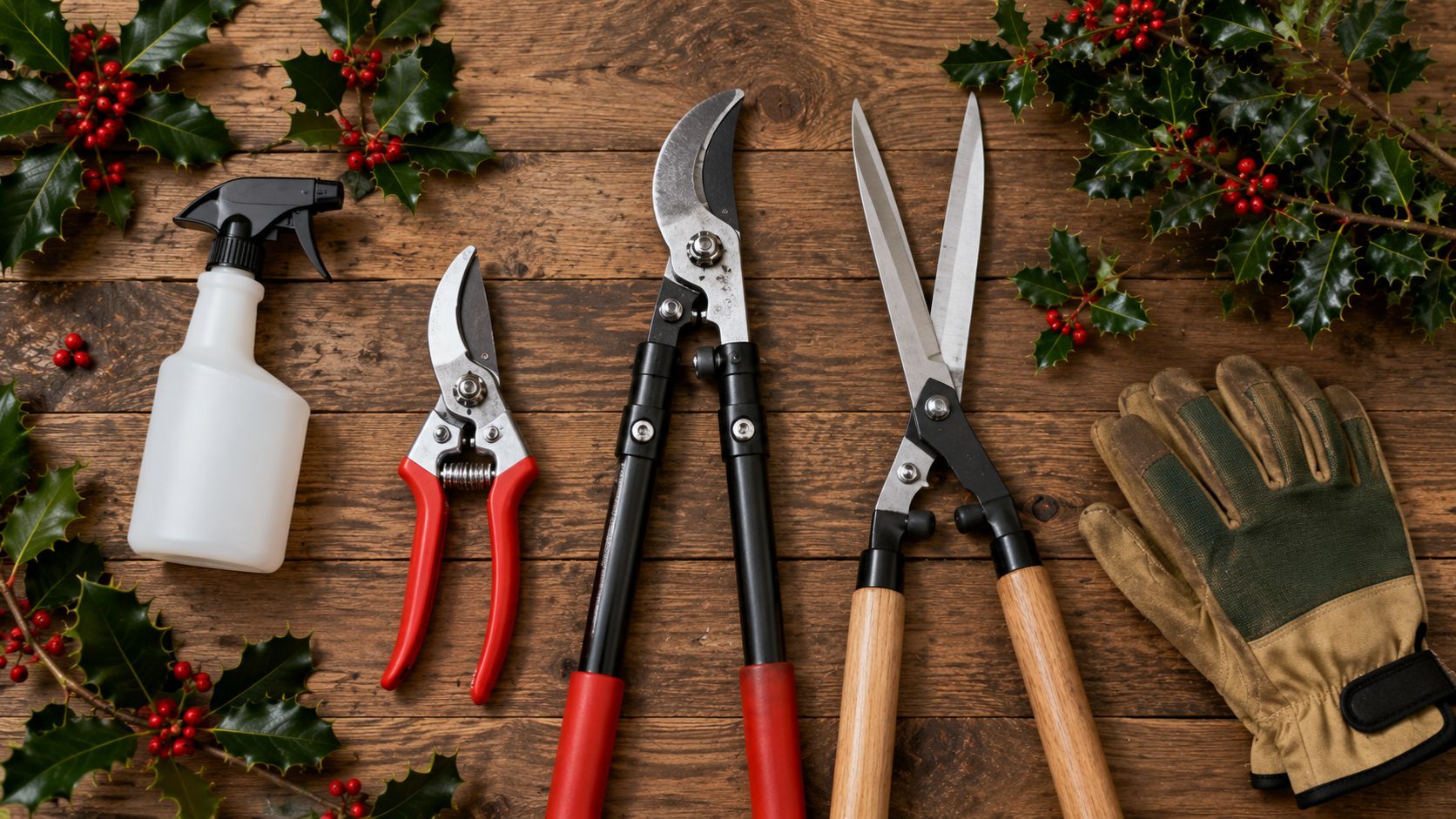
A clean cut heals faster than a torn one, and clean tools matter as much as a clean cut:
- Hand pruners (bypass-style) for branches up to about half an inch thick
- Loppers for anything thicker, up to roughly an inch and a half
- Hedge shears only if you’re maintaining a formal, sheared hedge
- Rubbing alcohol or disinfectant wipes to clean blades between plants, or between cuts on a plant with any sign of disease. Skipping this is how fungal and bacterial problems spread from one holly to the next. The ISA (International Society of Arboriculture) specifically recommends tool sanitation as a standard practice to prevent the spread of pathogens between cuts.
How to Make the Cut: Technique That Matters as Much as Timing
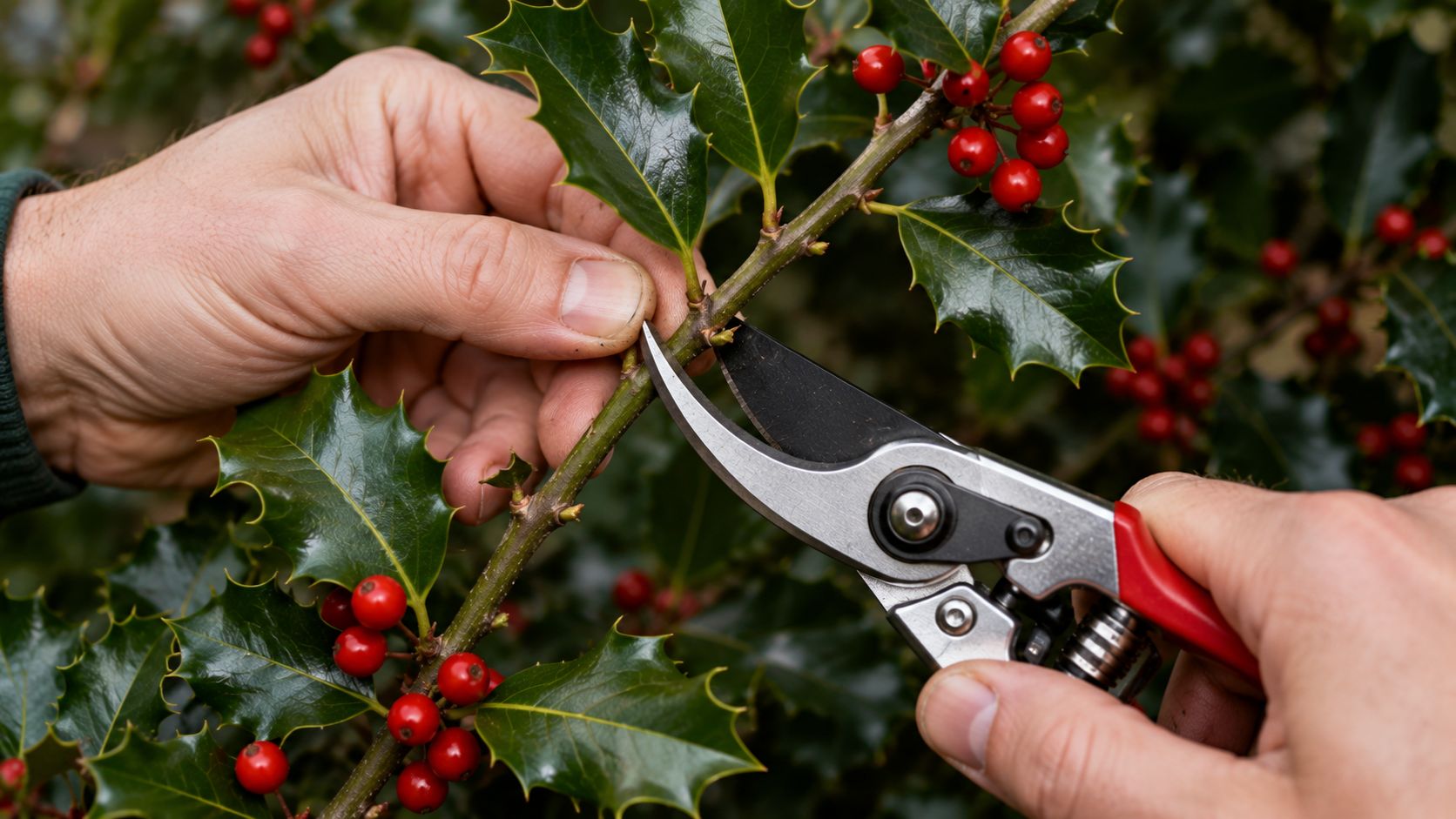
A few rules apply no matter the season:
The one-third rule: never remove more than a third of the plant’s overall growth in a single session. A badly overgrown holly that needs more than that should be brought down gradually over two or three years.
Cut just above a leaf node or lateral bud, at a slight angle, so new growth has somewhere to emerge from, and water doesn’t pool on the cut.
Dead, damaged, or diseased wood can come off at any time of year. That’s cleanup, not structural pruning, and the seasonal rules above don’t apply to it. If you’re noticing more than just a few dead branches, it may be worth checking whether your plant is showing signs your tree is dying before you prune.
Trimming Holly Branches for Wreaths and Holiday Decor
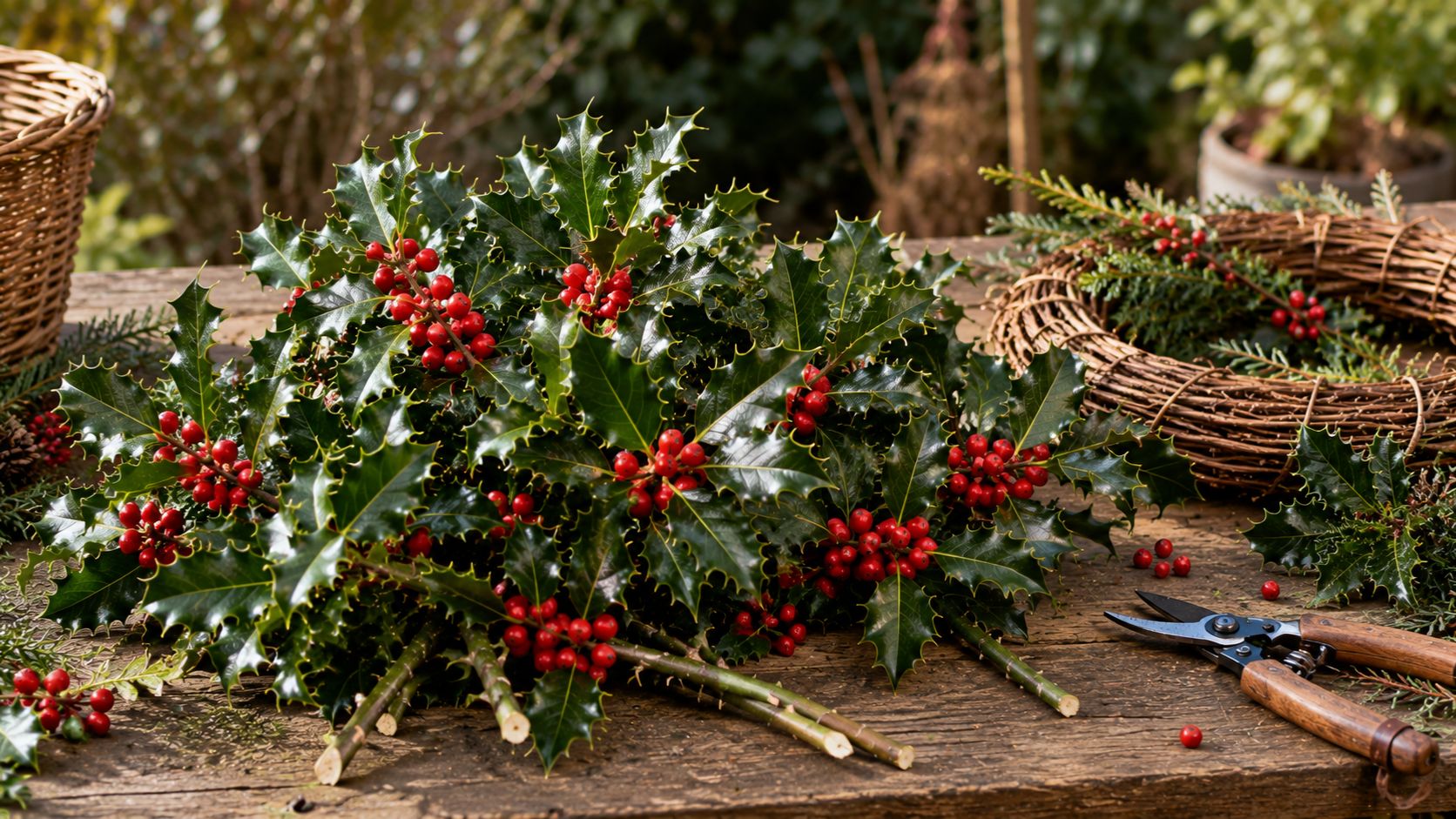
Snipping a few branches in late fall or December for wreaths, garlands, or a centerpiece won’t hurt a healthy holly, as long as you stick to the one-third rule and cut at a leaf node rather than tearing branches off. Skip this on a plant that’s already stressed, diseased, or thin; it doesn’t have the reserves to spare.
Common Holly Pruning Mistakes (and How to Avoid Them)
Cutting hard in late summer or fall
This is the single most common mistake. It pushes out tender new growth right before frost, which then dies back, and on berry-producing types, it removes the wood so that next year’s flowers and berries would have grown on.
Shearing a natural shrub into a tight ball
It looks neat for a season, then the dense outer shell blocks light from the interior, and the plant goes hollow and bare inside. Save shears for formal hedges; use hand pruners for anything meant to look natural.
Removing more than a third at once
Even an overgrown holly can be shocked by too aggressive a cut. Bring it down in stages over a couple of seasons instead.
Treating every holly the same
Evergreen and deciduous types bloom on different wood and tolerate different timings. Pruning a winterberry like an American holly (or vice versa) can cost you a season of flowers.
Skipping dead wood because “it’s not pruning season.”
Damaged, dead, or diseased branches should come off whenever you spot them. Waiting for the “right” month only gives pests and disease more time to spread. Leaving diseased wood on a plant is one of the hidden tree disease signs that homeowners most commonly overlook until real damage is done.
Blaming pruning for a lack of berries
Holly plants are either male or female, and only female plants produce berries, and only if a male plant is pollinating nearby. According to the USDA Plant Guide for American Holly, a single male plant can effectively pollinate up to three female plants within a reasonable proximity. If timing and technique were right but berries still aren’t showing up, that’s usually a pollination issue, not a pruning one.
When It’s Worth Calling a Professional
Mature tree-form holly can top 15 feet, and once you’re working with a ladder, a chainsaw, or anything near power lines or a roofline, this stops being a weekend job. A certified arborist can also handle large-scale rejuvenation pruning on a badly overgrown specimen in a way that protects its long-term shape, rather than just hacking it back. If you’re unsure whether your holly’s decline is a pruning problem or something deeper, reviewing the common reasons trees die can help you rule out root issues, soil stress, or disease before you start cutting.
FAQ
Is there a difference between pruning, trimming, and cutting holly?
No. The terms are often used interchangeably. Pruning is for plant health, trimming is for shaping, and cutting is a general term for both.
Can I prune holly in summer?
Light shaping only, once the spring growth flush has hardened off. Save heavy structural cuts for late winter.
How much can I cut off an overgrown holly at once?
No more than a third of the total growth in one session. Anything more should be spread over two or three years.
Does holly grow back after a hard pruning?
Yes. Holly tolerates hard pruning well and typically resprouts vigorously, though it may look uneven or sparse for a year or two while it fills back in.
How often does Holly actually need pruning?
Once a year is usually enough for shape and size control. Formal hedges may need two or three light shapings during the growing season; a natural, informal shrub or tree can often go a full year between prunings.
Will pruning hurt my holly’s berry production?
Only if it’s done late. Pruning after flowering or in late summer/fall removes the wood next season’s flowers and berries grow on.
Can I use hedge trimmers on holly?
Yes, for a tightly sheared formal hedge. For a natural-looking shrub or tree, hand pruners or loppers give a healthier result.
Final Thoughts
Holly rewards you for getting the timing right. Stick to the late-winter window, respect the one-third rule, keep your tools clean, and you’ll have a healthy plant with a strong berry display year after year. The mistakes that set holly back mostly come down to cutting at the wrong time or taking off too much at once.
If your holly has gotten overgrown, is showing disease signs, or has grown large enough to need a ladder, don’t wing it. The team at Tree Amigos Tree Service has the experience to handle everything from a simple seasonal shaping to full structural pruning on mature specimens, without costing your plant its next season of growth.