
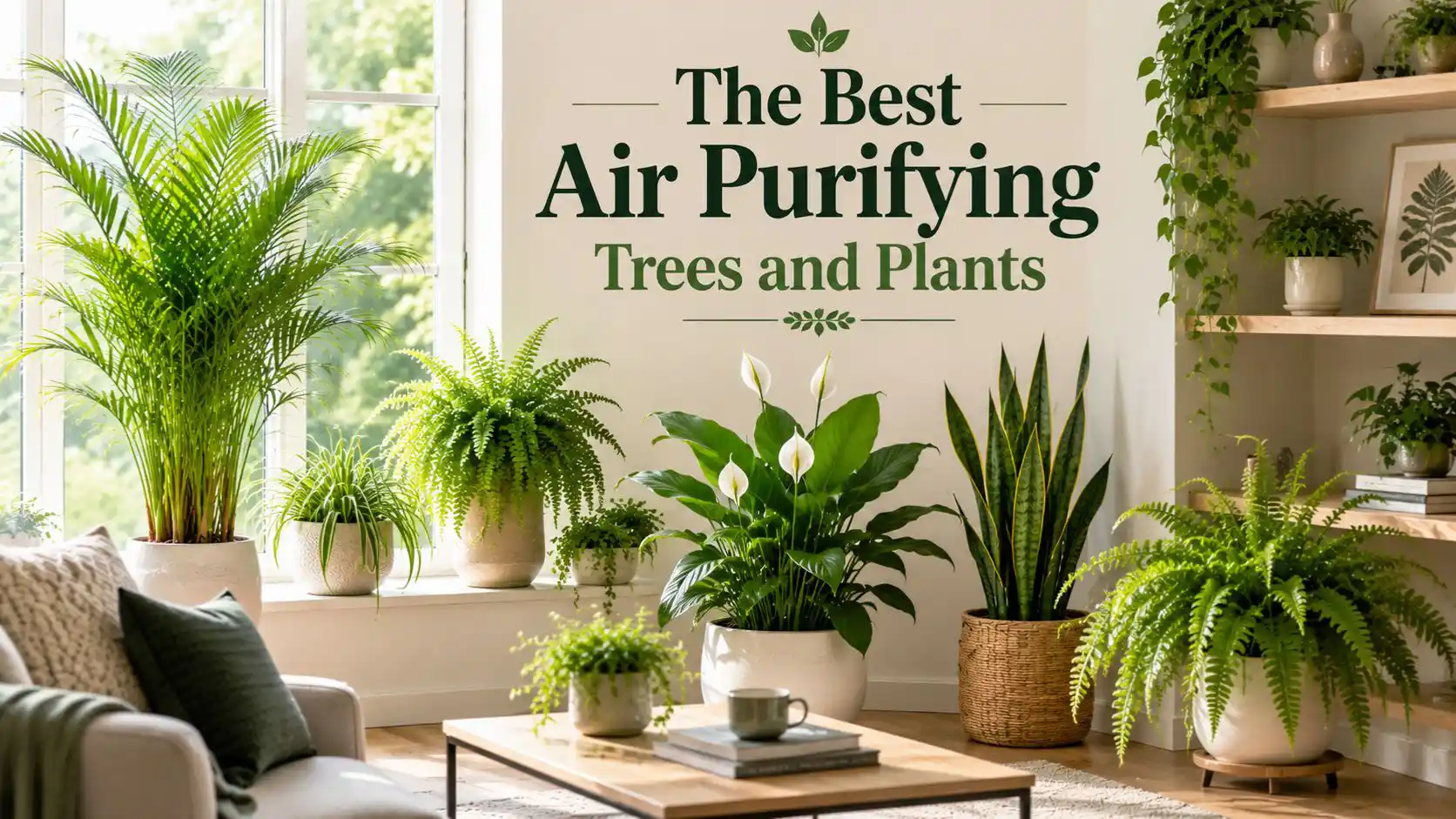
Interest in air-purifying plants took off after a 1989 NASA Clean Air Study tested how well common houseplants remove VOCs like formaldehyde and benzene from sealed environments built to mimic space station air. It’s still the foundation most “best air-purifying plants” lists build on today.
Later research has questioned how far those sealed-chamber results hold up in a real home with normal airflow, with some studies suggesting you’d need dozens of plants in one room for a measurable effect. That doesn’t make plants and trees a bad investment. It just means the honest case for them leans more on humidity, mood, and overall home health than lab-level purification.
If you’re comparing air purifying plants against air purifying trees, the short answer is that trees do more work outdoors while plants are more practical indoors, and this guide covers both.
The benefits worth keeping in mind:
- Certain plants and trees measurably reduce VOCs like benzene, formaldehyde, and carbon monoxide in enclosed spaces.
- Indoor humidity improves, which supports easier breathing and healthier skin.
- A well-planted yard filters roadside dust and particulate matter before it reaches your windows.
- Greenery lowers stress and creates a calmer home environment.
This guide covers the best plants for indoor air quality, the outdoor trees that do real work for a Hill Country yard, and how to think about both without overselling what a few potted plants can do.
Top Air Purifying Indoor Plants and Trees
The listed plants are among the simplest and most effective indoor air filtering options. While most air purifying trees are better suited outdoors, a few, like the Areca Palm below, work well as small indoor trees for rooms that can fit a larger plant.
1. Peace Lily (Spathiphyllum)
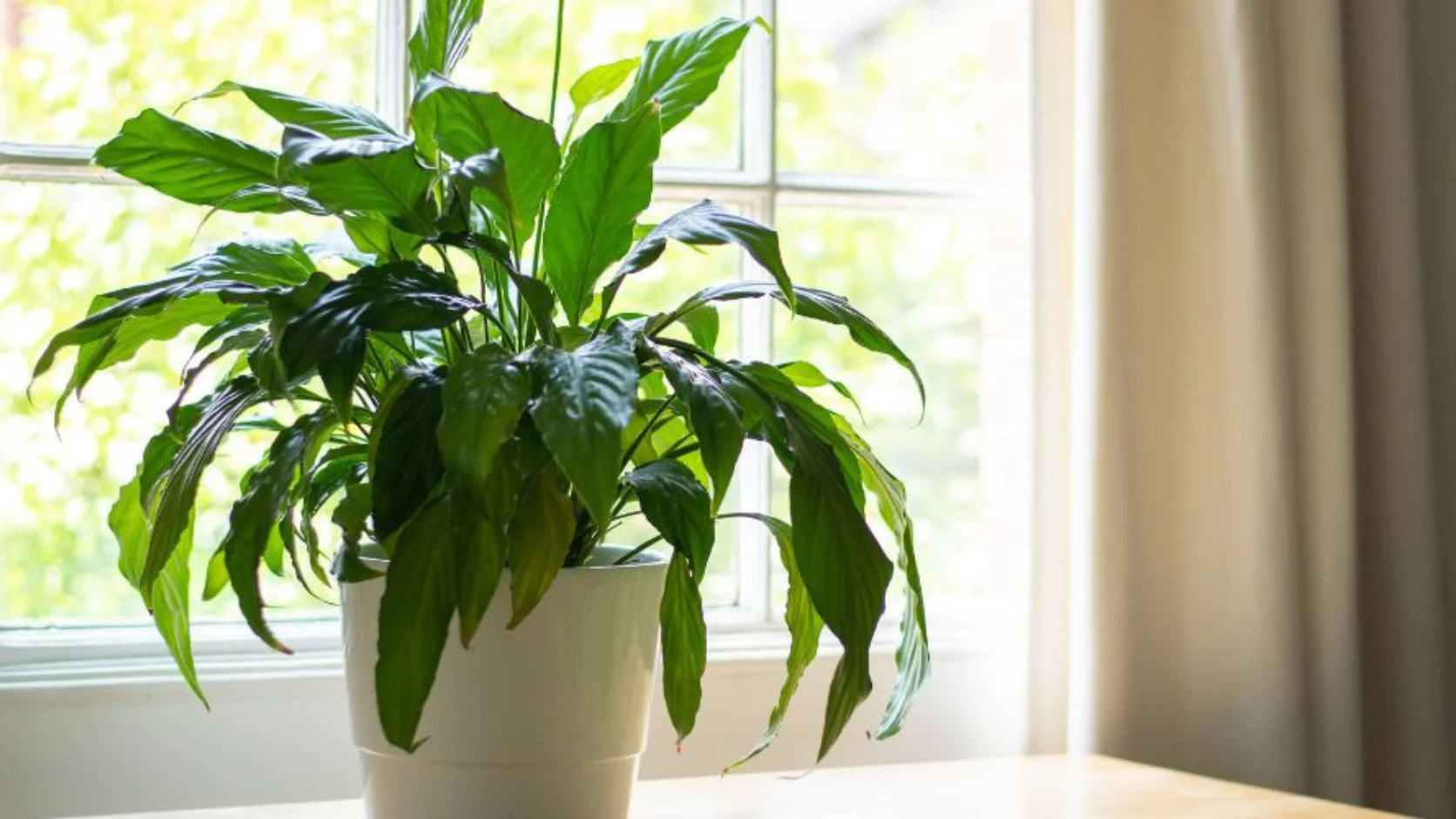
The Peace Lily is one of the most effective indoor plants for removing ammonia, benzene, and trichloroethylene from the air, with glossy leaves and white blooms that suit almost any room.
Care Tips:
- Keep soil consistently moist, not soggy and not fully dry.
- Place in bright, indirect light, never direct sun.
- Wipe leaves occasionally to keep pores clear.
Pet Friendly? No. Peace lilies are mildly toxic to cats and dogs if chewed.
2. Snake Plant (Sansevieria trifasciata)
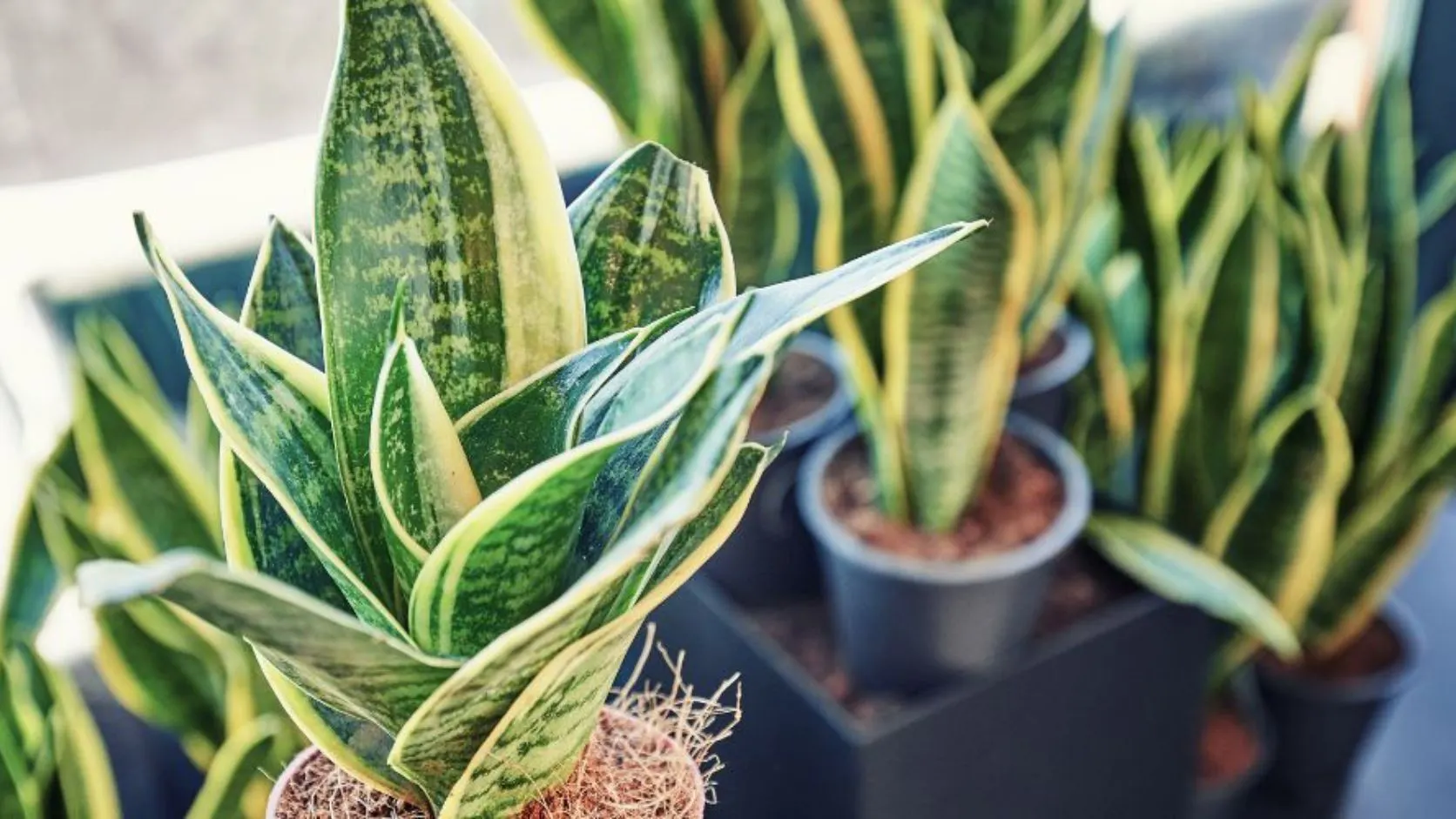
Snake plants remove formaldehyde, xylene, and nitrogen oxides, and they keep working even in low light, which makes them one of the most forgiving plants on this list.
Care Tips:
- Water sparingly. Let soil dry out completely between waterings.
- Tolerates low light but grows fuller in bright, indirect light.
- Avoid overwatering, which is the most common way to kill this plant.
Pet Friendly? No. Can cause mild stomach upset if ingested by pets.
3. Areca Palm (Dypsis lutescens)
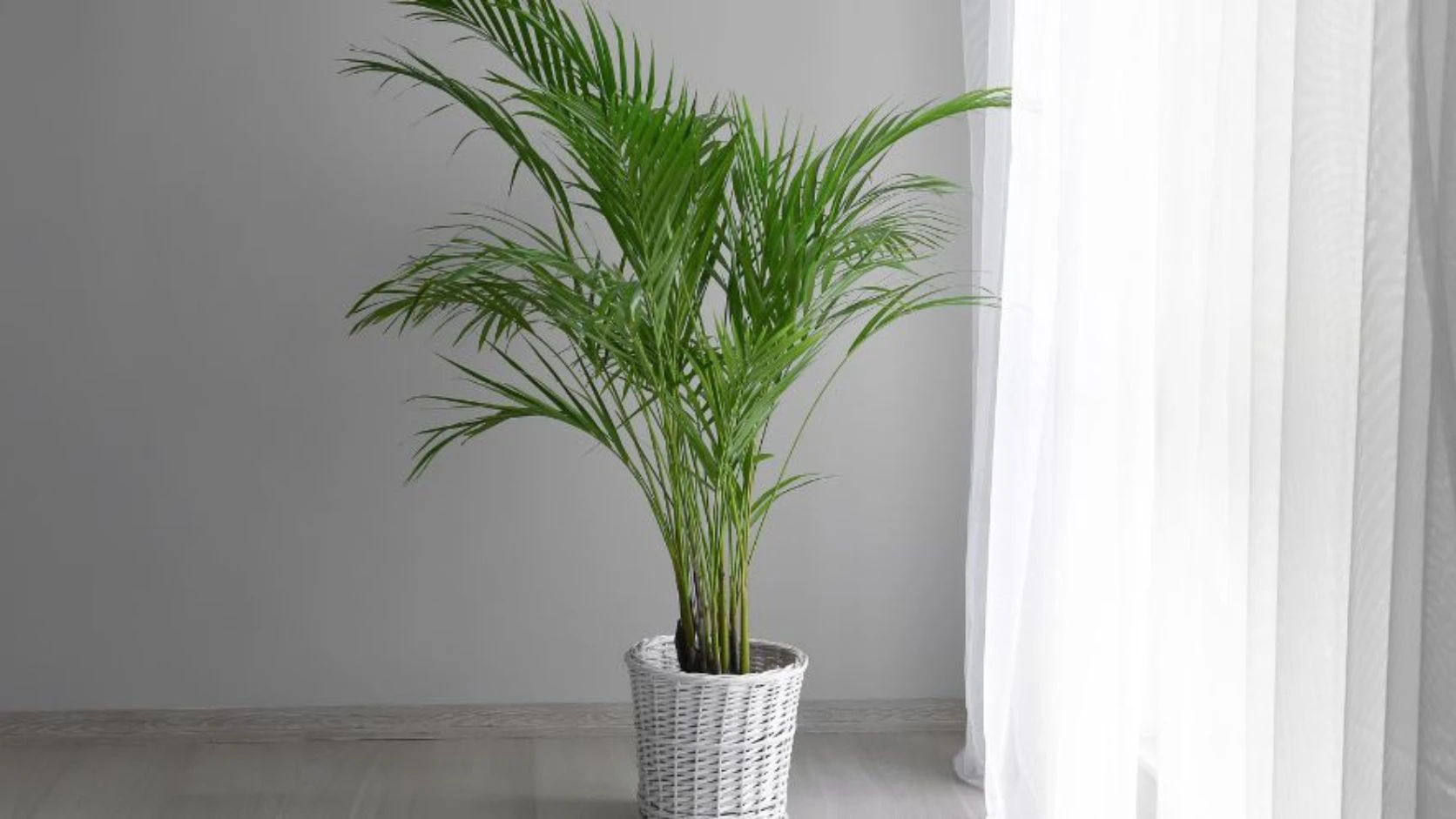
The Areca Palm doubles as a natural humidifier and is one of the few plants that also functions as an air purifying indoor tree, releasing moisture into dry air while filtering airborne toxins.
Care Tips:
- Needs bright, indirect light.
- Water regularly in spring and summer, less in winter.
- Trim brown fronds to keep it looking full.
Pet Friendly? Yes.
4. Spider Plant (Chlorophytum comosum)
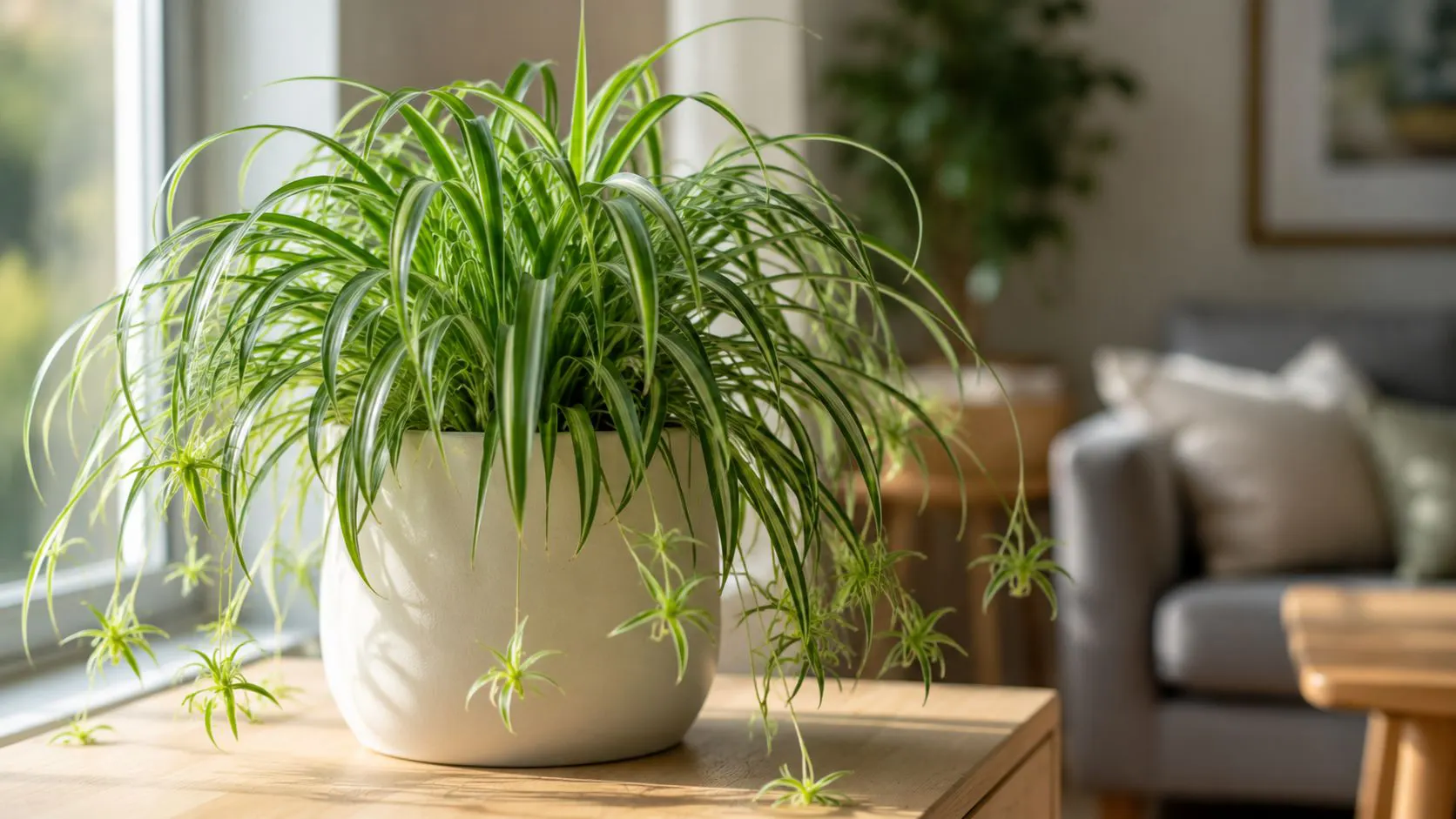
Spider plants remove formaldehyde, xylene, and toluene, and they’re one of the easiest plants to propagate, since the small plantlets that grow off the mother plant can be rooted separately.
Care Tips:
- Thrives in bright, indirect light but tolerates lower light.
- Water when the top inch of soil feels dry.
- Trim brown tips rather than the whole leaf.
Pet Friendly? Yes.
5. Golden Pothos (Epipremnum aureum)
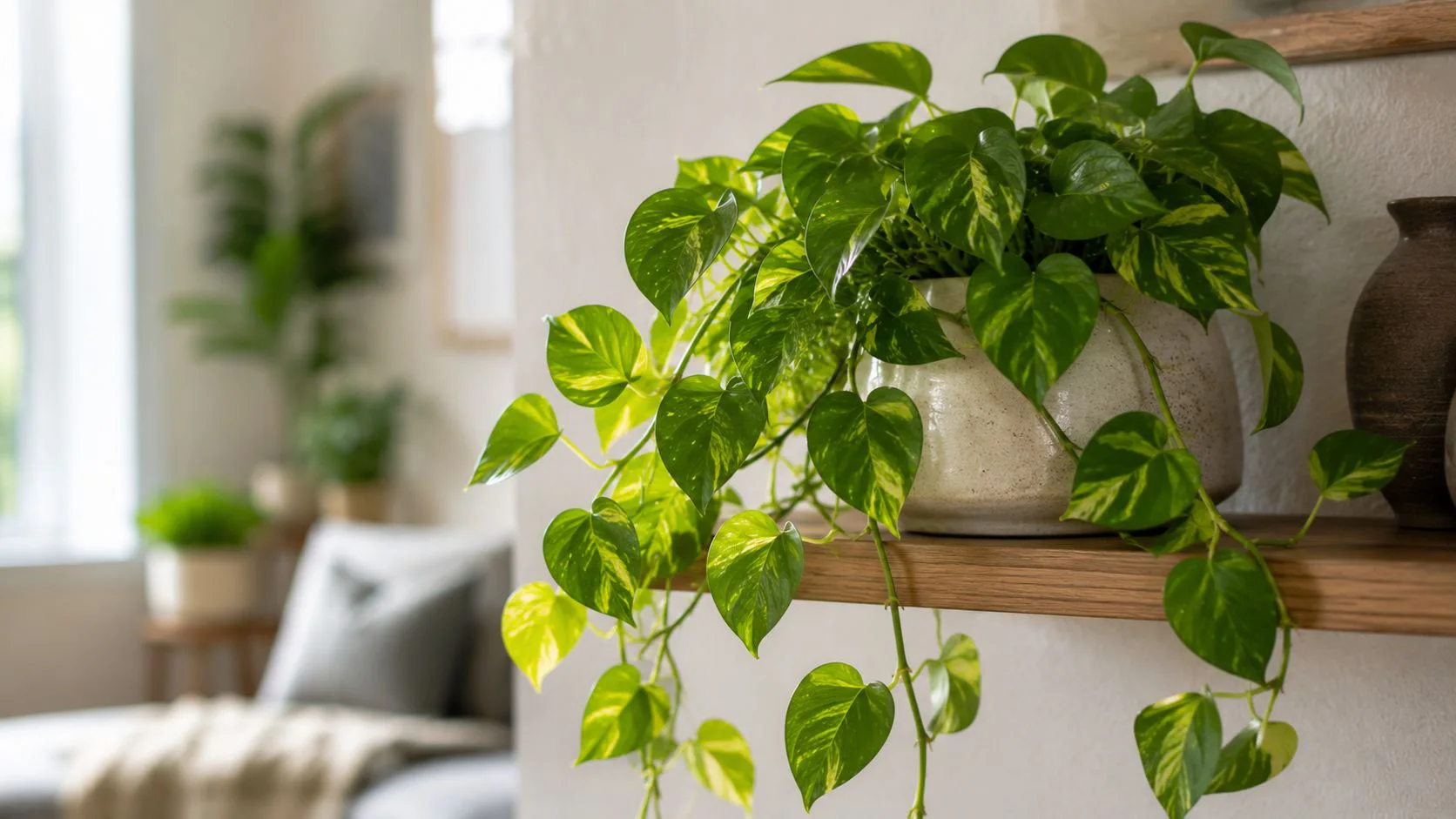
Pothos removes benzene, xylene, toluene, and formaldehyde, and it’s nearly impossible to kill through neglect, which makes it a common choice for offices and low-light homes.
Care Tips:
- Tolerates low light but grows faster in bright, indirect light.
- Water only when soil is dry to the touch.
- Prune vines to keep growth full rather than leggy.
Pet Friendly? No. Toxic if ingested by pets.
6. Boston Fern (Nephrolepis exaltata)
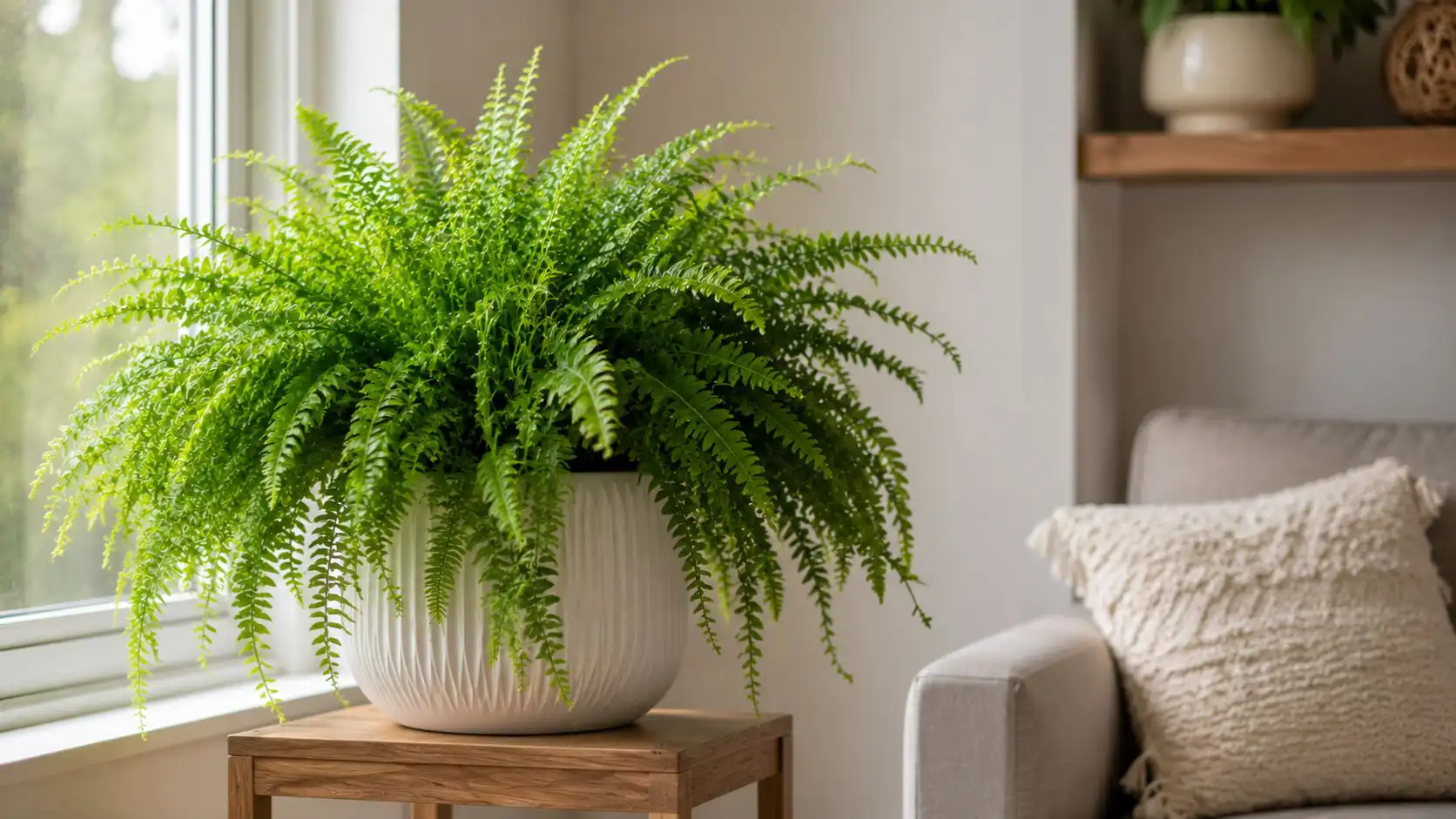
The Boston Fern removes formaldehyde and xylene and adds meaningful humidity to a room, though it’s more particular about care than the others on this list.
Care Tips:
- Needs high humidity. Mist regularly or set the pot on a pebble tray with water.
- Keep soil consistently moist, never fully dry.
- Prefers indirect light and cooler rooms.
Pet Friendly? Yes.
Best Outdoor Trees for Cleaner Air in Texas Yards
Most air purifying plant guides stop at houseplants, but when it comes to reducing outdoor air pollution, the trees already growing in your yard do far more work than any potted plant. If you’re asking which tree purifies air the most, the answer usually comes down to canopy size and how long the tree holds its leaves each year, which is why evergreen natives like Live Oak lead this list. Research out of the University of Gothenburg comparing eleven tree species also found that conifers generally capture more gaseous pollutants, while broadleaf trees are better at trapping particulate matter, meaning a mix of tree types filters more effectively than any single species alone. For San Antonio and Hill Country properties, that mix should be built around trees suited to our soil and climate.
1. Live Oak (Quercus virginiana)
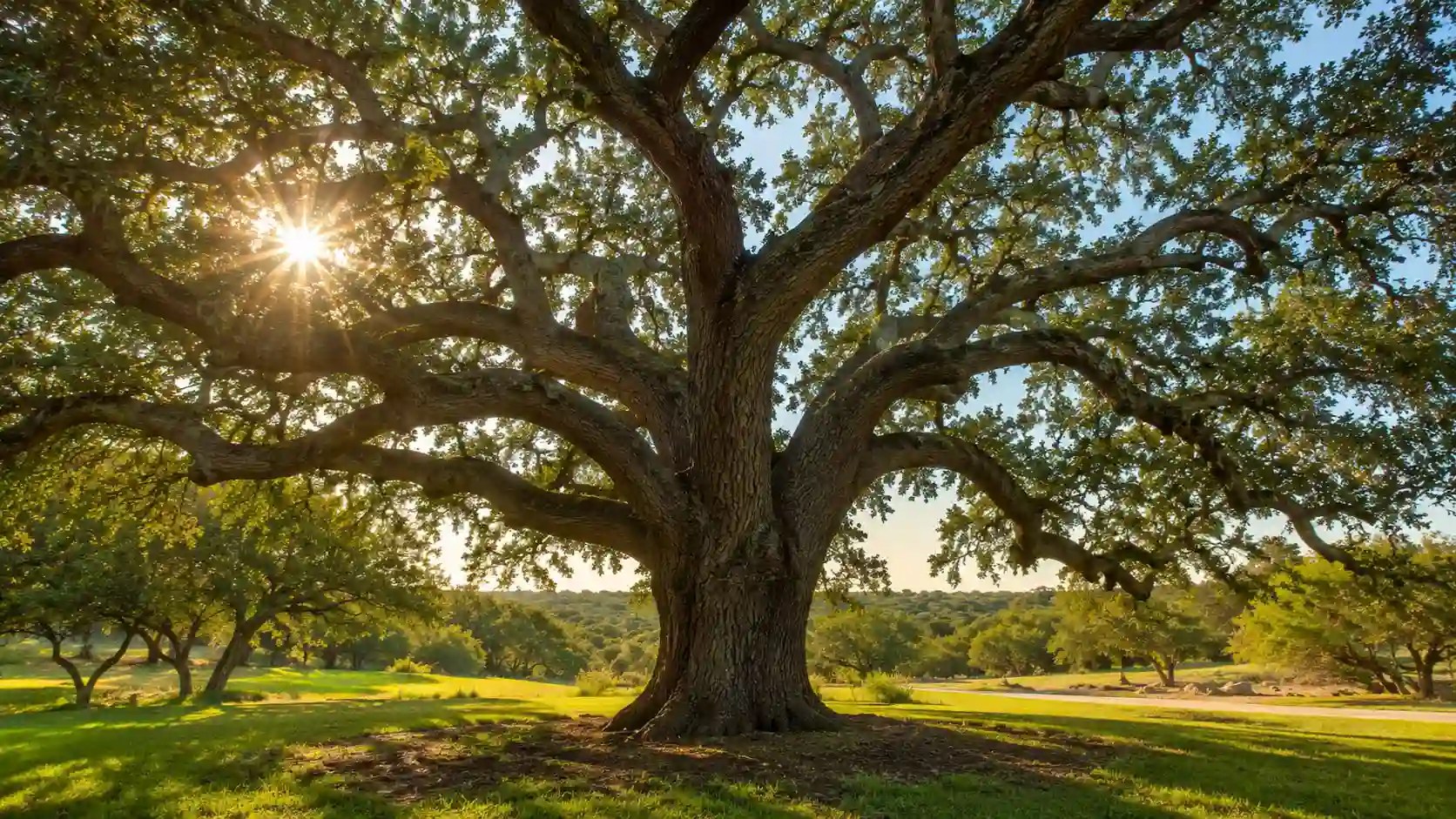
The live oak is the backbone of Hill Country landscaping, and its dense, near-evergreen canopy gives it a long season to filter roadside dust and vehicle exhaust. It also holds up to Texas heat and drought better than almost anything else you could plant. Because of its size and year-round canopy, Live Oak is generally considered the strongest air purifying tree option for Central Texas yards.
Care Tips:
- Established live oaks need very little supplemental water once past their first two years.
- Watch for signs of oak wilt, particularly if pruning during the spring transmission season.
- Give it room. A mature live oak’s canopy can spread 60 to 100 feet.
Pet Friendly? Yes.
If you’re planting new oaks or managing existing ones, our oak wilt management team can help you avoid the fungal disease that threatens live oaks across Central Texas.
2. Cedar Elm (Ulmus crassifolia)
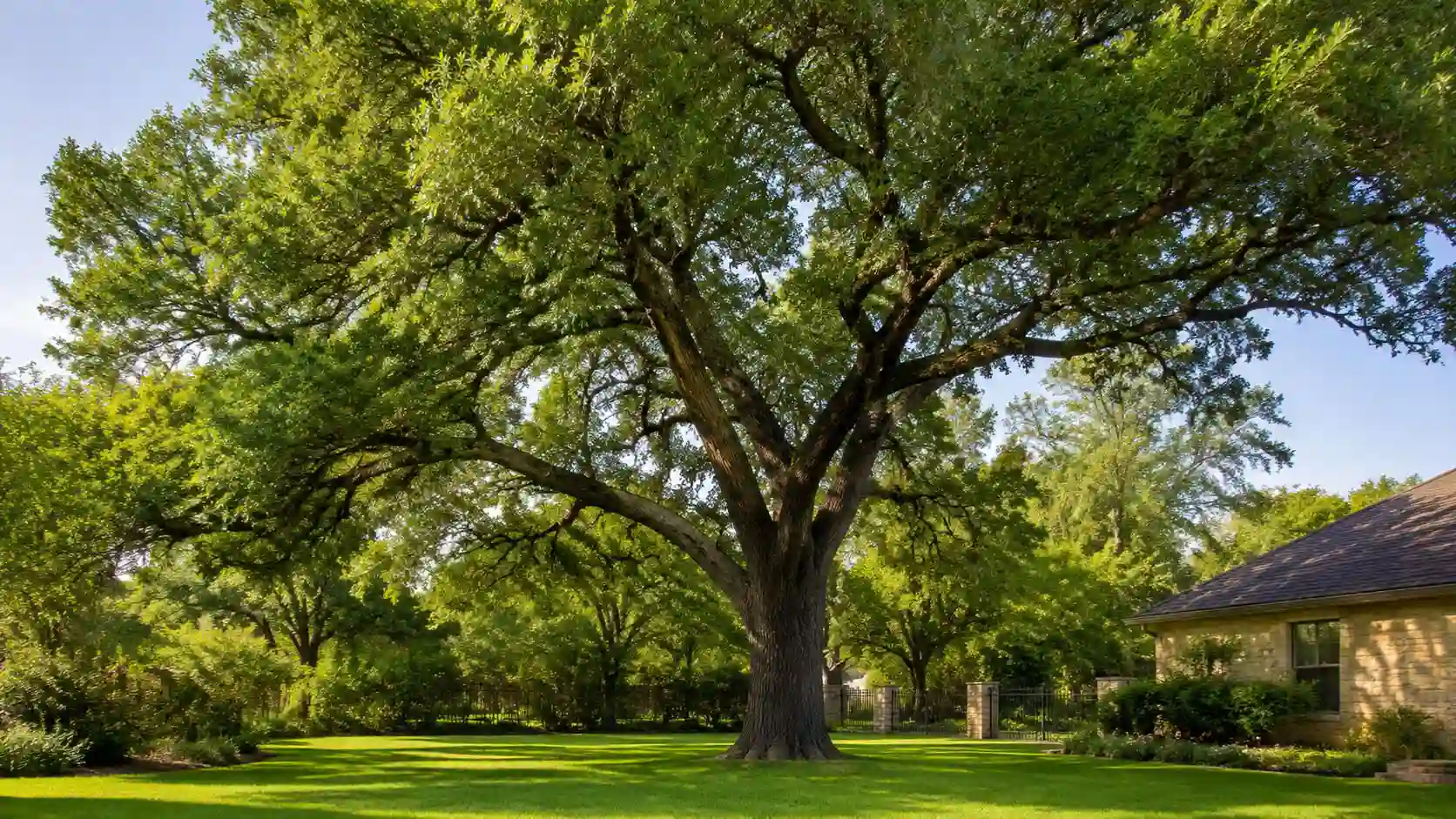
Cedar elm is one of the most drought-tolerant shade trees native to this region, and its dense summer foliage does solid work trapping airborne dust and particulates along property lines and driveways.
Care Tips:
- Tolerates poor, rocky soil better than most shade trees.
- Prune young trees to establish a strong central leader.
- Fall webworms are common but rarely serious; light pruning controls them.
Pet Friendly? Yes.
3. Texas Mountain Laurel (Sophora secundiflora)
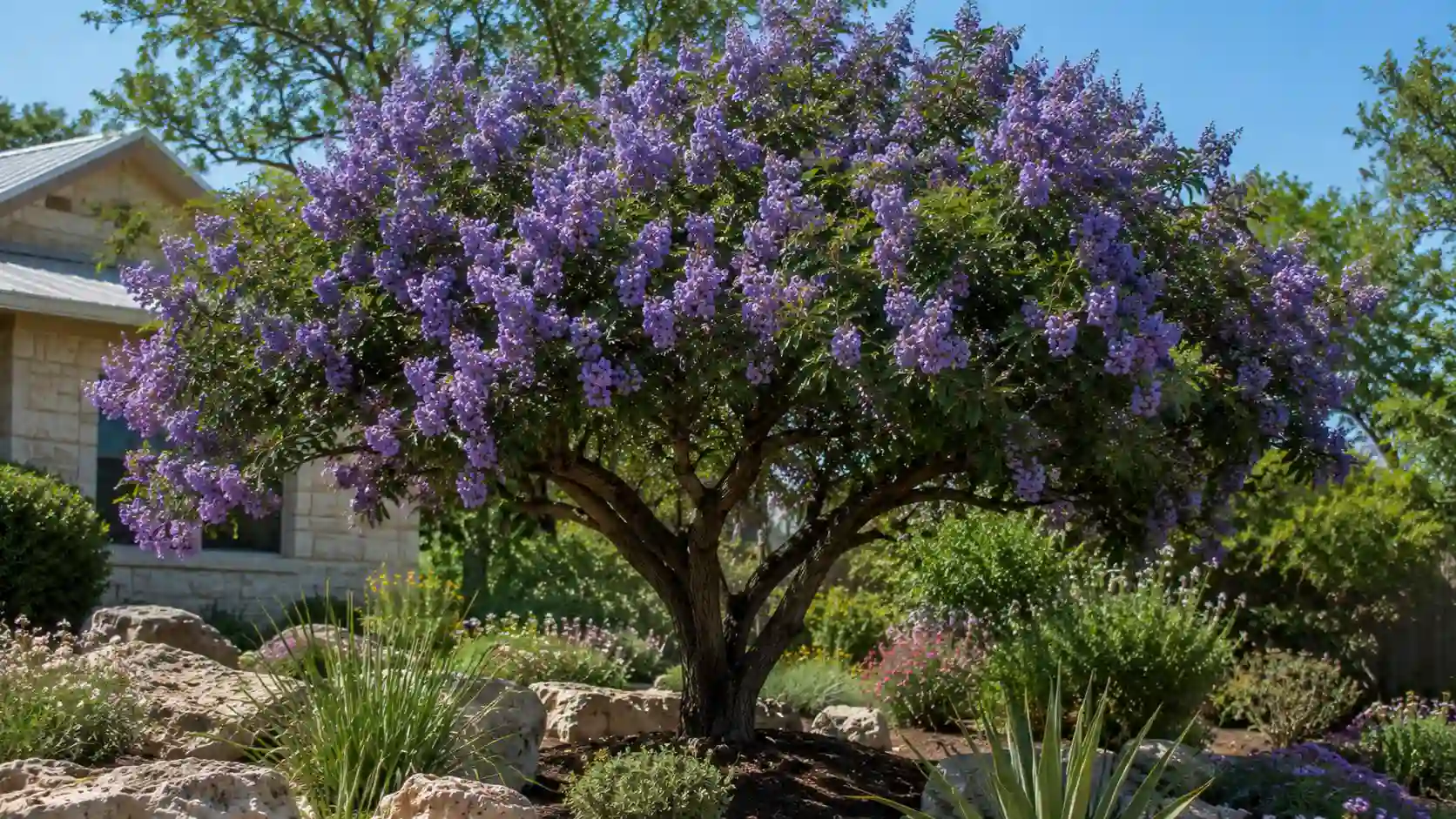
This evergreen holds its leaves year-round, which means it keeps filtering air even in winter when deciduous trees have dropped their canopy. Its dense foliage also makes it a strong privacy screen along fence lines.
Care Tips:
- Full sun and well-drained soil are essential. It won’t tolerate standing water.
- Slow-growing, so give it a permanent spot early.
- Its fragrant purple blooms in early spring also attract pollinators.
Pet Friendly? Yes.
4. Eastern Redbud (Cercis canadensis)
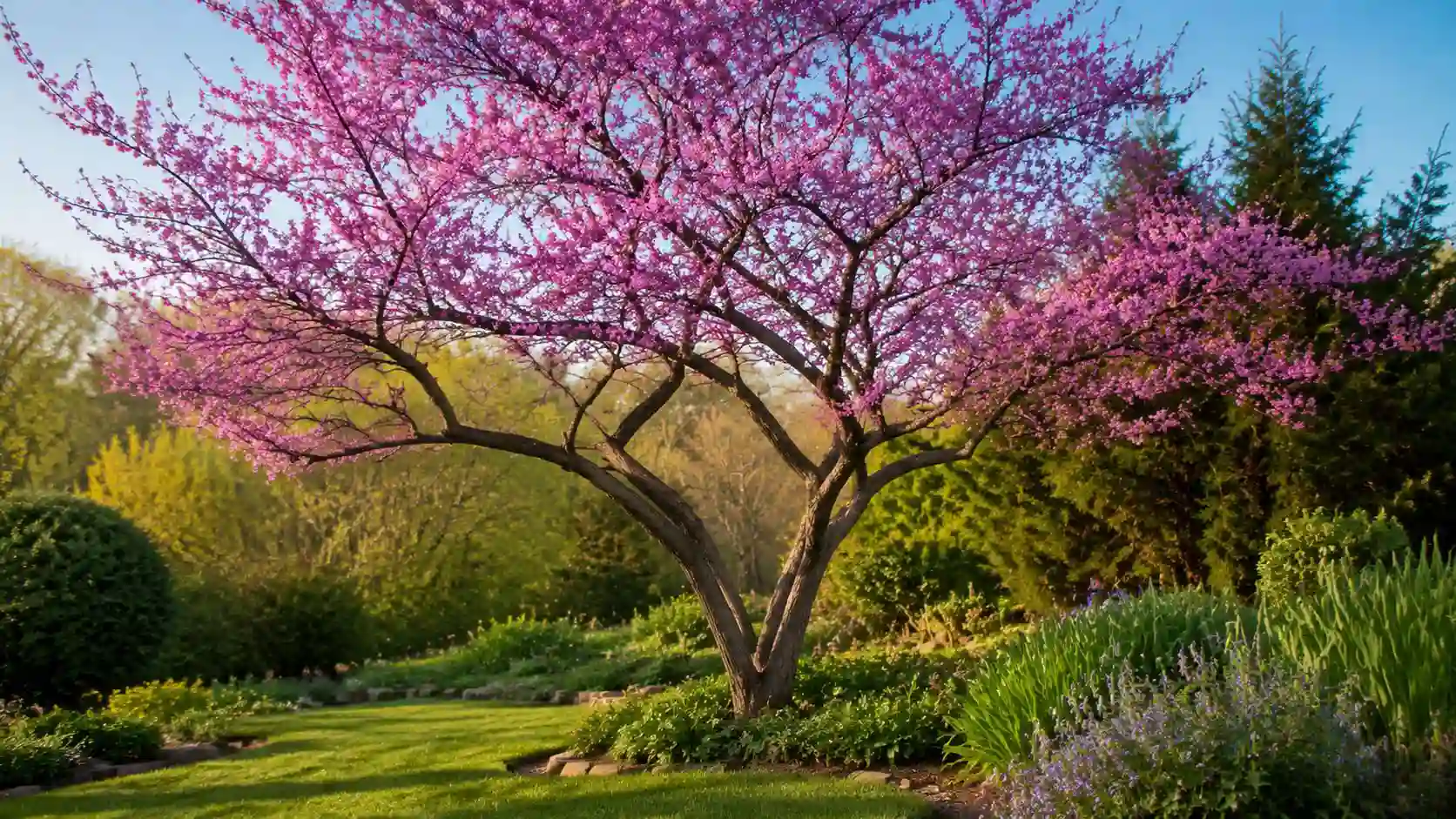
Redbuds are smaller natives that work well near patios or closer to the house where a full-size oak wouldn’t fit. Their broad leaves capture airborne particles through the growing season.
Care Tips:
- Prefers partial shade in Central Texas, unlike further north where full sun works fine.
- Water deeply but infrequently once established.
- Avoid heavy pruning. Redbuds are prone to dieback from over-cutting.
Pet Friendly? Yes.
Planting a mix of these species, rather than relying on one type, gives your property broader coverage against both particulate matter and gaseous pollutants, and it holds up better if one species faces disease pressure. If you’re planning new plantings or want a tree trimming plan built around air quality and shade coverage, that’s exactly the kind of thing our team can walk your property and map out.
Does This Actually Work? What the Research Really Says
The NASA Clean Air Study was conducted in sealed chambers built to simulate spacecraft, not open homes with normal airflow. Later research, including work out of Drexel University, found that replicating those results in a typical house would take far more plants than most people keep indoors, in some cases upwards of 90 plants in a single room to meaningfully lower VOC levels.
That doesn’t make these plants a bad investment. It means the honest expectation is different from what a lot of headlines imply. A handful of houseplants won’t replace ventilation or an air purifier, but they still add real humidity, reduce stress, and, for the trees on this list, filter genuine amounts of outdoor particulate matter over a much larger canopy area than any potted plant can match indoors. The best approach combines a few plants for the benefits they do provide with basic habits like regular ventilation and avoiding harsh cleaning chemicals indoors.
Air-Purifying Plants and Trees at a Glance
| Plant/Tree | Type | Pollutants Removed | Light Needs | Pet Friendly |
| Peace Lily | Indoor | Ammonia, benzene, trichloroethylene | Indirect light | No |
| Snake Plant | Indoor | Formaldehyde, xylene, nitrogen oxides | Low to bright indirect | No |
| Areca Palm | Indoor | Formaldehyde, xylene, toluene | Bright, indirect | Yes |
| Spider Plant | Indoor | Formaldehyde, xylene, toluene | Bright, indirect | Yes |
| Golden Pothos | Indoor | Benzene, xylene, toluene, formaldehyde | Low to bright indirect | No |
| Boston Fern | Indoor | Formaldehyde, xylene | Indirect, humid | Yes |
| Live Oak | Outdoor | Particulate matter, vehicle exhaust | Full sun | Yes |
| Cedar Elm | Outdoor | Airborne dust, particulates | Full sun | Yes |
| Texas Mountain Laurel | Outdoor | Year-round particulate filtering | Full sun | Yes |
| Eastern Redbud | Outdoor | Airborne particulates | Partial shade | Yes |
Bonus Tips for Creating a Healthy Green Space at Home
- Several kinds of house plants in varying sizes arranged together will form an attractive multi-level display.
- The essential maintenance practices for healthy growth include regular watering, plant dust removal, and tree branch pruning.
- Placements of bigger air-purifying trees must occur near window areas for optimal sun exposure. Small plants should be placed near your working and living spaces.
- Organic methods, such as fertilizers and pest solutions, should be used to protect the environment from chemicals.
Air cleaning plants, chosen and properly maintained, will allow you to create green, healthy areas that enhance well-being in any environment.
FAQ
Do air-purifying plants really clean the air in a home?
Only modestly. The NASA study was done in sealed chambers, not real homes with normal airflow.
How many plants do I need for cleaner indoor air?
More than most people keep. Research suggests dozens per room for a measurable difference.
Which tree purifies the air the most?
Among common yard trees, Live Oak generally performs best due to its large, long-lasting canopy, though a mix of species covers more pollutant types overall.
Which air-purifying plants are safe for pets?
Areca Palm, Spider Plant, and Boston Fern are pet-safe. Peace Lily, Snake Plant, and Pothos are not.
Do outdoor trees actually improve air quality around a home?
Yes. Trees filter particulates and gases over a much larger area than indoor plants can.
Can plants replace an air purifier?
No. A HEPA purifier removes airborne particles far faster and more consistently than plants.
Our team at Tree Amigos dedicates itself to developing and sustaining lovely, exclusive green areas that offer health benefits. Whenever you need assistance in air purifying plant selection, tree pruning, or landscape design, Tree Amigos Tree Service provides the required solutions. The time has arrived to support pleasant breathing and ecological living through collaboration.