
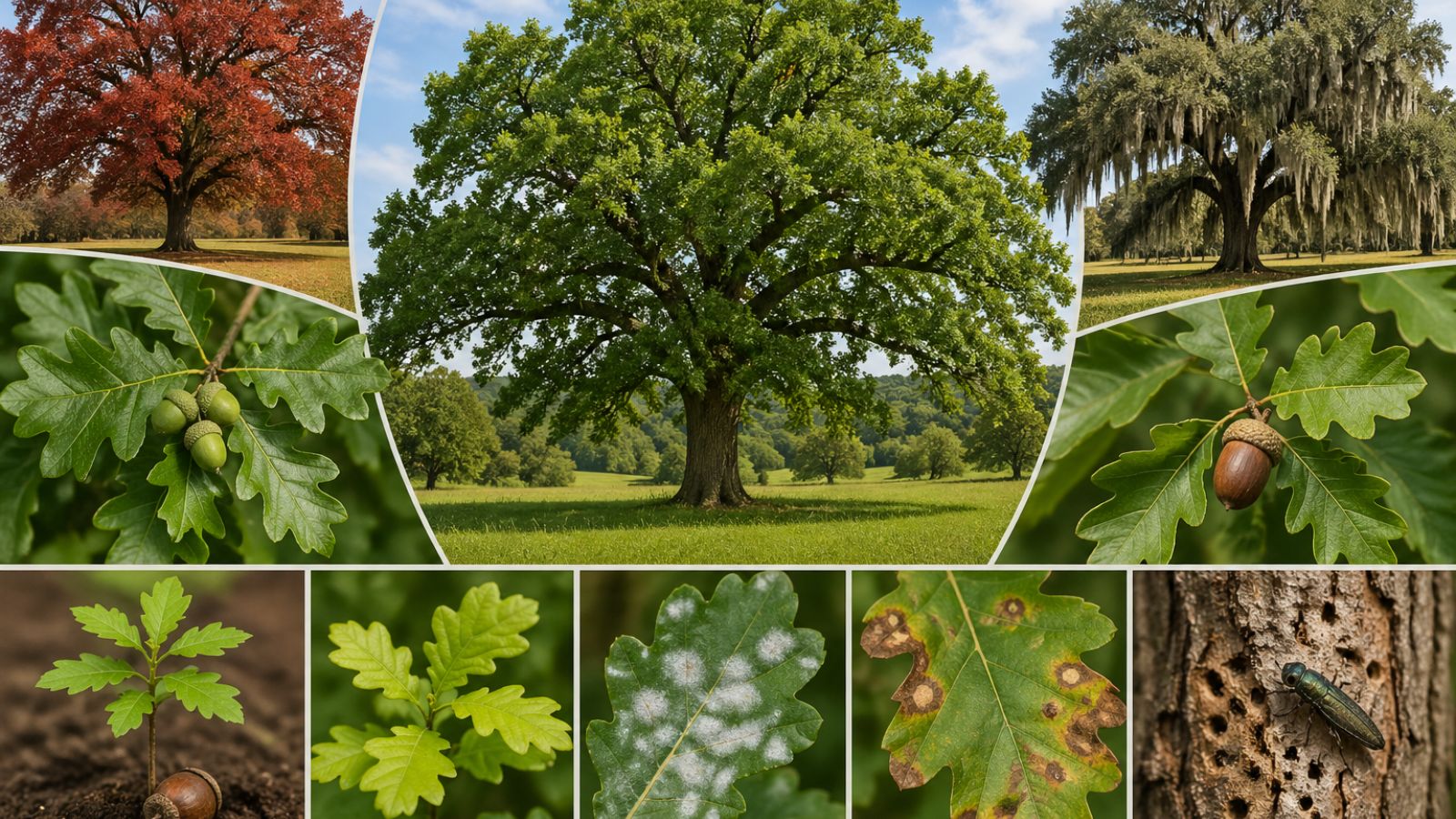
Oak trees are some of the most well-known and valuable trees, admired for their strength, long life, and the shade they provide. Whether you already have one in your yard, are thinking about planting one, or are noticing signs of damage, it helps to understand how they grow and what they need to stay healthy.
This guide will walk you through the basics, including different types of oak trees, simple care tips, and how to spot common problems early. You will also learn how to manage diseases and keep your oak tree strong and healthy for years to come.
What Is an Oak Tree?
An oak tree is a hardwood tree or shrub belonging to the genus Quercus, part of the beech family (Fagaceae). With roughly 500 species distributed across the Northern Hemisphere, oaks are one of the most widespread and diverse tree genera on Earth. In the United States alone, about 90 native oak species thrive across forests, suburbs, and urban landscapes.
Oak trees are celebrated for their strength, longevity, and ecological value. A healthy oak can live anywhere from 200 to over 600 years, depending on the species and growing conditions. They grow slowly but steadily — most species add 12 to 24 inches of height per year when young and even less as they mature.
Beyond their beauty, oak trees are keystone species in their ecosystems. They support more than 950 species of caterpillars and serve as a critical food source for birds, squirrels, deer, and dozens of other wildlife species through their acorns. An oak tree is not just a tree — it is an entire habitat.
Key facts about oak trees:
- Family: Fagaceae (beech family)
- Genus: Quercus
- Native range: North America, Europe, Asia, and North Africa
- Average height: 40–80 feet, depending on species
- Lifespan: 200–600+ years
- Fruit: Acorns (a nut enclosed in a scaly cup called a cupule)
- Leaf type: Lobed or toothed, deciduous or evergreen, depending on species
Types of Oak Trees: The Most Common Species Explained
One of the first things to understand about oak trees is that they fall into two broad groups: red oaks and white oaks. This classification matters because the two groups differ in leaf shape, acorn maturation time, and, importantly, susceptibility to diseases like oak wilt.
How to tell them apart at a glance:
- Red oaks have leaves with pointed, angular lobes tipped with bristles
- White oaks have leaves with rounded, smooth lobes and no bristle tips
- Red oak acorns take two years to mature; white oak acorns mature in one season
Here are the most common oak species you’ll encounter across North America:
Red Oak Tree (Quercus rubra)
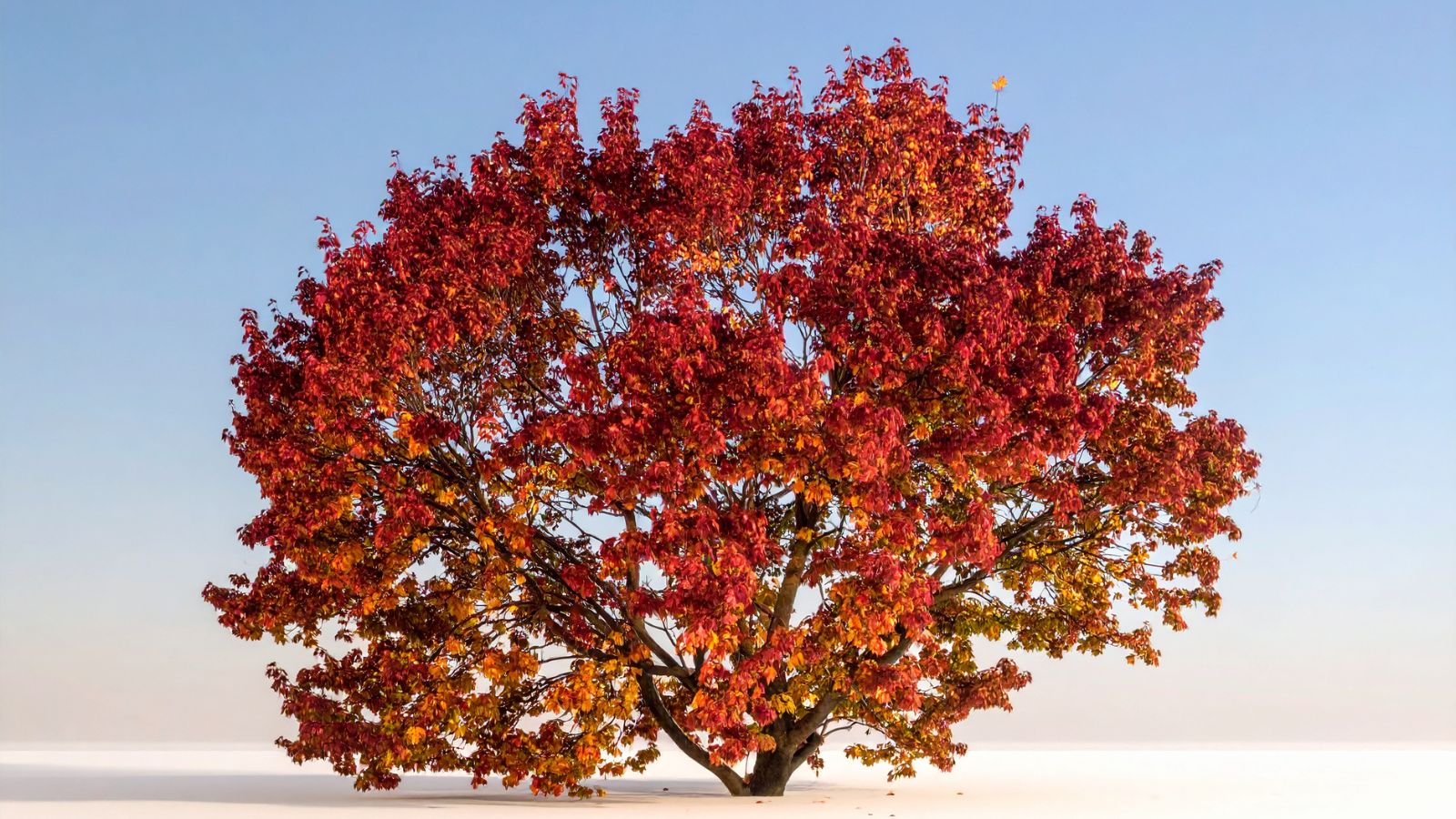
The northern red oak is one of the most popular and widely planted oaks in the eastern United States. It earns its name from its stunning scarlet fall foliage and reddish wood. Red oaks are fast-growing for an oak — often adding 24 inches per year when young — and are highly adaptable to urban environments.
- Height: 60–75 feet
- Best for: Shade, fall color, wildlife habitat
- Hardiness zones: 3–8
- Notable trait: One of the most important timber oaks; used for flooring, furniture, and veneer
Red oaks are more susceptible to oak wilt than white oaks, so location and proper care are important considerations when planting.
White Oak Tree (Quercus alba)
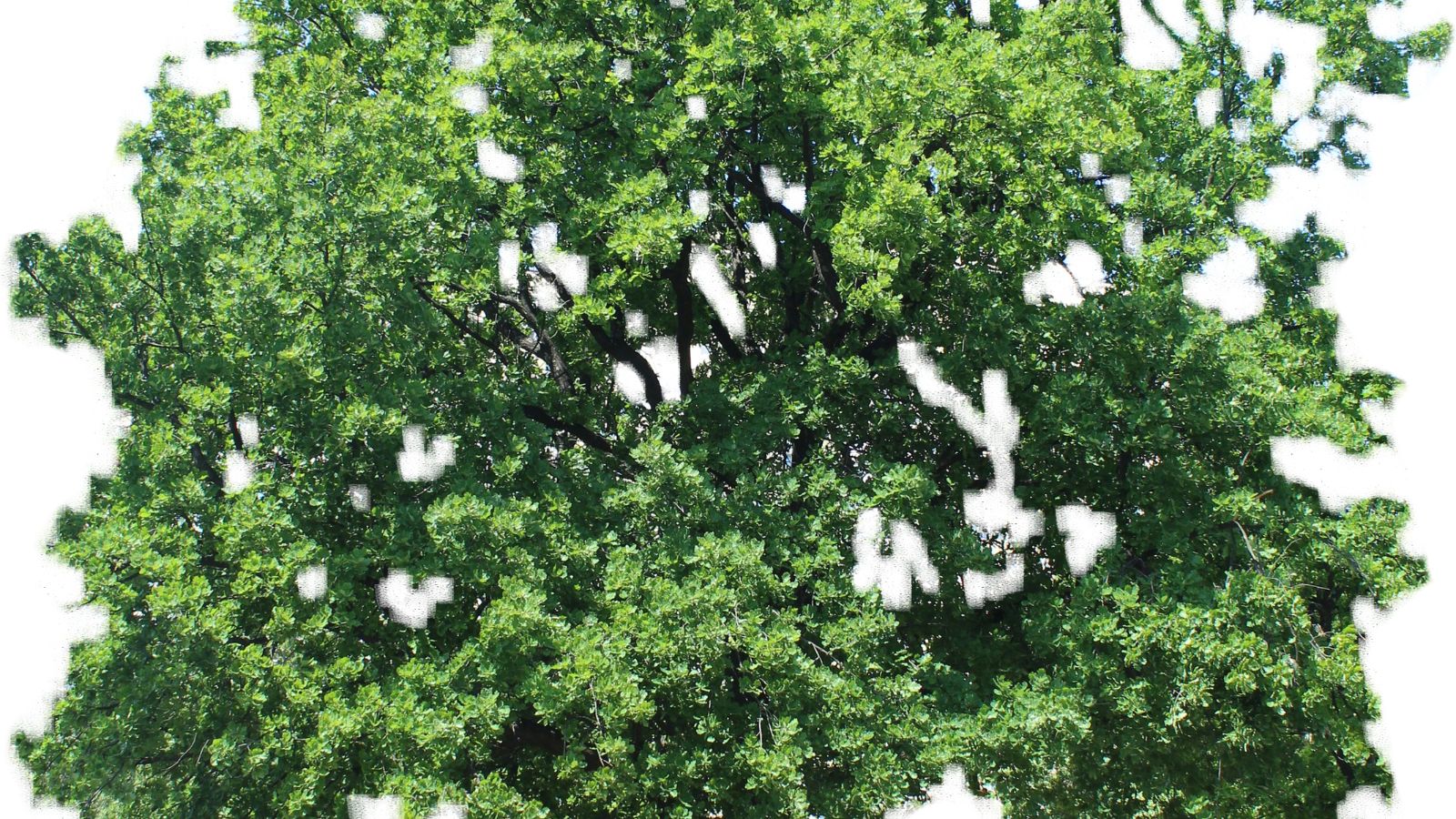
The white oak is a majestic, long-lived tree considered a national treasure in many parts of the United States. It is the state tree of Connecticut, Illinois, and Maryland. Its acorns are less bitter than red oak acorns, making them a favorite food source for wildlife and historically for Native Americans, who boiled them for consumption.
- Height: 60–100 feet
- Best for: Large landscapes, shade, wildlife food source
- Hardiness zones: 3–9
- Notable trait: Extremely long-lived; known to reach 500–600 years
White oaks are more resistant to oak wilt compared to red oaks, making them a slightly lower-maintenance choice in disease-prone areas.
Live Oak Tree (Quercus virginiana)
The southern live oak is an evergreen oak — meaning it keeps its leaves year-round — and is immediately recognizable by its wide-spreading, arching canopy. Live oaks are a defining feature of the American South, often draped in Spanish moss. They are remarkably drought-tolerant once established.
- Height: 40–60 feet, but can spread 60–100 feet wide
- Best for: Southern landscapes, coastal areas, dramatic visual impact
- Hardiness zones: 7B–10B
- Notable trait: Extremely wind-resistant; survived many major hurricanes
Pin Oak Tree (Quercus palustris)
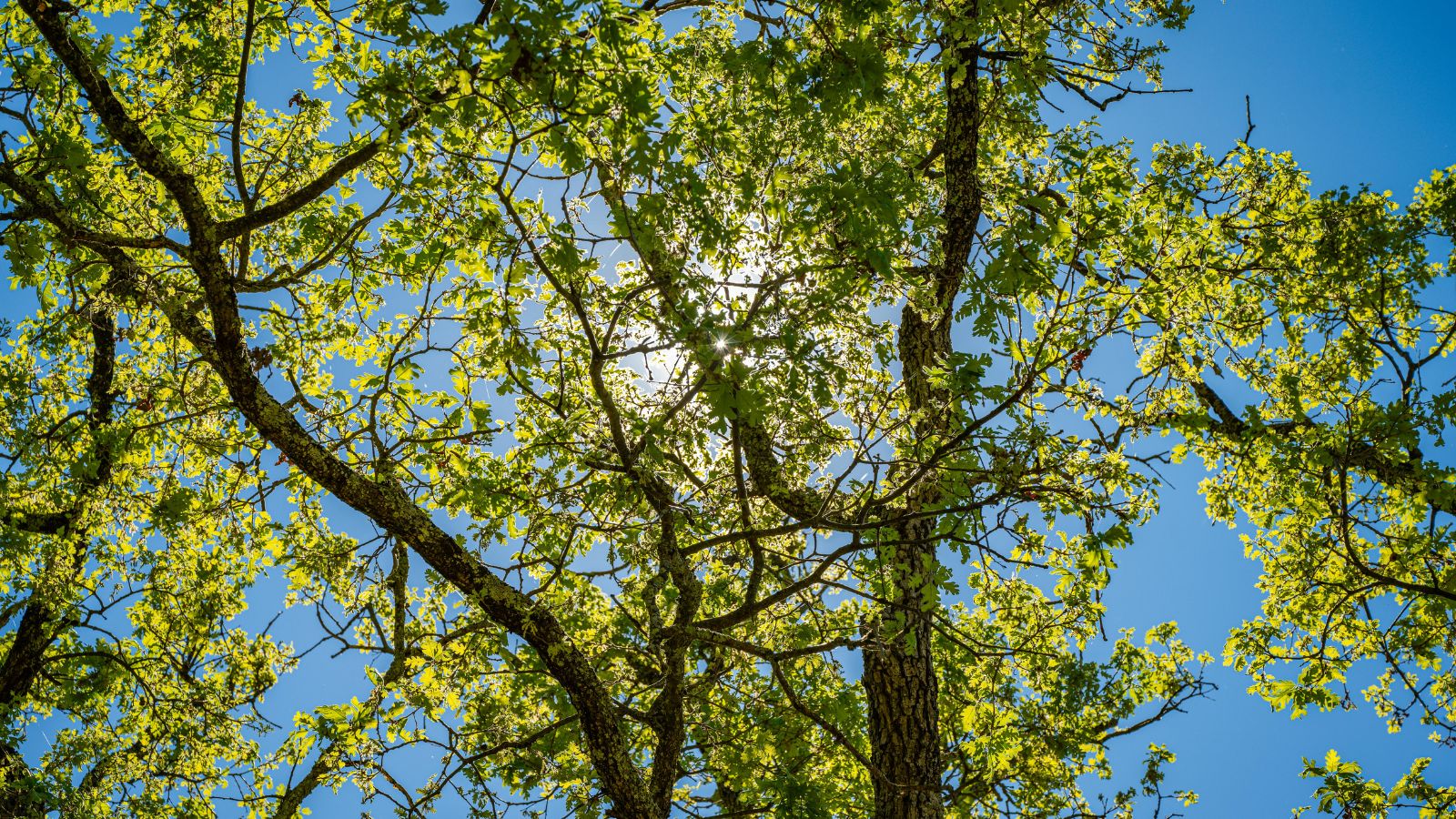
The pin oak is a popular landscaping oak due to its pyramidal shape when young and its reliable, bright red fall color. It grows relatively quickly for an oak and tolerates wet soils, making it useful in areas with poor drainage.
- Height: 60–70 feet
- Best for: Urban and suburban landscapes, street planting
- Hardiness zones: 4–8
- Notable trait: Tends to develop iron chlorosis (yellowing leaves) in alkaline soils
Bur Oak Tree (Quercus macrocarpa)
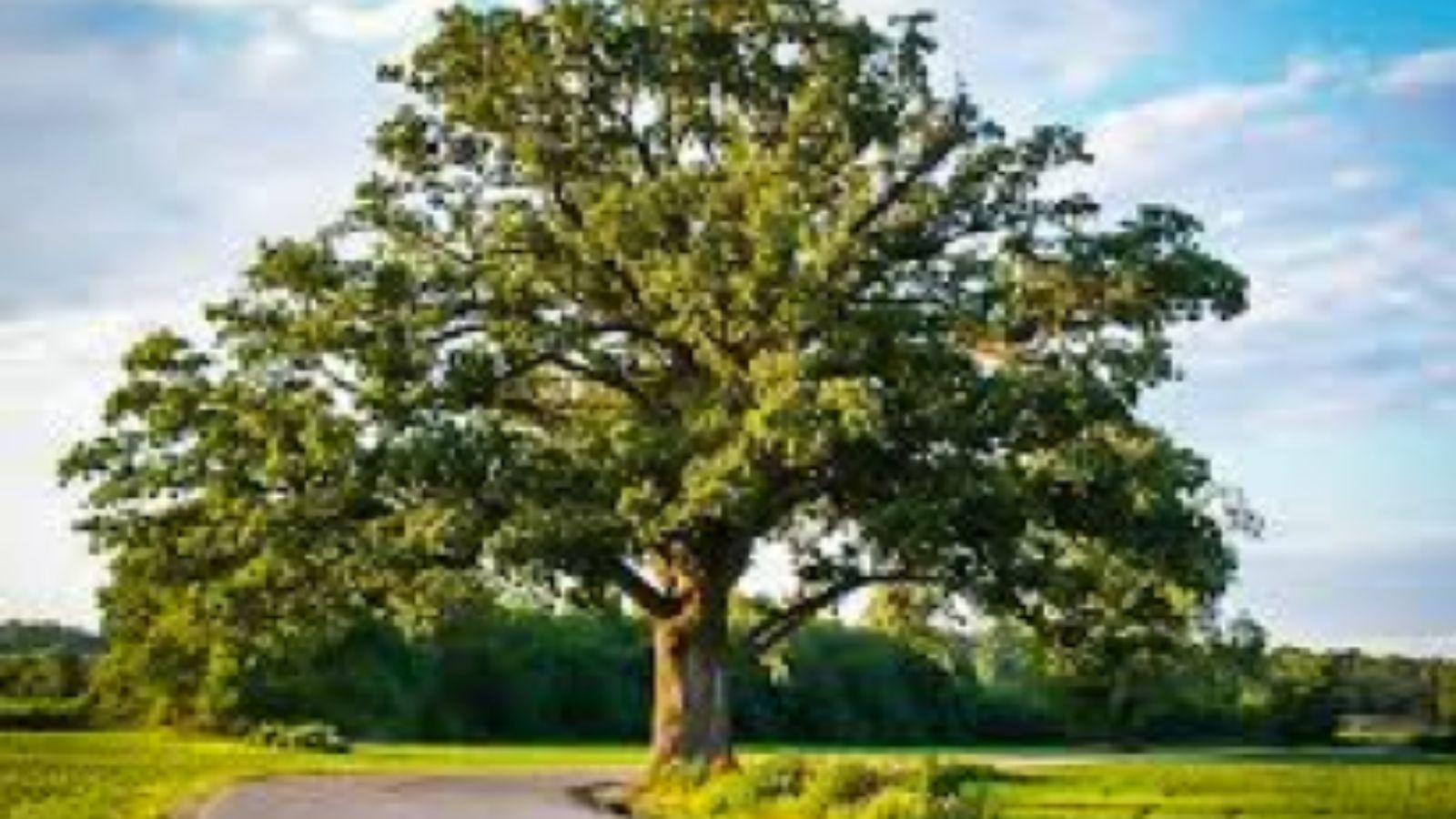
The bur oak (also spelled “burr oak”) is one of the most rugged and drought-tolerant oaks in North America. It has an exceptionally thick, corky bark that historically protected it from prairie fires. Its large, fringed acorn caps give it its distinctive name.
- Height: 70–80 feet
- Best for: Large open spaces, prairies, drought-prone regions
- Hardiness zones: 3–8
- Notable trait: Extremely cold-hardy and drought-resistant; one of the longest-lived oaks
Willow Oak Tree (Quercus phellos)
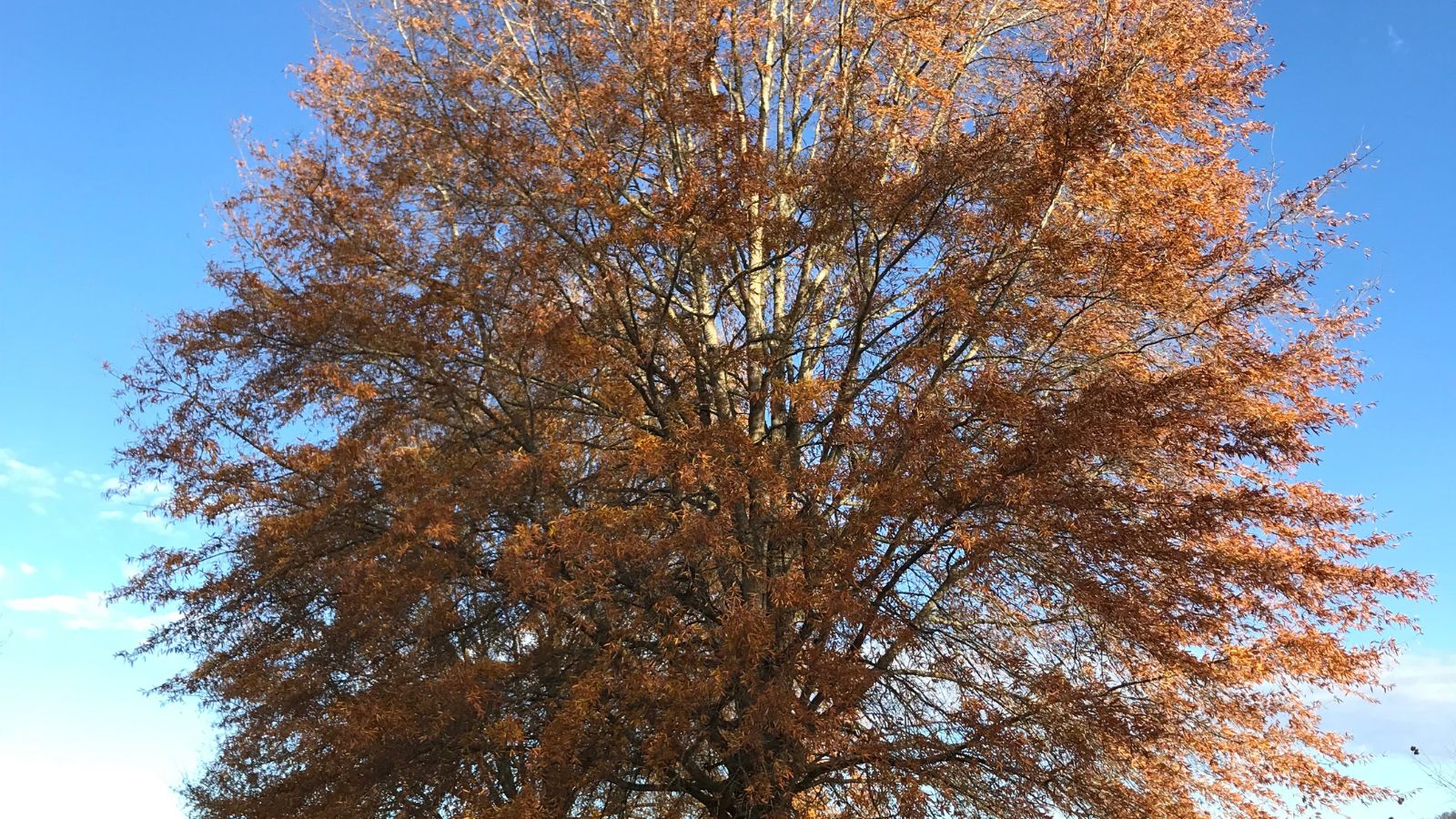
Despite its name, the willow oak is all oak — it simply has unusually narrow, willow-like leaves instead of the classic lobed oak leaf. It is a popular street and landscape tree in the southeastern United States, valued for its fine-textured, elegant appearance.
- Height: 60–75 feet
- Best for: Street planting, urban environments, southeastern landscapes
- Hardiness zones: 5–9
- Notable trait: Produces large numbers of small acorns, which attract birds and small wildlife
How to Grow an Oak Tree: Step-by-Step Guide
Growing an oak tree is a rewarding long-term investment. Whether you’re starting from an acorn or planting a nursery sapling, here’s everything you need to know to get your oak off to the best possible start.
Growing from an Acorn vs. Buying a Sapling
You have two main options when starting an oak tree:
Growing from an acorn is the more economical and deeply satisfying approach, but it requires patience and attention in the early stages.
- Collect fresh acorns in autumn — choose ones that are plump, brown, and sink (not float) when placed in water
- Store them in a plastic bag with slightly moist peat moss in your refrigerator for 4–8 weeks (cold stratification), which mimics winter conditions and triggers germination
- Plant them 1–2 inches deep directly in their permanent location, as oaks develop deep taproots that do not transplant well
- Germination typically occurs in spring; expect a small seedling 6–12 inches tall by the end of the first growing season
Buying a nursery sapling is faster and gives you a head start of several years. Choose a healthy container-grown tree and plant it in early spring or fall when temperatures are mild and rainfall is more consistent.
Best Soil, Sunlight, and Watering Conditions
Getting the growing conditions right is the single most important factor in raising a healthy oak.
Soil: Most oaks prefer well-drained, moderately fertile soil. They are adaptable to a range of soil types, sandy, loamy, or clay, but struggle in waterlogged conditions. Pin oaks are an exception and tolerate wetter soils. Avoid planting in high-pH (alkaline) soils if possible, as this can cause iron deficiency and yellowing leaves.
Sunlight: Oak trees are full-sun trees. Plant in a location that receives at least 6 hours of direct sunlight per day. Insufficient sun leads to weak, lopsided branch growth as the tree reaches toward the light.
Watering:
- Newly planted oaks need deep, regular watering, about 10–15 gallons per week during the first two growing seasons
- Water deeply and infrequently to encourage the roots to grow downward
- Once established (typically after 2–3 years), most oak species are quite drought-tolerant and require little supplemental irrigation
- Avoid overwatering – soggy soil is one of the most common causes of root rot and tree stress
Spacing: Give your oak room to grow. Plant large species like white oaks and bur oaks at least 20–30 feet away from buildings, fences, and other trees. Smaller species like pin oaks can be planted 15–20 feet from structures, but be mindful of root spread near sidewalks and driveways.
Pruning and Fertilizing Tips
Pruning: Young oaks benefit from light structural pruning to establish a strong framework for life. Always prune during the dormant season (late fall through late winter) to minimize disease risk. This is especially important in areas where oak wilt is active. Pruning wounds during the spring growing season can attract the beetles that spread the disease.
When pruning, remove:
- Crossing or rubbing branches
- Dead or diseased wood
- Branches with weak, narrow crotch angles
- Water sprouts (shoots growing straight up from branches) and root suckers
Fertilizing: Established, healthy oaks generally do not need fertilization. In fact, over-fertilizing with high-nitrogen fertilizers can encourage excessive soft growth that is more susceptible to pests and disease. If your oak shows signs of nutrient deficiency (yellowing leaves, poor growth), have your soil tested before applying any fertilizer. A slow-release, balanced fertilizer applied in early spring is appropriate if deficiencies are confirmed.
Common Oak Tree Diseases and How to Treat Them
Despite their reputation for toughness, oak trees are vulnerable to several serious diseases. Early identification is critical — the longer a disease progresses, the harder it is to treat and the greater the risk of losing the tree entirely.
Oak Wilt — Symptoms and Treatment
Oak wilt is arguably the most destructive disease affecting oak trees in North America, and it is particularly devastating to red oaks. It is caused by the fungal pathogen Bretziella fagacearum, which blocks the tree’s water-conducting vessels, causing rapid wilting and death.
Symptoms:
- Rapid wilting and browning of leaves, starting at the top of the canopy and moving downward
- Leaves wilt in a characteristic V-shaped pattern from the margins inward
- Premature leaf drop — trees may lose leaves in a matter of weeks
- In red oaks, fungal mats (pressure pads) can form under the bark, which attract sap-feeding beetles that spread the disease to new trees
How it spreads: Oak wilt spreads in two ways: underground through connected root systems between neighboring oaks, and overland via insects carrying spores to fresh pruning wounds or storm-damaged bark.
Treatment and prevention: There is no cure once a tree is severely infected. Prevention is the most effective strategy:
- Avoid pruning oaks during spring (the highest-risk period), particularly from February through June in most regions
- Immediately paint any pruning cuts or wounds with a pruning sealant
- In areas where oak wilt is established, have root connections between neighboring oaks severed by a certified arborist using a vibratory plow
- Fungicide injections of propiconazole can protect high-value trees before infection occurs, and may slow progression in early-stage infections
- Remove and destroy infected trees promptly to prevent spread to nearby trees
Oak Anthracnose
Oak anthracnose is a fungal disease caused by the species of Apiognomonia. It tends to appear during cool, wet springs and is most damaging to young leaves that haven’t fully hardened off.
Symptoms:
- Irregular brown or tan spots along leaf margins and veins
- Distorted or curled leaves, particularly on new spring growth
- Premature leaf drop in severe cases, though trees typically re-leaf
Treatment: Anthracnose is rarely fatal to otherwise healthy oaks. The best approach is to:
- Rake and destroy fallen leaves in autumn to reduce the fungal spore load
- Improve air circulation around the tree through selective pruning
- Apply a fungicide (phosphorous acid or propiconazole) in early spring before bud break if the tree has suffered severe anthracnose in previous years
Oak Decline
Oak decline is not a single disease but rather a complex condition triggered by a combination of stressors — drought, soil compaction, root damage from construction, insect defoliation — that weakens the tree and makes it vulnerable to secondary fungal and insect attackers.
Symptoms:
- Progressive dieback starting from the outer tips of branches and moving inward
- Gradual thinning of the canopy over several years
- Reduced leaf size and sparse new growth
- Dead limbs throughout the crown
Treatment:
- Mulch a wide area around the base of the tree (out to the drip line if possible) to retain moisture, regulate soil temperature, and protect roots
- Avoid soil compaction by keeping foot traffic and vehicles away from the root zone
- Water during extended droughts
- Consult a certified arborist to assess the tree’s structural integrity and recommend targeted treatments for any secondary infections
Also read about how to identify hidden tree diseases.
Why Are Oak Tree Leaves Turning Brown?
Browning leaves are one of the most common concerns for oak tree owners, and the cause is not always a disease. Here is a quick diagnostic guide:
| Symptom | Likely Cause |
| Brown edges, starting in summer | Drought stress or bacterial leaf scorch |
| Brown V-shaped patches, rapid leaf drop | Oak wilt (urgent — call arborist) |
| Brown irregular spots in spring | Anthracnose (usually not serious) |
| All-over yellowing with brown tips | Iron deficiency / alkaline soil |
| Brown patches on the lower canopy in late summer | Tubakia leaf spot (fungal, usually minor) |
| Sudden brown, leaves stay attached | Late frost damage or drought shock |
If you notice rapid browning combined with significant leaf drop outside of autumn, contact a certified arborist promptly. Conditions like oak wilt can kill a red oak within weeks if left untreated.
Oak Tree Care Tips: Seasonal Checklist
Keeping your oak healthy is about consistent, season-appropriate care rather than intensive intervention.
Spring:
- Inspect for disease symptoms as leaves emerge
- Avoid pruning (high oak wilt risk)
- Apply mulch 2–4 inches deep around the base (keep mulch away from the trunk)
- Water newly planted trees regularly
Summer:
- Water deeply during dry spells, especially for young trees
- Monitor for pest activity (gypsy moths, tent caterpillars, borers)
- Watch for leaf browning and unusual symptoms
Fall:
- Begin structural pruning after leaves drop and trees enter dormancy
- Rake and dispose of fallen diseased leaves
- Plant new oaks or acorns
Winter:
- Continue pruning during dormancy (safest time for most diseases)
- Avoid salt spray near young oaks (road salt from winter treatments can damage roots)
- Check for storm damage and make clean cuts to remove broken branches
Frequently Asked Questions About Oak Trees
How long does it take for an oak tree to grow?
Most oak trees grow 12–24 inches per year when young, slowing as they mature. A tree planted from an acorn may take 20 years to reach a respectable size, but it will continue growing and improving for centuries.
How far should I plant an oak tree from my house?
Large species should be planted at least 20–30 feet from any structure. Oak roots are extensive and can lift sidewalks and foundations over time. Even smaller oak varieties need at least 15 feet of clearance.
Are oak trees messy?
Oaks do drop acorns, leaves, small twigs, and catkins (flower clusters) at various times of year. Some species, like pin oaks, hold onto dead brown leaves through winter. They are not the neatest trees, but their ecological and aesthetic benefits far outweigh the cleanup.
Can I grow an oak tree in a container?
Young oak trees can be started in containers, but they are not suitable as permanent container plants. Their deep taproots and ultimate size require planting in the ground.
What is the best oak tree for a small yard?
For smaller spaces, consider the Chinkapin oak (Quercus muehlenbergii) or a dwarf cultivar like ‘Crimschmidt’ (Crimson Spire Oak), which grows in a narrow, columnar form. Always check mature size before planting.
Final Thoughts
Oak trees are more than just part of your landscape; they are long-lasting additions that provide shade, beauty, and value for years to come. Whether you are choosing the right oak for your yard, growing one from an acorn, or dealing with a tree that does not look healthy, understanding proper care and common issues can make a big difference. With the right approach, you can help your oak tree grow strong and thrive for generations.
If you notice signs like sudden leaf drop, wilting during summer, or unusual growth at the base, it is best to act early. Contact Tree Amigos Tree Service today for expert guidance and keep your oak trees healthy, safe, and looking their best.