

Texas stretches from the high plains to the humid Gulf Coast, so our backyards sit in U.S. Department of Agriculture hardiness zones 6 to 9. Summer heat, mild winters, and long growing seasons mean homeowners can enjoy fresh fruit almost year-round—if the tree copes with low “chill-hour” winters, alkaline soils, and the occasional late freeze.
Choose proven varieties, plant the best fruit trees for Texas where they receive full sun, and you will gain shade, pollinator habitat, and baskets of home-grown produce while adding value to your landscape. Below are five species that experts and Texas A&M AgriLife Extension recommend again and again for reliability, modest care needs, and generous harvests.
Best Fruit Trees for Texas
1. Peach (Prunus persica)

Peaches are the most commonly grown deciduous fruit in the state, with about one million trees currently producing. They suit every region except the lower Rio Grande Valley, provided you match the variety’s chill requirement to your county’s winter average:
| Region | Typical chill hours | Trusted varieties |
|---|---|---|
| North & Central (≥700 hrs) | 700–1,000 | ‘Harvester,’ ‘Redglobe’ |
| South & Hill Country (450–650 hrs) | 450–650 | ‘TexKing,’ ‘TexPrince’ |
| Coastal & Deep South (150–400 hrs) | 150–400 | ‘TropicBeauty,’ ‘Flordaprince’ |
Why do they shine in Texas?
- Climate fit: Modern Texas-bred cultivars wake up late enough to dodge most spring frosts and only need 150–750 chill hours.
- Quick payoff: Trees planted this winter can give a light crop in year 3 and reach full production by year 5.
- Manageable care: An open-center prune each February, mulch to hold moisture, and two fertilizer applications keep growth steady. Regular thinning (leave 6 inches between fruit) rewards you with two months of sweet, freestone peaches from late May through August.
2. Fig (Ficus carica)

Extension specialists call figs “one of the most problem-free and probably the best fruit trees” for areas with mild winters. Because the fruit forms without pollination, one tree will feed the whole family.
Why do they shine in Texas?
- Heat tolerance: Trees handle 100°F afternoons as long as the roots stay moist.
- Low input: Figs rarely require spraying; pruning is optional beyond removing winter-killed wood.
- Fast fruiting: Container or bare-root stock fruits in year 2, sometimes the first summer after planting. ‘Celeste’ starts in June, while ‘Texas Everbearing’ produces from June through August.
Texas favorites
- ’‘Celeste’—toughest to winter cold, small but intensely sweet.
- ‘Texas Everbearing’ (‘Brown’ Turkey’)—larger fruit over a long season.
- ’‘Alma’—outstanding flavor near the Gulf Coast.
Plant 16 feet apart in well-drained soil; a 3-inch wood-chip mulch conserves moisture for the shallow root system.
3. Pomegranate (Punica granatum)

Pomegranate fruit trees grow best in areas with hot and dry summer conditions. Most varieties tolerate temperatures down to 18°F and remain evergreen in the Lower Rio Grande Valley, yet they also fruit across central and southeast Texas.
Why do they shine in Texas?
- Soil flexibility: Performs in slightly acidic East-Texas loam and the alkaline clays of South Texas .
- Modest maintenance: Shape the shrub once a year by choosing three to five trunks; otherwise, let it grow. Insect and disease pressure is minor compared with many tree fruits.
- Early yield: Expect 20–25 fruit by year 4, ripening September–October. ‘Wonderful’ is the familiar grocery-store cultivar, but ‘Al-sirin-nar’ and ‘Russian 18’ combine better cold tolerance with sweet-tart flavor.
Weekly irrigation during bloom and fruit fill improves aril size; a balanced fertilizer in February keeps new growth vigorous.
4. Plum (Japanese hybrid types)

European plums struggle here, but Japanese hybrids such as ‘Methley’ and ‘Santa Rosa’ have become reliable yard trees all over Texas.
Why do they shine in Texas?
- Adapted genetics: Hybrids need fewer chill hours (250–600) and resist fungal issues that plague peaches.
- Minimal spraying: Brown rot still occurs, yet one preventative fungicide at petal-fall often suffices.
- Speedy results: Grafted bareroot trees often fruit in their second spring. ‘Methley’ is typically ready in late May to early June, with ‘Santa Rosa’ coming in toward the end of June.
Plums require a pollen partner except self-fruitful ‘Methley’, so plant two varieties 18 feet apart. Annual thinning prevents limb breakage on heavy crops.
5. Apple (Malus domestica)

Yes—apple trees in Texas. The key is choosing low-chill selections. ‘Anna’ and ‘Dorsett Golden’ set reliably where winter chill drops below 400 hours . Both ripen crisp, sweet fruit in late June to early July, weeks before northern markets ship south.
Why do they shine in Texas?
- Climate match: ‘Anna’ and ‘Dorsett Golden’ were bred for subtropical Israel and thrive in our warm springs.
- Early bearing: On dwarf or semi-dwarf rootstock, they crop in year 2–3.
- Light upkeep: Summer pruning to open the canopy and a dormant-season oil spray curbs fire blight and scale. Apples are ready for harvest in different parts of the state between July and October.
Plant two different low-chill cultivars for cross-pollination, keep mulch pulled back 6 inches from the trunk, and water every 7–10 days during fruit fill.
6. Persimmon (Diospyros kaki)
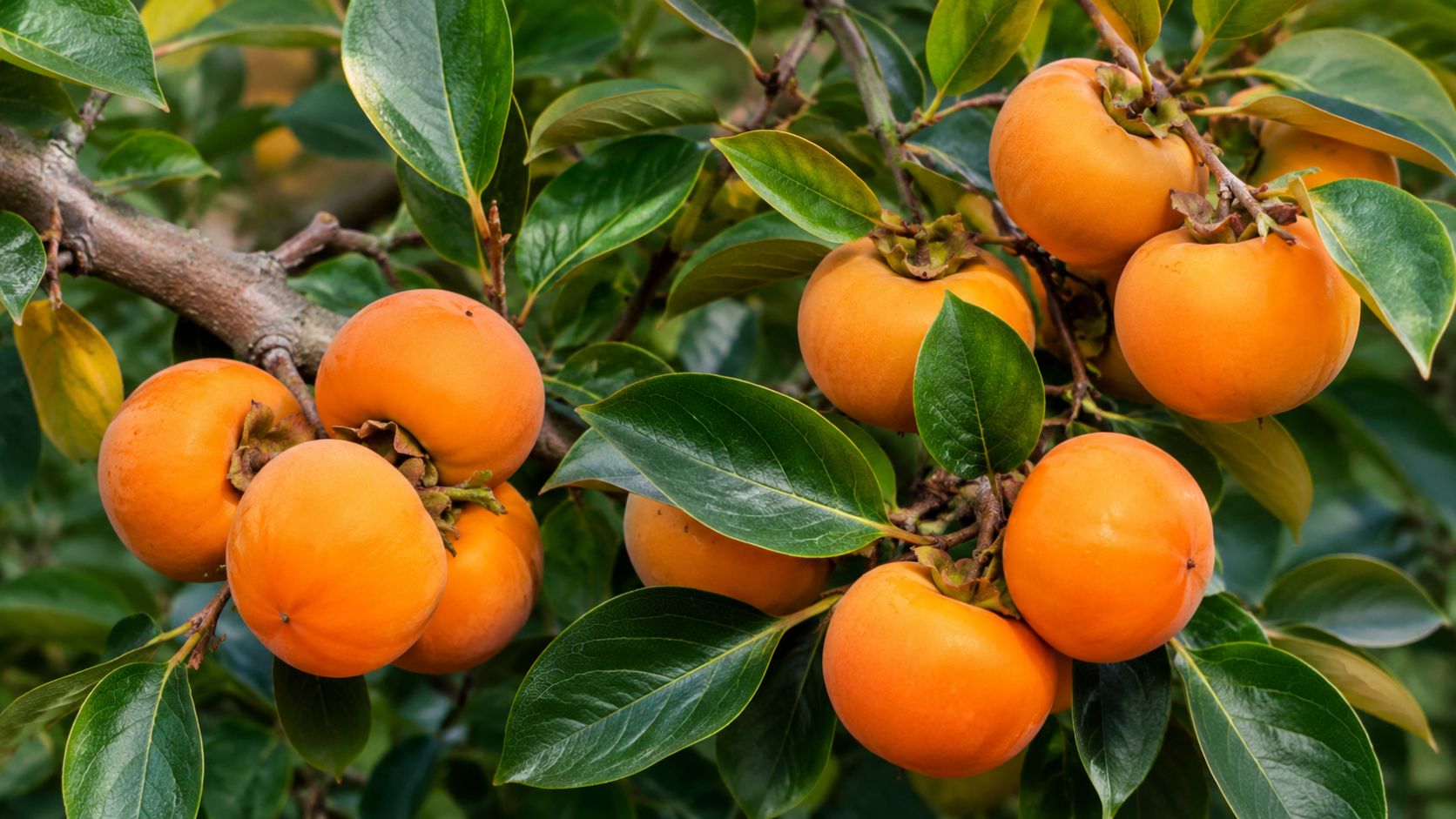
Persimmon fruit trees are one of the most underused options for Texas yards, thriving in the mild winters and hot summers found from the Hill Country through southeast Texas. ‘Fuyu’ is the standout variety, non-astringent, meaning it’s edible while still firm, unlike traditional astringent persimmons that must fully soften first.
Why do they shine in Texas?
- Low chill requirement: Needs only 100–200 chill hours, making it one of the most reliable fruiters even in warm San Antonio winters.
- Minimal upkeep: Largely pest- and disease-free compared to peach or plum; rarely needs spraying.
- Ornamental bonus: Bright orange fall foliage and fruit that persists on bare branches, adding visual interest into late fall.
Plant in full sun with well-draining soil. Expect first fruit in 3–4 years, harvested October–November. Minimal fertilizing needed; over-feeding reduces fruit set.
7. Jujube (Ziziphus jujuba)
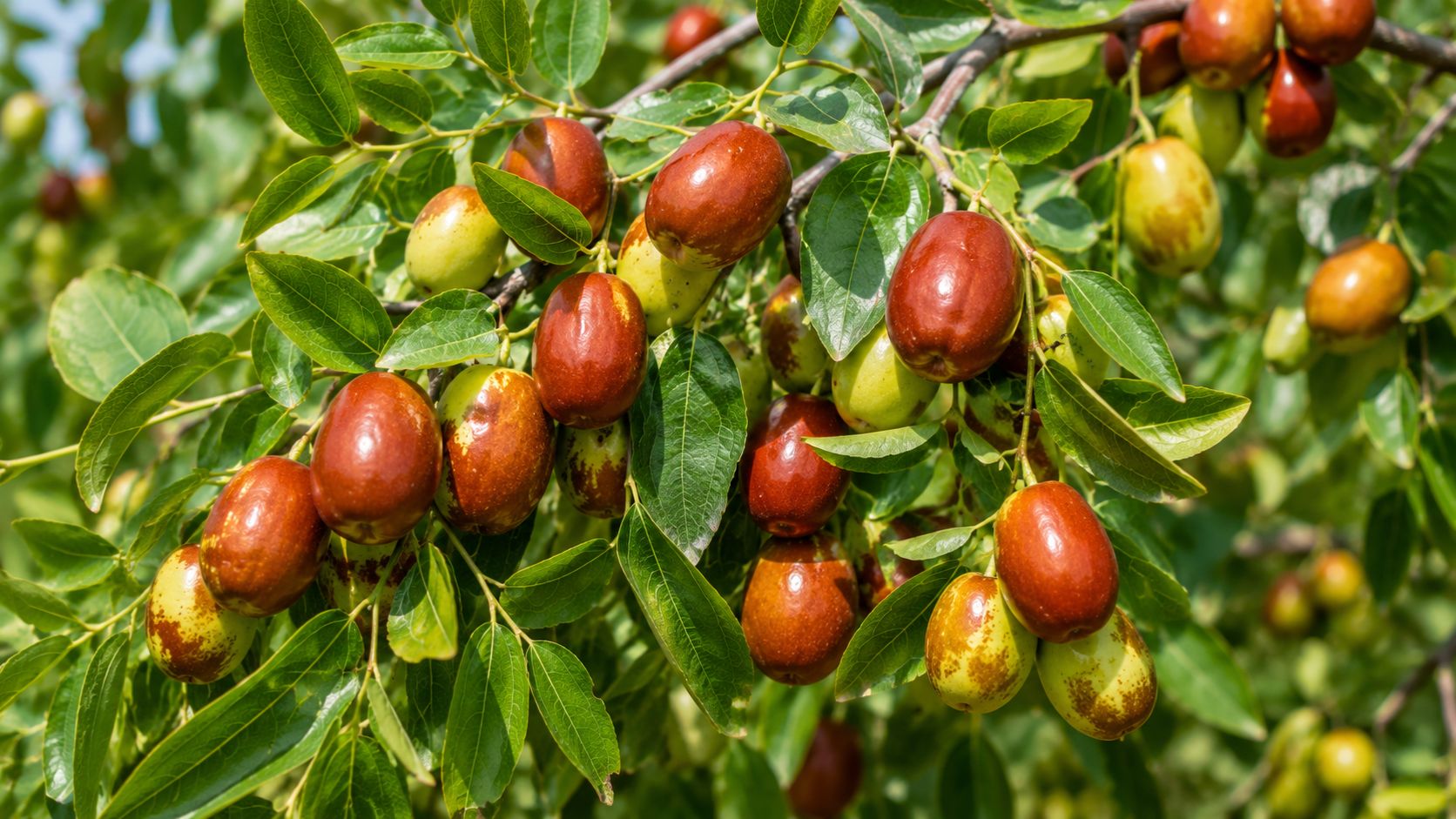
Jujube, also known as Chinese date, is built for Texas heat and drought, performing especially well in Central and West Texas where water is scarce and soil is alkaline. It’s one of the most resilient fruit trees available to Texas homeowners.
Why do they shine in Texas?
- Drought tolerance: Once established, needs little supplemental irrigation, making it ideal for xeriscaped or low-water yards.
- Soil flexibility: Handles alkaline caliche and clay soils without amendment, where trees like apple struggle.
- Reliable bearing: Self-fertile and consistent; ‘Li’ and ‘Lang’ are the most widely grown varieties, producing apple-crisp fruit fresh or date-sweet when dried.
Fruit ripens late summer into fall. Little pruning or spraying required; a light feeding in spring is usually enough.
8. Pear (Pyrus communis / Pyrus pyrifolia)
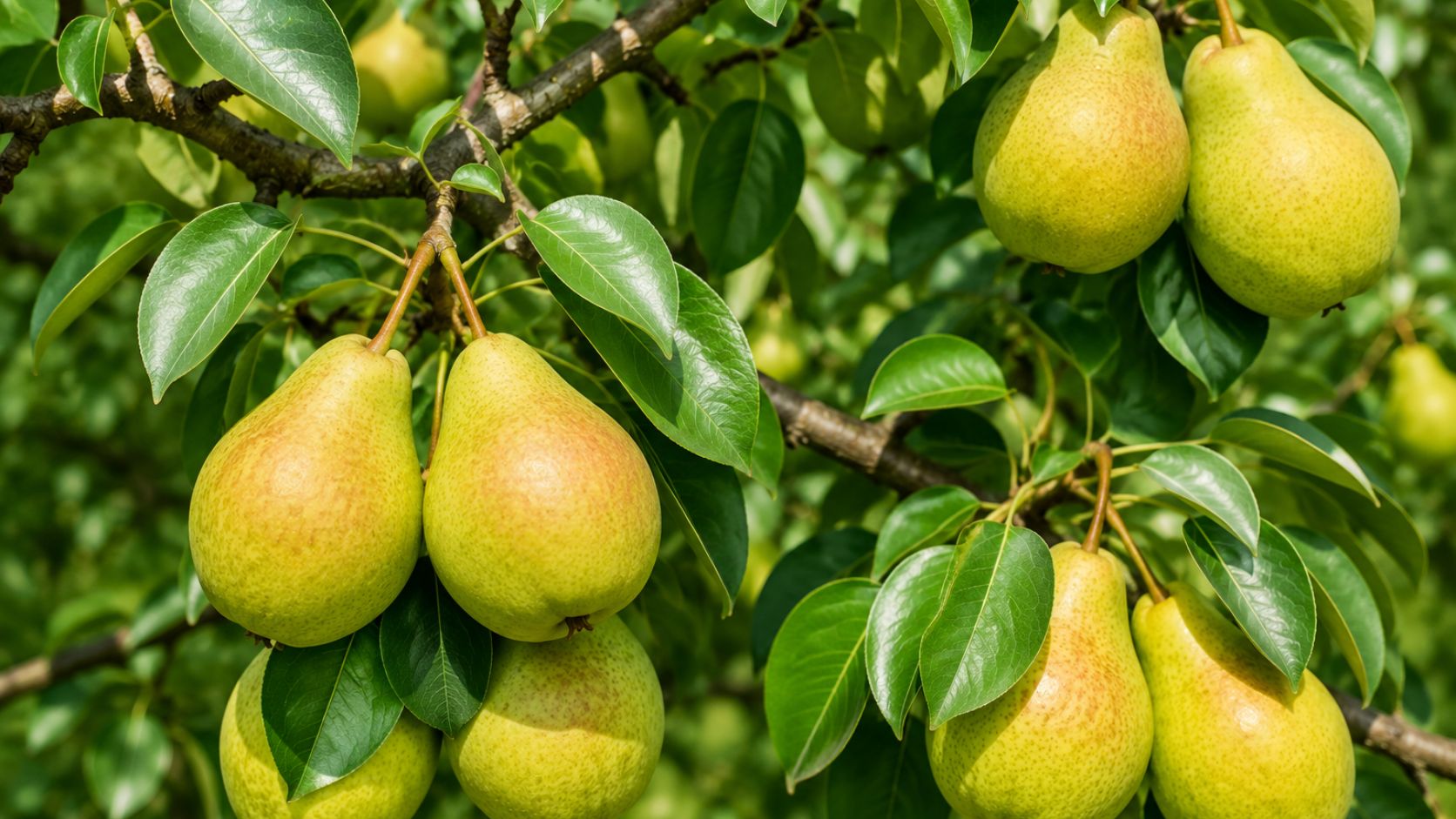
Pear trees, particularly Asian and fire-blight-resistant hybrids, are a solid choice for San Antonio and Central Texas yards, tolerating heat and alkaline soil better than most European dessert pears.
Why do they shine in Texas?
- Disease resistance: Hybrids like ‘Kieffer’ and ‘Orient’ resist fire blight far better than apple trees grown in similar humid, warm conditions.
- Soil tolerance: Performs in both East Texas loam and South-Central Texas alkaline clay.
- Reliable cropping: Needs a second variety nearby for cross-pollination but rewards with consistent yields once established.
Expect fruit in 3–5 years, harvested August–September. Prune annually to maintain an open canopy and reduce fire blight risk; avoid high-nitrogen fertilizer, which encourages blight-prone new growth.
Fruit Trees by Texas Region
Texas is too large and climate-diverse for one-size-fits-all fruit tree advice. Here’s how growing conditions shift across the state, with a closer look at what thrives in our Hill Country and South-Central Texas service area.
Hill Country & South-Central Texas (San Antonio, New Braunfels, Boerne)
This region sits in USDA zones 8a–8b, with shallow, alkaline limestone soil and 350–600 chill hours depending on elevation. Peaches, figs, pomegranates, and persimmons handle our thin caliche soil far better than trees bred for deep, acidic soil. Raised beds or amended planting holes are often necessary here — straight caliche will stunt root development on trees like apple and pear. Summer heat and periodic drought mean drip irrigation isn’t optional; it’s essential for the first 2–3 years.
North Texas (Dallas–Fort Worth)
Zone 7b–8a with heavier clay soil and colder winter lows. Higher chill-hour varieties of apple, peach, and plum perform better here than in San Antonio. Not our primary service area, but worth noting if you’re comparing regions.
East Texas
Zone 8a–9a, higher rainfall, and more fungal disease pressure (fire blight, brown rot) due to humidity. Pears and blueberries do well; stone fruit needs more disease management.
South Texas / Rio Grande Valley
Zone 9a–10a, very low chill hours (under 300). Citrus and avocado are viable here in a way they aren’t in San Antonio, where winter freezes are a real risk to both.
West Texas / Panhandle
Zone 6b–7b, arid, high wind, and low humidity. Jujube and drought-tolerant stone fruit varieties outperform anything that needs consistent moisture.
Choose low-to-moderate chill-hour varieties, plan for alkaline soil correction, and prioritize drought tolerance over anything bred for a wetter climate.
Fruit Tree Care Basics
Here are some helpful fruit tree care tips:
- Site selection: Full sun and well-drained soil are non-negotiable. Where clay prevails, plant on a 12-inch-high mound or berm.
- Watering: New trees need 5 gallons twice a week through their first summer; mature trees use up to 40 gallons weekly during heat waves.
- Fertilizing: A spring and midsummer dose of nitrogen (about 1 cup ammonium sulfate per inch of trunk diameter for pomegranate; half that for peach and plum) supports vigorous, fruitful growth .
- Mulching: A 3- to 4-inch organic mulch ring keeps roots cool, saves water, and deters mower damage.
- Pruning: Remove dead or crossing limbs each winter. Train peaches and plums to an open center; keep apples to a central-leader form; figs and pomegranates do fine as multi-trunk shrubs.
Ready to Plant?
Fresh fruit outside your back door starts with the right tree in the right place. Tree Amigos Tree Service has helped Texas residents plant, prune, and protect their trees for more than a decade. Our certified arborists understand local soils, regional chill-hour maps, and the practical details that turn a sapling into a productive, long-lived asset.
Ready to plant fruit trees in Texas yard? Contact Tree Amigos Tree Service today for expert advice and professional planting services.
FAQs
What is the easiest fruit tree to grow in Texas?
Figs. They tolerate poor, alkaline soil, need little spraying or pruning, and bounce back fast from freeze damage since they fruit on new growth.
What are the best fruit trees to grow in San Antonio?
Peach, fig, pomegranate, persimmon, and jujube all handle our alkaline, caliche soil and mild winters well.
Can apple trees grow in Texas?
Yes, but they need higher chill hours and struggle with our mild winters and alkaline soil. Stick to low-chill varieties like ‘Anna,’ or choose peach or persimmon for easier results.
Are there dwarf fruit trees suited for Texas yards?
Yes. Dwarf peach, fig, pomegranate, and citrus (in warmer regions) reach just 8 to 10 feet, making them ideal for smaller San Antonio lots.
What are the fastest-growing fruit trees in Texas?
Fig and peach, often fruiting within 2 to 3 years. Pomegranate follows close behind.
What fruit trees grow well in Central Texas?
Peach, fig, pomegranate, persimmon, jujube, and pear all thrive in Central Texas’s heat and alkaline soil. Citrus and avocado aren’t reliable here since winter freezes are too risky.
What are the best fruit trees to plant in Texas overall?
Peach, fig, and pomegranate are the most reliable statewide, with persimmon and jujube close behind for low-maintenance options. The right pick depends on your local soil and chill hours.