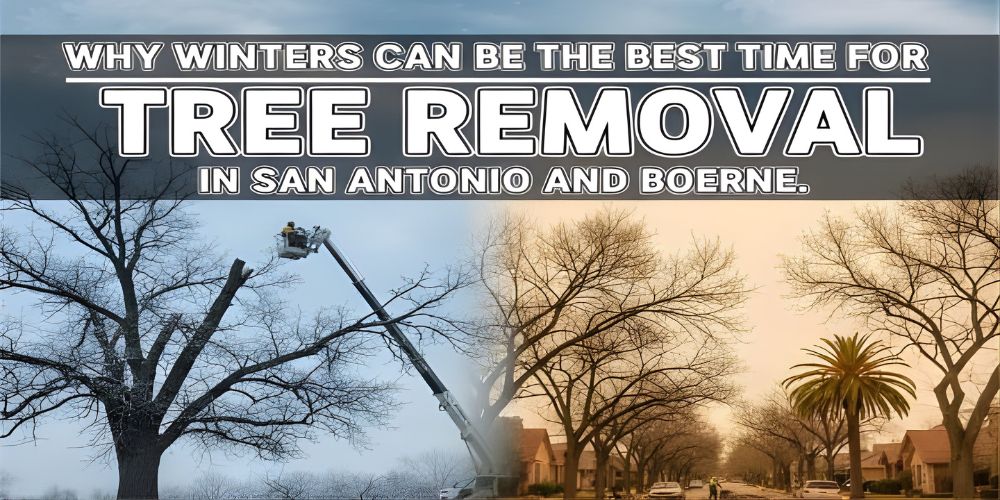
Winters can be the best time for tree removal, as this season brings a rare slowdown in trees’ growth. Below, we’ll look at the top reasons why this winter season is the best season for tree removal in San Antonio and Boerne.
Winter in San Antonio & Boerne – mild, yet important for trees
South-Central Texas does not freeze the way Amarillo or Dallas sometimes do. In San Antonio and nearby Boerne, average January lows hover near 40 °F. Cold snaps do arrive, but hard freezes are short. Rainfall falls off and humidity drops.
Oaks, pecans, and cedar elms slip into dormancy even without long snow cover. Sap flow slows, insects hide, and most local trees hold no leaves. These quiet weeks create the ideal window for winter tree removal and winter tree trimming.
Dormancy: why winter is the best time for tree removal
Trees heal by forming callus tissue over cuts. When a cut happens in summer, energy shifts from growth to repair. In winter the tree rests, so removing it – or pruning the neighbour next to it – does not steal strength meant for new shoots.
That is one reason Winter is the best time for tree removal. Sap stays low, so less mess bleeds onto nearby drives. Diseases like oak wilt spread by beetles; those beetles stay inactive in cold weather, lowering infection risk after cuts.
Better visibility means precise work
With leaves gone, crews see the full branch pattern. They spot:
- Dead or decaying limbs
- Cracks and splits along major forks
- Trunk cavities hidden by summer growth
This “tree transparency” allows exact rigging and clear drop zones. Fewer surprises cut time on site and cut costs. In tight neighbourhood lots from Alamo Heights to Boerne’s gated estates, exact cuts matter. Crews can lower wood away from roofs, fences, and pool decks. That protects your home and keeps insurance claims away.
Reduced risk to soil, turf, and beds
San Antonio lawns turn brown in January. St Augustine and Bermuda grass sit dormant, so heavy machinery leaves fewer ruts. Many perennials die back, leaving beds empty. Removing a tree now avoids crushing blooming plants that emerge in March.
Lower rainfall also firms up Hill Country soil, giving lift trucks solid footing. All this means tree removal in winter reduces the risk of property and landscape damage. You spend less on lawn repairs later.
Safer conditions for the removal crew
Summer afternoons here push 100 °F with brutal humidity. Chainsaw work at that heat risks heatstroke. In contrast, 50-degree air keeps workers alert and tools cooler. Fewer mosquitoes and wasps cut sting hazards. Dormant sap flows slower, keeping saw bars from gumming. Clear sight lines through bare branches reduce the chance of hidden hang-ups.
All told, tree removal in winter creates safer working conditions for the tree removal crew and finishes jobs faster.
The best season for land clearing and site prep
Planning to add a casita, pool, or new fence? Winter offers a head start:
- Permitting and surveys. City offices are less backed up after the holiday rush.
- Ground work. Bulldozers compact soil less when it holds less water.
- Burn bans. Cooler air often relaxes fire restrictions, easing brush disposal.
Removing unwanted cedar or mesquite now lets you seed new grass in early spring rains. If you hope to plant native redbuds or live oaks, a cleared plot by February gives roots time to settle before summer heat. Put simply, winter is the smart time for land clearing and property preparation in the San Antonio and Boerne area.
How to trim trees in winter
Follow these steps to efficiently trim down the trees this winter:
- Remove deadwood first.
- Thin crowded interior shoots.
- Keep collar cuts clean and avoid leaving stubs.
- Seal live-oak cuts with paint to block oak wilt spores.
- Stay off ladders near power lines – hire a pro.
Structural danger only winter shows
January exposes problems many owners miss in August:
- Leaning trunks – Weight of foliage hides tilt until leaves drop.
- Frost cracks – Rapid temperature swings split bark, starting decay.
- Root heave – Soil shifts in wet/dry cycles, lifting one side of the root plate.
Early removal prevents storm breakage. During the 2021 ice storm, hundreds of untreated trees failed across Bexar and Kendall Counties. Clearing weak specimens now avoids repeats.
Timing the work within the season
Late December–Mid January
Good for removals that need large equipment; holiday traffic is lower on neighbourhood streets.
Late January–Mid February
Prime for pruning of shade trees before sap begins to rise.
Late February–Early March
Finish removals so stumps can be ground and turf repairs started before spring rains.
Schedule early. Quality crews fill calendars once cedar pollen peaks and homeowners notice dead limbs.
Choosing a qualified winter tree service
Here’s how to choose a qualified winter tree service:
- Confirm ISA Certified Arborist credentials.
- Ask for proof of insurance listing your property.
- Require written plans detailing drop zones and clean-up.
- Get stump grinding and haul-away included.
- Check reviews from other San Antonio or Boerne clients.
Caring for remaining trees after removal
After a large tree comes out, nearby oaks or elms face new sun and wind. Mulch roots eight cm deep, water if three weeks pass without rain, and watch for sun-scald on thin-bark species. Proper follow-up keeps the canopy healthy.
Conclusion
Winter creates ideal conditions for resolving tree concerns before spring growth begins. With dormant trees, reduced disease risk, and safer working conditions, homeowners can address removals and pruning with confidence. Acting during these cooler months helps protect structures, preserve landscapes, and prevent unexpected failures during storms. In San Antonio and Boerne, many property owners rely on experienced local providers such as Tree Amigos Tree Service to handle winter tree removal and trimming with care, precision, and a deep understanding of Hill Country trees.