
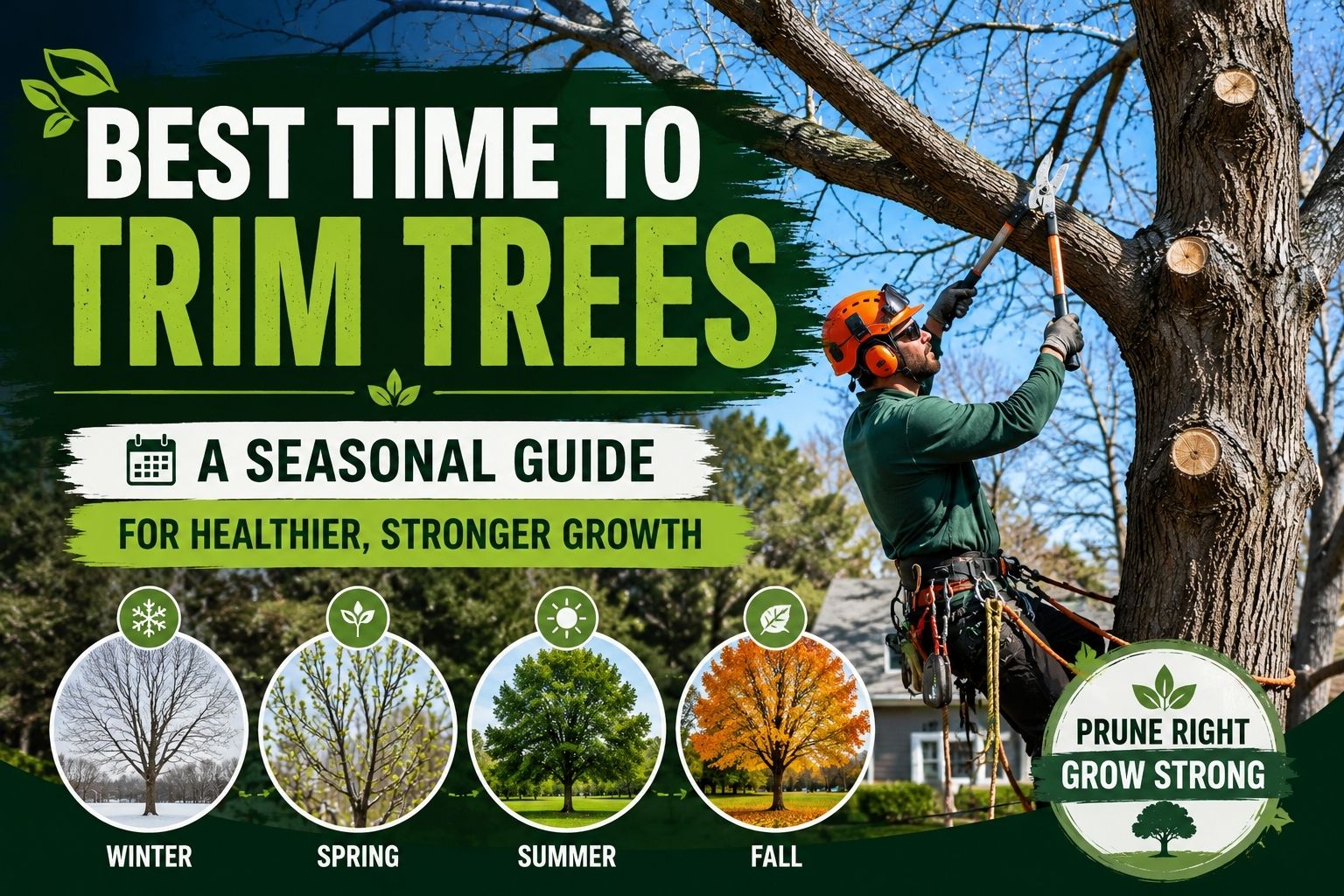
Many homeowners trim trees whenever they have free time, but timing can determine whether a tree heals quickly or becomes vulnerable to disease, pests, and decay. The best time to trim trees is late winter, between February and early March, when the tree is fully dormant, disease risk is lowest, and spring healing is just around the corner. But most homeowners trim whenever it is convenient, not when it is actually best for the tree. Trimming at the wrong time invites disease, attracts pests, and weakens a tree that would otherwise thrive for decades.
In this guide, you will learn exactly when to trim trees, when to prune by season and tree type, and how to trim back trees the right way.
Why Timing Your Tree Trimming Matters
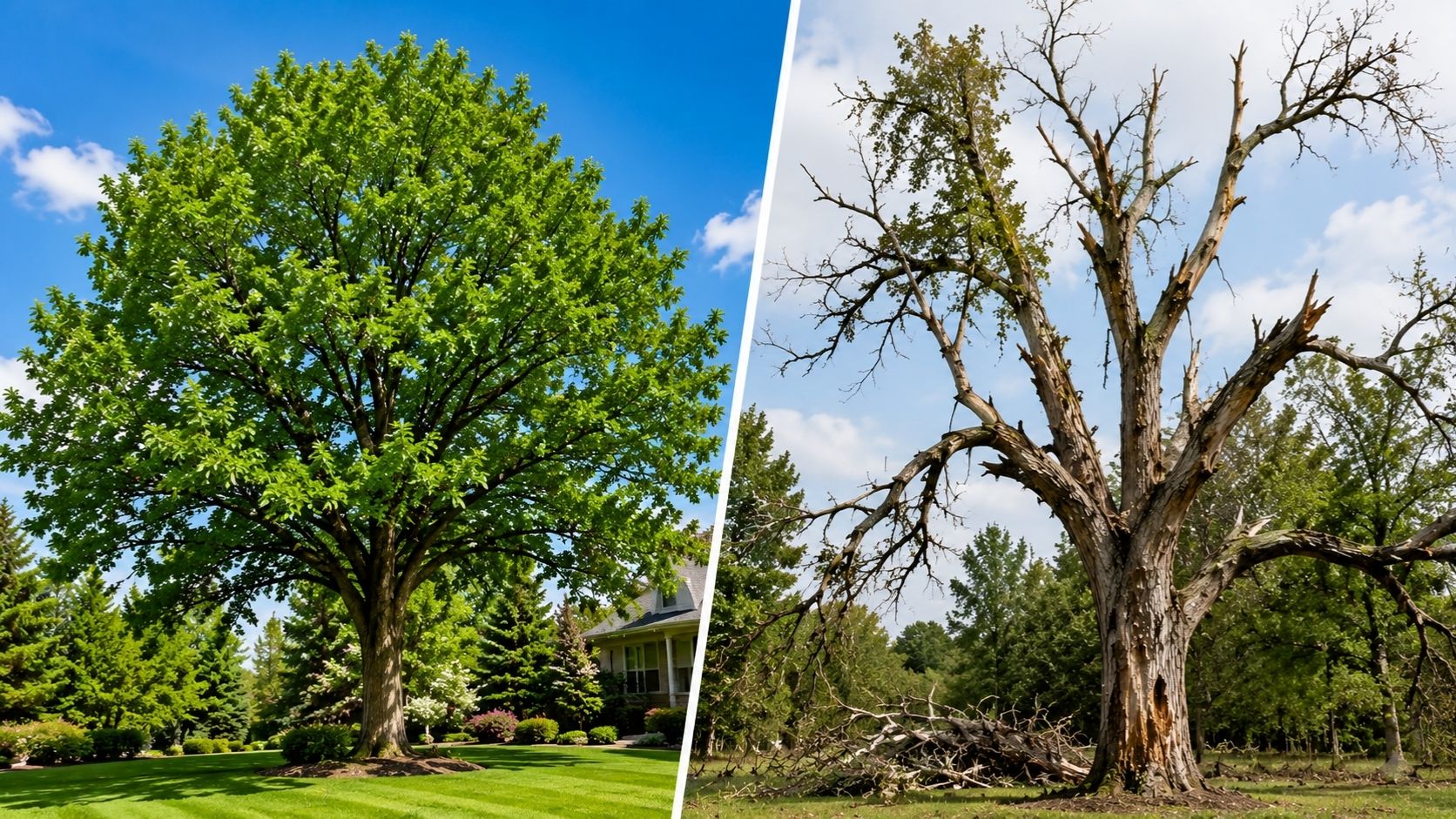
Regular tree pruning is essential for long-term tree health, but only when done at the right time. Every cut you make is a wound. A healthy tree trimmed in the right season seals that wound quickly. A stressed tree trimmed at the wrong time? That same cut becomes an open door for fungal infections, bark beetles, and decay.
Timing also affects how much energy the tree loses. During active growing seasons, a tree is pushing nutrients out to every leaf and branch. Cut a major limb during that window and you are interrupting a process the tree has invested months of energy into.
Get the timing right and your trees grow stronger and live longer. Get it wrong and you are paying for removal years earlier than you should.
What Happens When You Trim at the Wrong Time
Trimming in early fall stimulates new growth right before cold arrives. That soft new growth has no time to harden before frost and it dies. This weakens the tree heading into winter and causes dieback of entire branches.
Trimming oaks in spring and early summer, when sap beetles are active, can attract insects that carry oak wilt, a deadly fungal disease with no cure. Pruning at the wrong time can also attract insects, increase moisture loss, and slow the tree’s ability to seal wounds. Fresh cuts made during periods of drought, extreme heat, or active growth place additional stress on the tree when it is already using significant energy reserves. In some cases, poorly timed pruning can lead to excessive sap loss, increased susceptibility to disease, and slower overall recovery. The result is often weaker growth, a higher risk of branch dieback, and a tree that becomes more vulnerable to future problems.
Trimming vs. Pruning: Is There a Difference?
While many homeowners use the terms interchangeably, tree trimming and tree pruning serve different purposes. Pruning focuses on improving tree health by removing dead, diseased, or structurally weak branches, while trimming is typically performed to maintain appearance, manage growth, and improve clearance. Both should be done at the proper time of year to minimize stress and encourage healthy growth. For a more detailed comparison, read our guide on Tree Trimming vs. Pruning.
When to Trim Trees: A Season by Season Guide
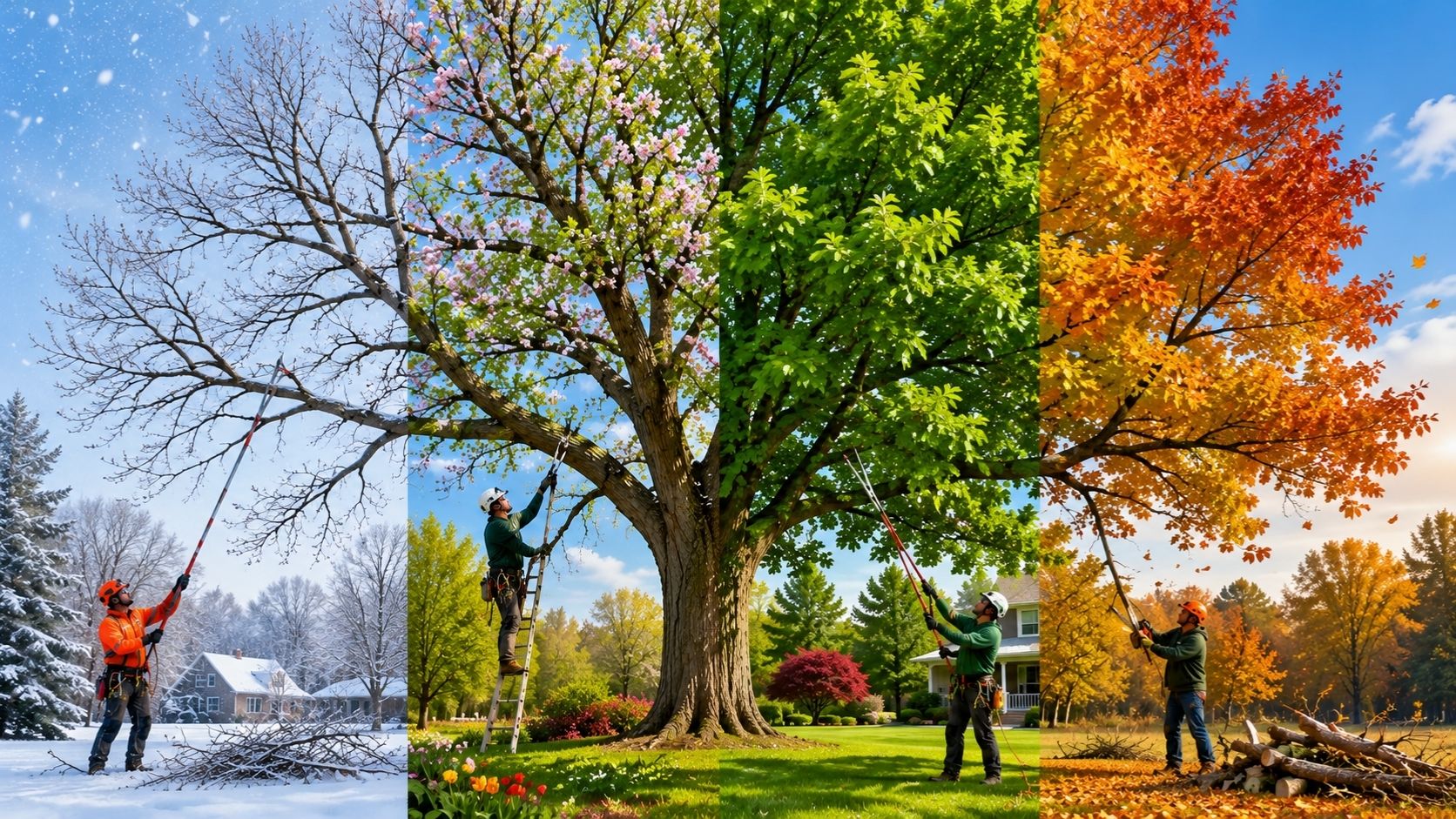
Best Time to Trim Trees in Winter (Late Dormancy)
Late winter, roughly February through early March, is the best time to trim most trees. Here is why:
The tree is fully dormant. There are no leaves, so you can clearly see the branch structure and make smarter cuts. Insects and fungal spores are largely inactive, which dramatically lowers the risk of disease. And because spring growth is just weeks away, wounds close faster than at any other time of year.
Best for: Oak, maple, ash, birch, elm, most shade trees, and fruit trees.
When to Prune Trees in Spring (Just Before New Growth)
Early spring, just as buds are swelling but before they fully open, is your second best window. This is especially useful if you missed the late winter window or live in a region with unpredictable winters.
Once leaves are fully out and the tree is in active growth, stop pruning. Cutting during full spring flush stresses the tree and wastes the energy it just spent pushing out new leaves.
One important exception: spring-flowering trees like dogwood, cherry, lilac, and magnolia bloom on old wood set the previous fall. Prune them in winter, and you cut off this year’s blooms. Always prune spring-flowering trees immediately after they finish blooming.
Trimming Trees in Summer: Proceed With Caution
In Texas, summer pruning can be especially stressful because trees are already coping with prolonged heat and drought conditions, but there are specific situations where it makes sense:
- Corrective trimming when a branch is growing into power lines or rubbing against your house
- Deadwood removal, which can be done any time without stressing the tree
- Slowing growth on a branch that is getting too large too fast
Avoid heavy pruning in summer. The tree is working hard to feed all that foliage and removing large sections of the canopy puts it under serious stress.
According to the USDA Forest Service, oak wilt spreads through sap beetles that are attracted to fresh pruning wounds, which is why trimming oaks in summer is strongly discouraged. If you must trim an oak in summer, seal the wound immediately with pruning sealant. You can also read more about oak tree care and trimming timing in our detailed oak guide.
Should You Trim Back Trees in Fall?
Fall is the one season most arborists agree you should avoid trimming. As temperatures drop, trees pull nutrients from their leaves back into their core for winter storage. Trimming interrupts this process. Fresh cuts also do not close quickly in fall because the tree’s wound sealing response slows with the temperature, leaving cuts exposed all winter.
Fungal spores are also at peak activity in fall and slow sealing wounds are exactly what they look for.
If a branch is cracked, hanging, or likely to fall, remove it regardless of the season. Safety always comes first. But for routine trimming, wait until late winter.
Best Time to Prune Trees by Tree Type
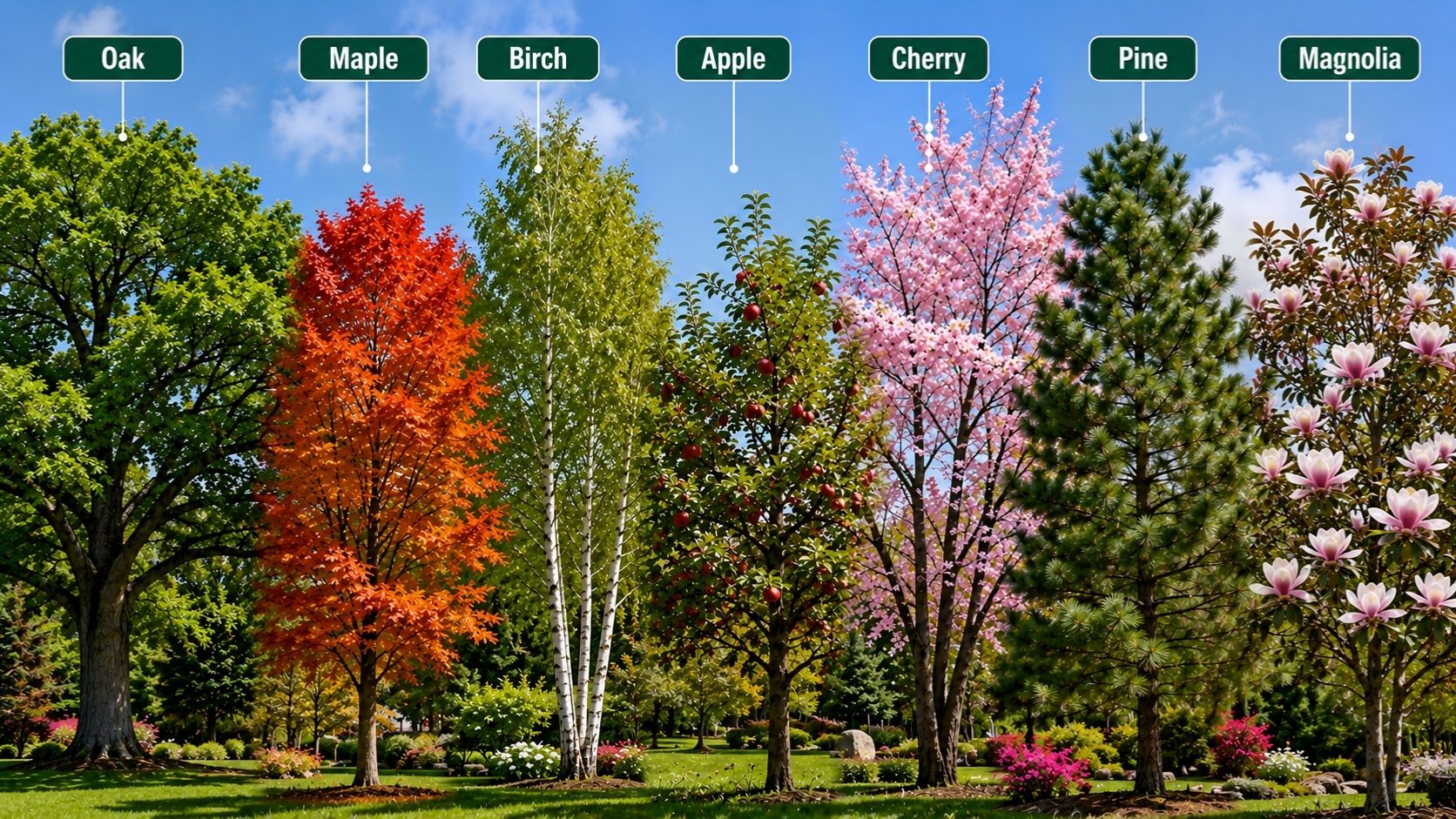
| Tree Type | Best Time to Prune | Notes |
| Deciduous trees (maple, oak, birch) | Late winter (Feb to early March) | No leaves = clear view of structure |
| Evergreen trees (pine, spruce, fir) | Late winter to early spring | Before new growth (candles) emerge |
| Fruit trees (apple, pear, peach) | Late February to early March | Improves fruit size and quality |
| Spring flowering trees (dogwood, cherry, lilac) | Right after flowering ends | Pruning before = no blooms this year |
| Summer or fall flowering trees (crape myrtle) | Late winter | They bloom on new wood |
| Oak trees | Late winter only | Never trim in summer, oak wilt risk |
For this reason, oak pruning is typically recommended during the dormant season when the risk of disease transmission is lower. Texas trees also endure long periods of extreme heat and drought, making heavy pruning during summer more stressful than it may be in cooler regions. Removing too much canopy during hot weather can increase moisture loss and place additional strain on an already stressed tree.
For homeowners in San Antonio, Boerne, and surrounding areas, scheduling routine tree trimming during late winter is usually the safest approach. Proper timing helps reduce disease risks, encourages stronger spring growth, and supports the long-term health of your trees.
Special Situations: When to Trim Back Trees Outside the Normal Schedule
Storm-Damaged Branches
A storm does not care about your trimming schedule. If a branch is split, hanging, or has torn bark, remove it as soon as it is safe. Leaving a hanging branch risks people, property, and the tree itself. Read our full guide on handling storm damaged trees for step-by-step advice. Make a clean cut back to the nearest healthy branch union or the trunk, and do not leave stubs.
Dead, Diseased, or Crossing Branches
Dead and diseased branches can and should be removed any time you spot them. Knowing the hidden tree disease signs early can save the entire tree. Diseased wood especially needs to come off immediately to stop the problem from spreading. After removing diseased branches, disinfect your tools with a 10% bleach solution or rubbing alcohol before making any other cuts.
When a Tree Is Already Stressed
If your tree is showing yellowing leaves mid-season, a thin canopy, or signs of decline, this is not the time to add the stress of pruning. Learn to spot signs your tree is dying before picking up your pruning saw. Let it recover first, then come back to structural pruning once the tree shows signs of improvement.
Young Trees vs. Mature Trees
Young trees benefit enormously from early structural pruning in their first three to five years. Shaping a young tree while it is small is far easier and less stressful than correcting structural problems on a mature tree. Prune lightly each late winter to establish one clear central leader, remove crossing branches, and open up the canopy.
Mature trees need less frequent pruning. Focus on removing dead wood, managing size, and correcting structural issues as they develop.
How to Trim Back Trees the Right Way
Tools You Need
| Tool | Best Used For |
| Hand pruners (bypass style) | Stems up to 3/4 inch diameter |
| Loppers | Branches up to 2 inches diameter |
| Pruning saw | Branches 2 inches and above |
| Pole saw or pole pruner | High branches out of reach from the ground |
| Chainsaw | Large limbs (use with proper training or hire a pro) |
Always use sharp, clean tools. Dull blades crush tissue instead of cutting cleanly, making the wound harder for the tree to seal.
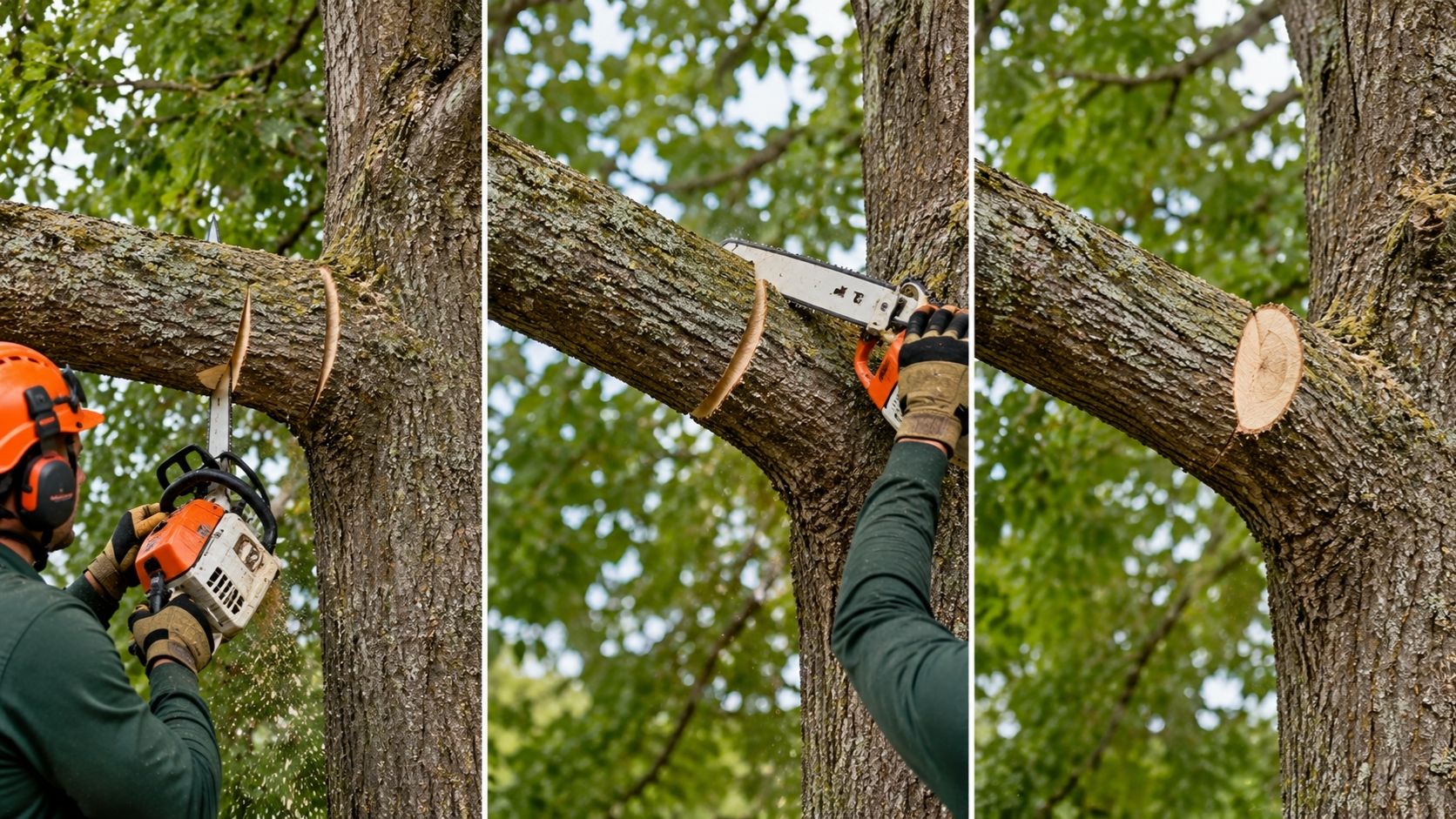
The 3 Cut Method for Large Branches
Never remove a large branch in one downward cut. The weight of the falling branch will tear a long strip of bark down the trunk before you finish cutting. That kind of damage can take years to heal.
Use the 3 cut method instead:
Cut 1 (Undercut): About 12 to 18 inches from the trunk, cut upward from the bottom one third of the way through. This stops bark from tearing downward.
Cut 2 (Top cut): A few inches further out from the undercut, cut downward from the top until the branch falls cleanly.
Cut 3 (Final cut): Remove the remaining stub by cutting just outside the branch collar. This is your clean, final cut.
Where to Cut: The Branch Collar
The branch collar is the slightly swollen ring of tissue where a branch meets the trunk. It contains the specialized cells the tree uses to seal over wounds. Research from Michigan State University Extension confirms that trees seal wounds through a process called compartmentalization, and cutting just outside the branch collar is critical to triggering this response correctly.
Always cut just outside the branch collar. Never cut through it and never leave a stub beyond it. Cutting through the collar destroys the tree’s ability to seal the wound. Leaving a stub means the collar can never fully close, and the stub eventually rots into the trunk.
Common Trimming Mistakes to Avoid
Topping: Cutting the main trunk or large branches back to stubs. Topped trees regrow with weak, poorly attached branches that fail easily in storms.
Flush cuts: Cutting flush with the trunk removes the branch collar and leads to decay entering the trunk.
Over pruning: Never remove more than 25% of a tree’s canopy in a single year. The canopy is where the tree makes its food.
Quick Reference: Best Time to Trim Trees by Month
| Month | Trim? | Notes |
| January | Yes | Full dormancy, low disease risk |
| February | Yes (best window) | Ideal for most deciduous and fruit trees |
| March | Early yes, late use caution | Stop before buds fully open |
| April | Spring bloomers only after flowering | Avoid trees in full leaf flush |
| May | Deadwood and hazards only | Tree is in active growth |
| June | Light corrective only | Never trim oaks, oak wilt risk |
| July | Light corrective only | Minimize cuts to reduce stress |
| August | Avoid | Heat stress and peak fungal activity |
| September | Avoid | Stimulates growth before frost |
| October | Avoid | Wounds seal slowly, fungal spores peak |
| November | Avoid if possible | Wait for full dormancy |
| December | Acceptable late month | Full dormancy returning |
When to Call a Professional
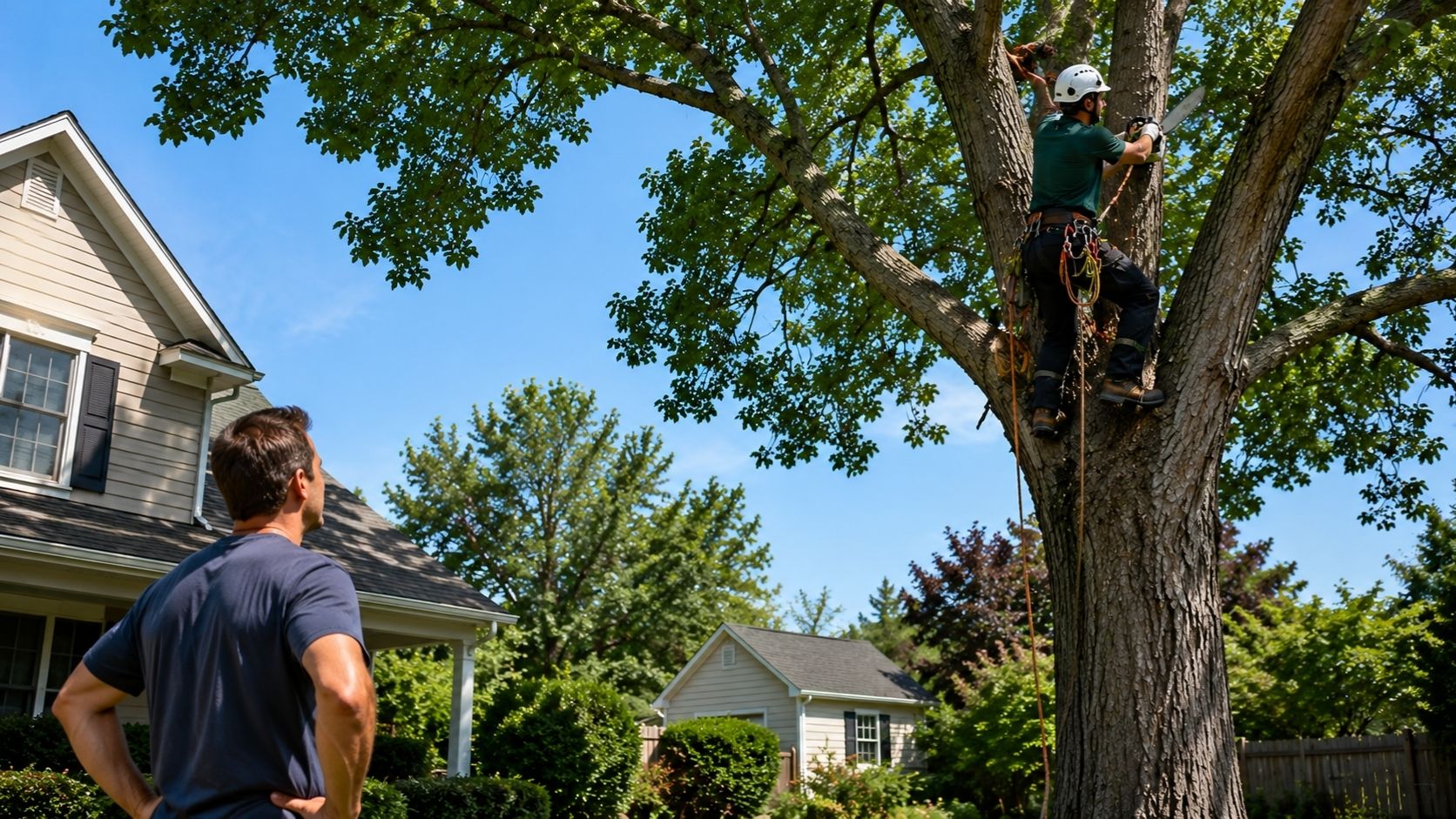
Watch for dangerous tree signs that signal a job is beyond DIY. Some situations should always go to a certified arborist:
- Any branch near power lines or over your roof
- Large limbs over 4 inches in diameter requiring a chainsaw at height
- Trees showing signs of disease, structural decay, instability, or potential oak wilt infection
- Any work requiring climbing or a ladder above 8 feet
- Storm damage where a branch is partially attached and under tension
Advice From Tree Amigos Arborists
At Tree Amigos Tree Service, Owner and ISA-Certified Arborist Justin Joseph has spent more than 20 years helping homeowners throughout San Antonio and Boerne care for native Texas trees, diagnose tree health issues, and reduce risks associated with improper pruning. throughout San Antonio and Boerne, maintain healthier, safer trees. One of the most common mistakes he sees is pruning at the wrong time of year, particularly with oak trees that are susceptible to oak wilt.
Proper timing is just as important as making the correct cut. Pruning during the dormant season helps minimize stress, reduces exposure to pests and diseases, and gives trees the best opportunity to recover quickly. When in doubt, consulting an experienced arborist can help prevent costly mistakes and ensure your trees receive the care they need to thrive for years to come.
Frequently Asked Questions
What is the best time of year to trim trees?
Late winter, between February and early March. The tree is dormant, disease risk is low, and wounds heal fast before spring growth begins.
Is it better to prune trees in fall or spring?
Spring is better. Fall pruning stimulates growth that cannot survive frost and fungal activity is at its peak.
Can you trim back trees in summer?
Only for deadwood removal or corrective safety cuts. Avoid heavy pruning and never trim oaks in summer.
How often should trees be trimmed?
Mature trees every 3 to 5 years. Young trees benefit from light annual shaping in their first 5 years.
What is the difference between trimming and pruning?
Pruning targets health by removing dead or diseased wood. Trimming targets shape and size. Both follow the same timing rules.
Can I trim a tree myself?
Yes, for small branches, you can reach safely from the ground. Hire a professional for anything involving a ladder, chainsaw, or work near your home or power lines.
What month is best for trimming oak trees in Texas?
Late winter, typically between January and early March, is considered the best time to trim oak trees in Texas. During this period, trees are dormant and the risk of oak wilt transmission is significantly lower than during spring and summer when sap-feeding beetles are most active.
Can trimming a tree kill it?
Improper trimming can severely weaken a tree and, in some cases, contribute to its decline or death. Removing too much of the canopy, making incorrect cuts, or pruning during periods of stress can reduce the tree’s ability to produce energy and defend itself against pests and disease. Following proper pruning practices helps protect long-term tree health.
Final Thoughts
The best time to trim trees is not whenever you get around to it. Late winter is your ideal window for almost every species. Whether you handle it yourself or call in the experts at Tree Amigos Tree Service, respecting the seasonal rules, making clean cuts outside the branch collar, and never removing more than 25% of the canopy at once will always give your trees the best chance to thrive.
Proper timing is one of the simplest ways to improve tree health, reduce disease risk, and avoid costly corrective work later. Whether you’re maintaining a young shade tree or protecting mature oaks, pruning at the right time helps ensure decades of healthy growth. Healthy trees are the result of consistent, well-timed care over many years. Start trimming at the right time, and your trees will reward you with stronger growth, fewer problems, and a longer life. Start trimming at the right time, and your trees will reward you with stronger growth, fewer problems, and a longer life.