
For about two weeks every spring, a flowering cherry tree does something no other tree can. It stops people mid-walk. It makes drivers slow down. It turns an ordinary backyard into something people actually photograph. Then the petals fall, the leaves come in, and the show is over until next year.
That fleeting quality is exactly the point. In Japan, the cherry blossom, or Sakura, has been a symbol of hope and renewal for centuries precisely because it does not last long. And yet every single spring, without fail, it comes back.
Whether you are planting your first one or trying to figure out why an existing tree is not performing, this guide covers everything you need to know: the best varieties, how and when to plant, how to prune correctly, and the mistakes that most people don’t catch until it’s too late.
What Is a Flowering Cherry Tree?
The term flowering cherry tree covers a group of ornamental trees from the genus Prunus, most originating in Japan, China, Korea, and Taiwan. Unlike fruiting cherries grown for harvest, these are bred entirely for their spring blossoms, elegant branch structure, attractive bark, and vivid fall color.
They arrived in the United States in 1912 when Japan gifted 3,000 trees to Washington D.C. as a symbol of friendship. According to the National Park Service, two of those original trees still stand today and the collection has since grown into one of the most visited floral displays in the world.
Japanese Flowering Cherry Tree
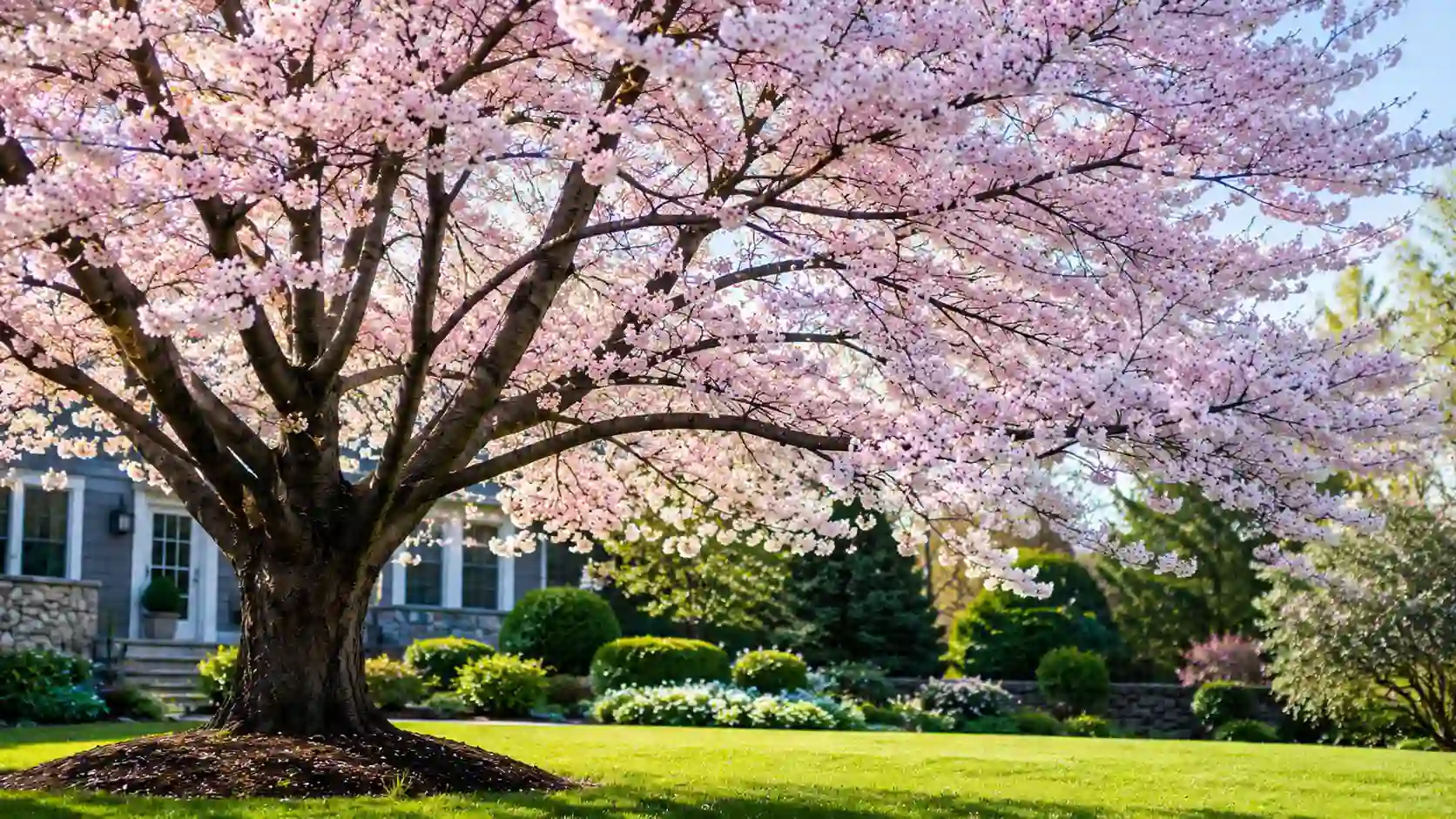
When most people picture a flowering cherry, they are picturing a Japanese flowering cherry tree (Prunus serrulata or Prunus x yedoensis). These are the most widely planted ornamental cherries in the world.
Japanese cherry trees offer:
- Spring blooms in shades from pure white to deep pink, single or double-petaled
- Elegant branching that looks beautiful even without leaves in winter
- Vivid fall foliage in golds, oranges, and deep reds
- Attractive bark on many varieties, providing year-round interest
The key thing to understand about Japanese flowering cherries is that they are old-wood bloomers. The flower buds you enjoy each spring were actually formed on last summer’s growth. This one fact changes everything about how and when you prune them.
Most Popular Flowering Cherry Tree Varieties
Yoshino Flowering Cherry Tree
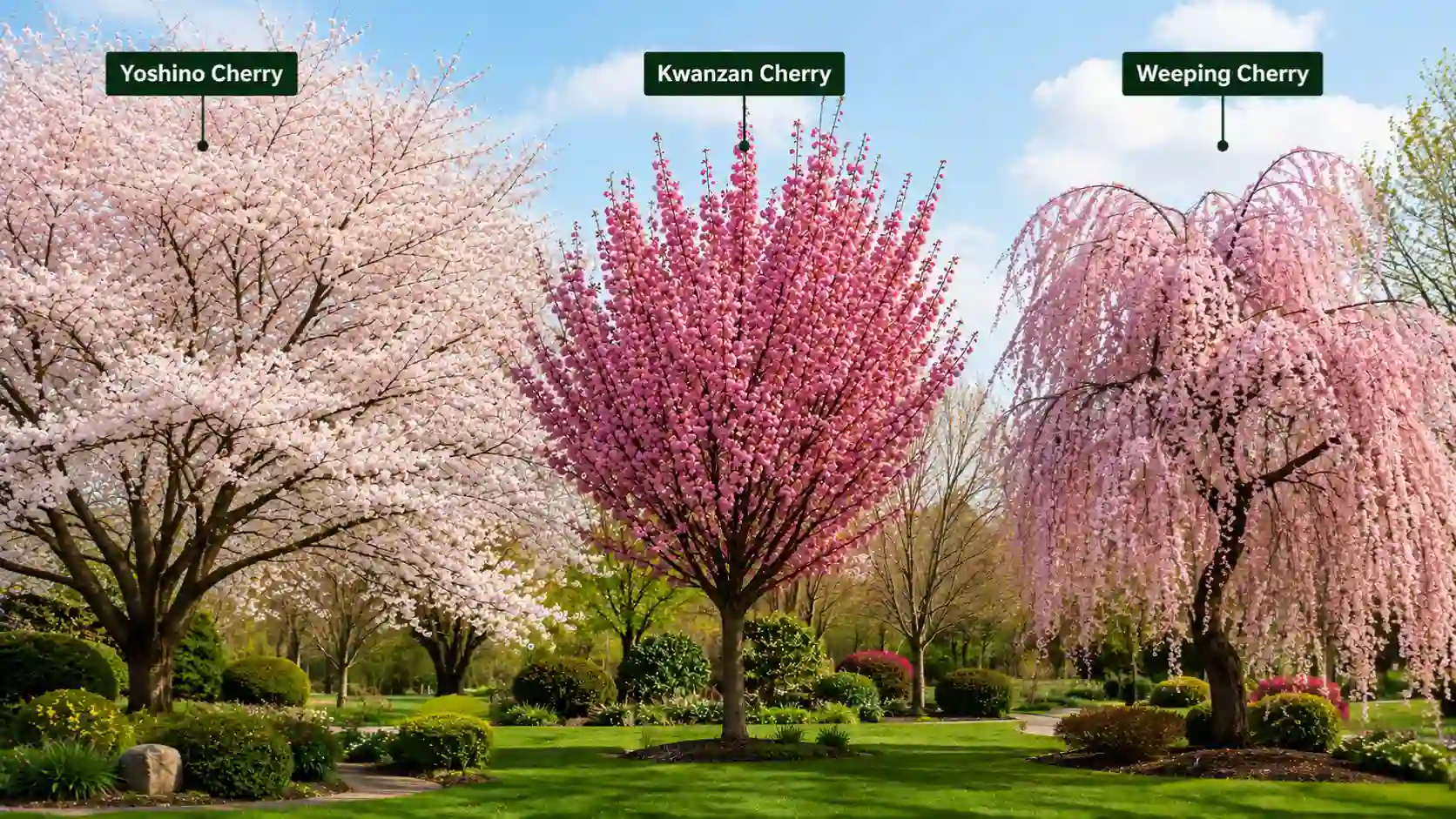
The Yoshino cherry (Prunus x yedoensis) is the most planted ornamental cherry in the world. Its pale pink blossoms fade to near-white as they mature, creating the effect of flowers floating against bare branches in early spring. These are the iconic trees lining Washington D.C.’s Tidal Basin.
- Height: 25 to 40 feet, broad spreading crown
- Bloom time: Late March to early April
- Flower: Single, pale pink fading to white, lightly fragrant
- Fall color: Orange to bronze
- USDA Zones: 5 to 8
Akebono is a Yoshino cultivar that blooms at the same time but holds its pink color longer, offering a warmer, deeper blush that many gardeners prefer.
Kwanzan Flowering Cherry Tree
The Kwanzan cherry is the most dramatic of all. Each bloom is packed with up to 30 petals, producing a cloud of deep rose-pink that is impossible to ignore. It blooms 2 to 3 weeks after Yoshino, which also means it misses most late frosts.
- Height: 15 to 25 feet, upright vase shape
- Bloom time: Mid to late spring
- Flower: Double, deep pink
- New foliage: Coppery-bronze in spring, brilliant orange-red in fall
- USDA Zones: 5 to 9
Royal Burgundy is Kwanzan with deep purple foliage throughout the season. Same showstopping double-pink blooms, but with four-season color interest.
Weeping Flowering Cherry Tree
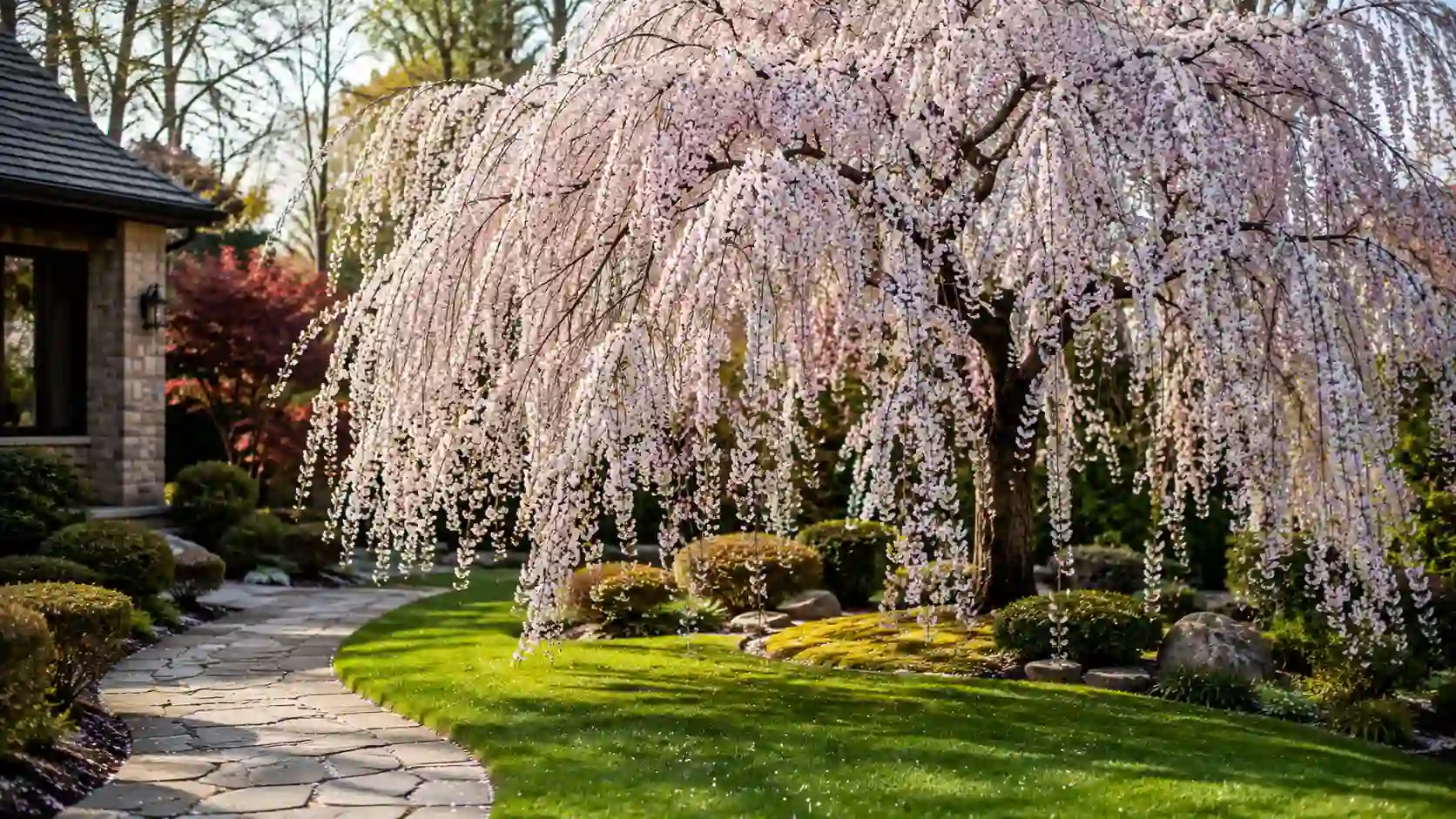
The weeping flowering cherry creates one of the most dramatic focal points available in home landscaping. Long arching branches cascade toward the ground and cover themselves completely in blossoms each spring. If you are planning a front yard landscape design, a weeping cherry positioned as a central specimen tree is one of the most impactful choices you can make.
Top weeping varieties:
Snow Fountains: Compact at 8 to 15 feet, covered in single white blooms. Best for smaller yards.
Weeping Higan Cherry (Prunus subhirtella ‘Pendula’): One of the longest-lived weeping forms. According to Garden Design, the Brooklyn Botanic Garden’s two Weeping Higan cherries planted in 1921 are among the oldest flowering cherry specimens in North America.
Weeping cherries are grafted onto upright rootstock. Always remove any shoots that emerge from below the graft union as these come from the rootstock and will not bloom the same way.
Flowering Cherry Tree Varieties at a Glance
| Variety | Bloom Time | Flower | Height | Best For |
| Yoshino | Early spring | Pale pink to white | 25 to 40 ft | Large yards, statement trees |
| Akebono | Early spring | Pink, longer-lasting | 25 to 35 ft | Color impact |
| Kwanzan | Mid-late spring | Double deep pink | 15 to 25 ft | Smaller yards, bold color |
| Royal Burgundy | Mid-late spring | Double pink | 15 to 20 ft | Four-season interest |
| Okame | Very early spring | Bright pink | 20 to 30 ft | Cold regions |
| Snow Fountains | Early spring | Single white | 8 to 15 ft | Weeping, small spaces |
| Mt. Fuji | Late spring | Double white | 15 to 20 ft | Fragrance, spreading crown |
Compact varieties like Kwanzan and Snow Fountains are among the best trees for small yards where space is limited but visual impact still matters.
How to Plant a Flowering Cherry Tree
Getting planting right is the most important thing you do for a flowering cherry’s long-term health. These trees are not forgiving of poor drainage or incorrect planting depth.
Choose the Right Spot
Full sun, at least 6 hours of direct sunlight daily, is non-negotiable. More sun means more blooms, stronger growth, and better disease resistance. Avoid low-lying areas where water pools after rain. Before planting, it also helps to understand planting zones for your Texas landscape to confirm your chosen variety is matched to your local climate.
Dig the Hole Correctly
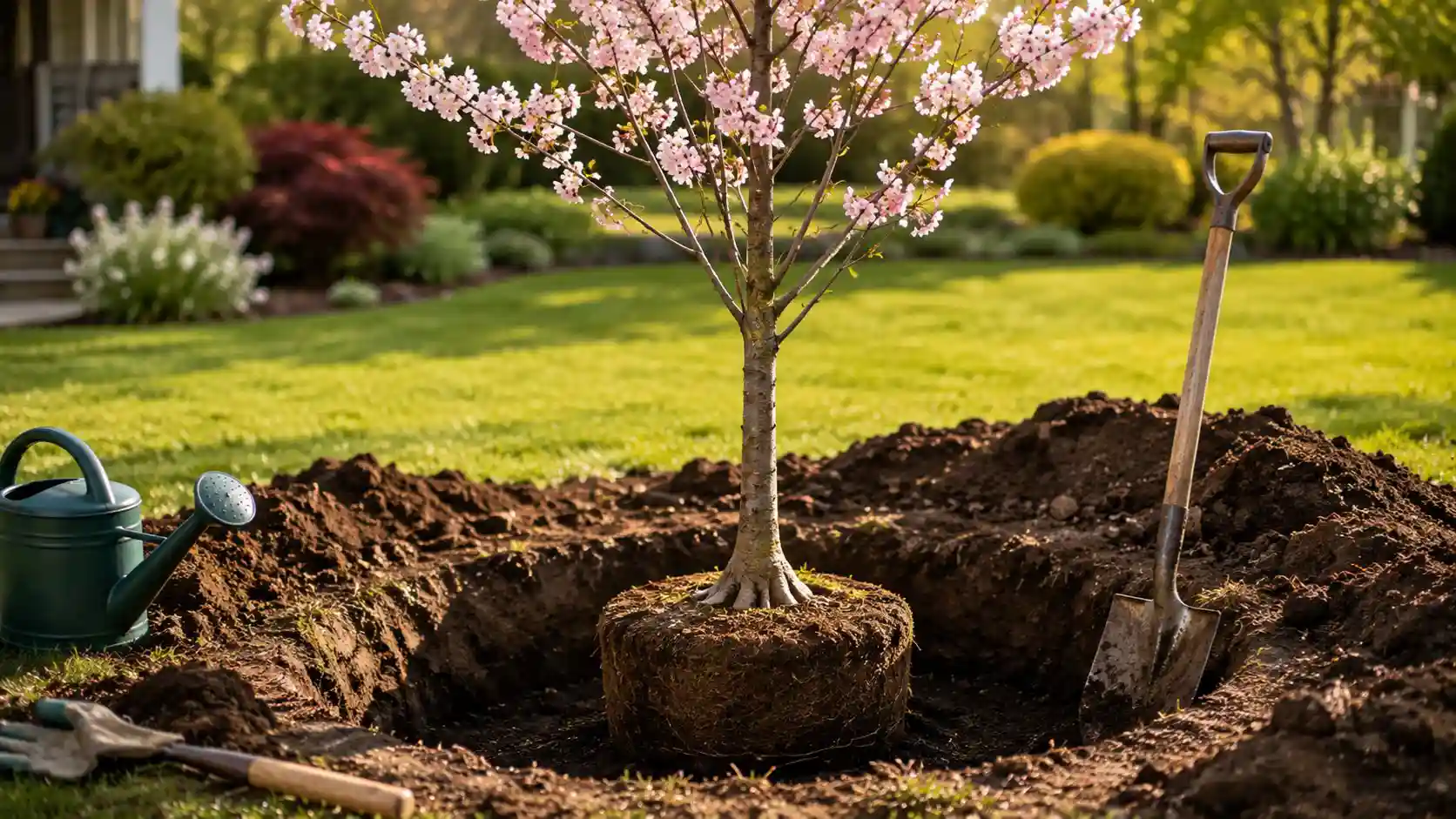
Dig twice as wide as the root ball but no deeper. The top of the root ball should sit slightly above the surrounding soil line. Never bury the root flare.
Improve Drainage if Needed
Flowering cherries are highly sensitive to waterlogged roots. Heavy clay soil should be amended with compost or coarse grit at planting.
Backfill and Water Deeply
Use the original soil, firm gently to remove air pockets, and water thoroughly. Deep watering at planting encourages roots to grow downward rather than staying near the surface.
Mulch Around the Base
Apply 2 to 3 inches of organic mulch such as wood chips or bark in a wide ring, kept away from direct contact with the trunk. This retains moisture, regulates soil temperature, and reduces grass competition. Understanding why trees shed bark around the base helps you distinguish normal development from a mulching or planting depth problem.
When to Plant a Flowering Cherry Tree
Early fall is the best time overall. Cooler temperatures reduce transplant stress while soil is still warm enough to encourage root growth before winter.
Spring after last frost works well for container-grown trees. Avoid planting during or immediately after bloom as the tree is already under significant energy demand and does not need additional transplant stress.
Summer is not recommended. Heat and dry conditions make establishment difficult and dramatically increase watering needs.
When to Prune a Flowering Cherry Tree
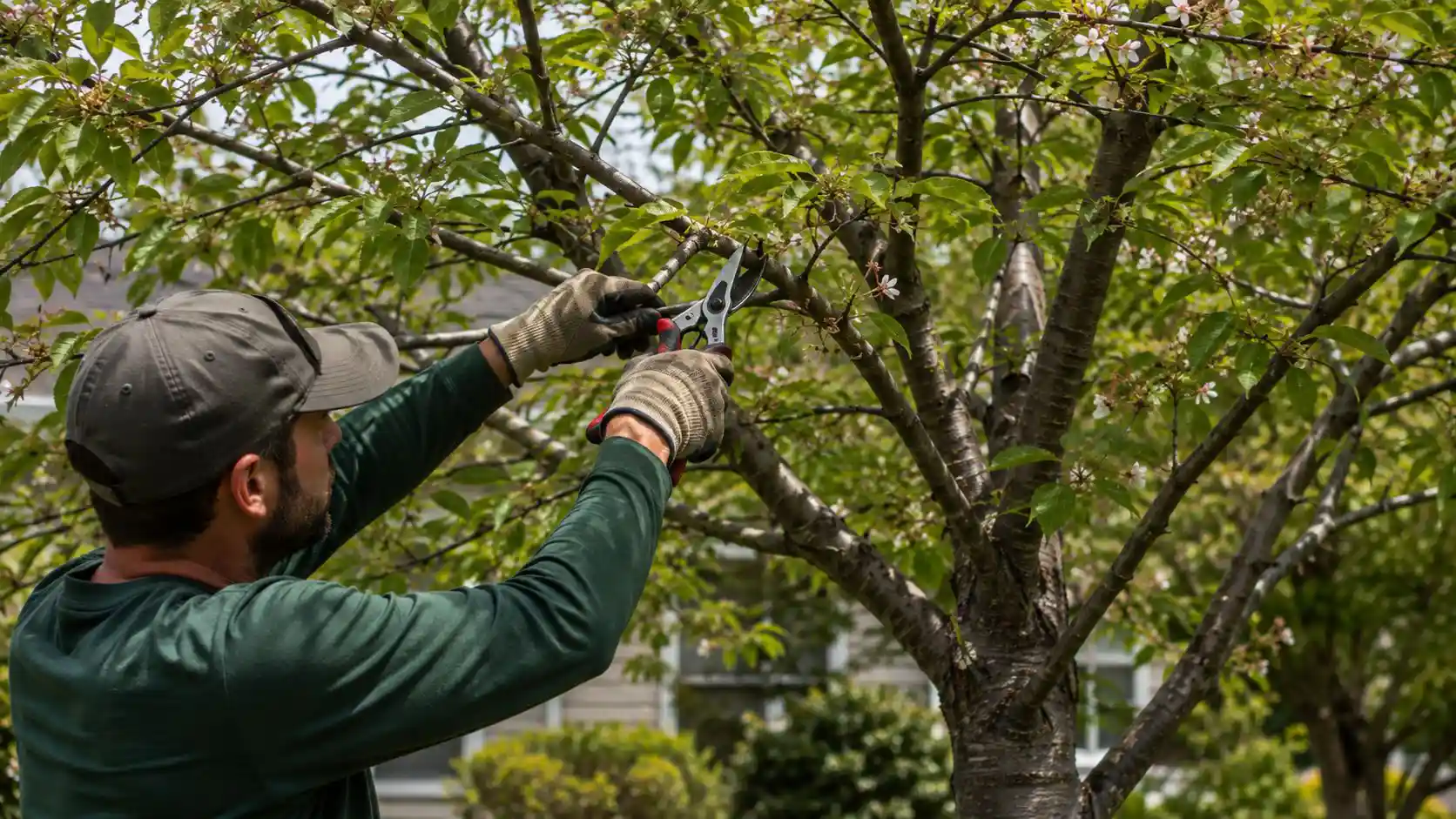
This is where most people make their biggest mistake.
Because flowering cherries bloom on old wood, buds set in summer, pruning in fall or winter removes those buds before they ever open. An entire season of blooms is lost with a few careless cuts.
The rule is simple: prune immediately after flowering ends, while the tree is in full leaf. This gives the tree the whole summer to produce new growth and set next year’s flower buds. Knowing the best time to trim trees in general is useful, but for flowering cherries the post-bloom window is the one time that truly matters above all else.
What to prune:
- Dead, damaged, or crossing branches
- Shoots growing from below the graft union on grafted or weeping forms
- Water sprouts growing straight upward from main branches
- Branches that disrupt the tree’s natural form
What to avoid:
- Heavy pruning into large-diameter wood as cherry trees do not heal large wounds well and are vulnerable to silver leaf disease and bacterial canker entering through cuts
- Pruning in wet weather, which spreads fungal spores
Flowering Cherry Tree Care
Watering
Newly planted trees need deep watering once or twice per week for the first two growing seasons. Once established, most are moderately drought-tolerant. Avoid overhead watering as wet foliage encourages fungal disease.
Fertilizing
A light balanced slow-release fertilizer applied at the right time and using the right method in early spring before bud break supports healthy growth. Avoid high-nitrogen formulas, which push leafy growth at the expense of flowers.
Soil
Slightly acidic to neutral pH (6.0 to 7.0), moist and well-drained. Standing water around the roots is one of the fastest ways to kill a flowering cherry.
Common Flowering Cherry Tree Problems
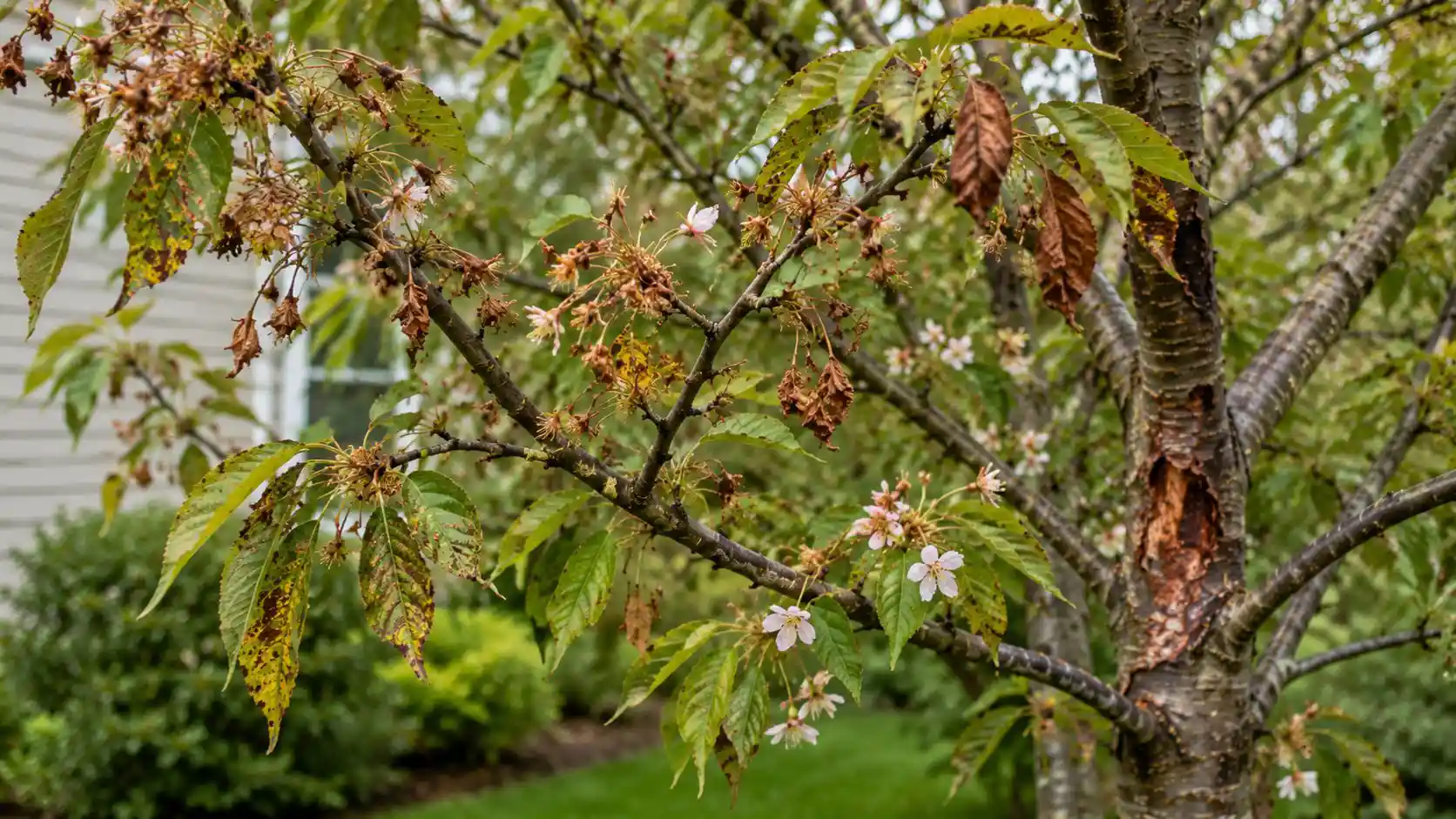
Blossom Blight
The tree blooms, flowers shrivel and turn brown within days. This is a fungal pathogen (Monilinia sp.) that thrives in cool, wet spring conditions. A preventative fungicide spray at bud break controls it effectively. Left untreated, it kills new growth and requires significant pruning to clear dead wood.
Silver Leaf Disease
Leaves develop a silvery sheen before the branch dies. It enters through pruning wounds. Prevent it by pruning only in dry conditions using clean tools, and always pruning immediately after bloom rather than in autumn.
Bacterial Canker
Sunken dead patches on bark that ooze amber resin. More common on young trees and those pruned incorrectly. Remove affected branches cleanly and dispose of them away from the garden.
Root Rot
Almost always caused by poor drainage rather than overwatering directly. If a cherry wilts despite adequate rainfall, check that water is not pooling at the base. Improving drainage is the only real solution.
Frequently Asked Questions
How fast do flowering cherry trees grow?
Most varieties grow 1 to 2 feet per year. Yoshino is among the faster growers, Kwanzan grows slightly slower.
How long do flowering cherry trees live?
Most live 25 to 50 years. Some Higan varieties outlive this significantly. The Brooklyn Botanic Garden’s Weeping Higan cherries planted in 1921 are still thriving today.
Are flowering cherry tree roots invasive?
Cherry roots are shallow and spread horizontally, staying within the top 2 to 3 feet of soil. Plant full-sized varieties at least 15 feet from foundations, pipes, or paving.
Why is my flowering cherry tree not blooming?
Usually pruning at the wrong time, too little sunlight, or a late frost killing buds. Trees in partial shade rarely bloom well regardless of care.
When do flowering cherry trees bloom?
Yoshino and Okame bloom late March to early April. Kwanzan blooms in April. Mt. Fuji blooms into early May. Temperature has more impact on timing than day length.
How big do flowering cherry trees get?
Weeping forms stay 8 to 15 feet. Mid-sized varieties like Kwanzan reach 15 to 25 feet. Large varieties like Yoshino can reach 40 feet at full maturity.
How much sun does a flowering cherry tree need?
At least 6 hours of direct sunlight daily. Full sun produces the best blooms and strongest disease resistance.
What time of year should I plant a cherry blossom tree?
Early fall is ideal as cooler temperatures reduce transplant stress while the soil stays warm enough for root establishment. Spring after the last frost works well too for container-grown trees.
What to put at the base of a cherry tree?
Apply 2 to 3 inches of organic mulch such as wood chips or bark in a wide ring around the base. Keep it a few inches away from the trunk to prevent rot and moisture buildup against the bark.
Are flowering cherry trees easy to grow?
Yes, they are among the more straightforward ornamental trees to grow. Give them full sun, well-drained soil, and prune immediately after flowering. The biggest mistake most people make is pruning at the wrong time and losing a full season of blooms.
Final Thoughts
A flowering cherry tree asks relatively little. Give it full sun, decent drainage, and the discipline to prune at the right time. In exchange, it gives you one of the most spectacular seasonal displays in gardening, reliable fall color, and attractive structure year-round.
Plant it in the right spot, learn when to prune it, protect it from disease, and it will reward you every spring for decades. And when you need an extra pair of expert hands, whether for planting, pruning, or diagnosing a problem, Tree Amigos Tree Service is here to help you get it right.