

Flowering trees for Texas not only add aestheticism but boosts your garden with colorful flowers, shade and natural beauty. Beautiful trees help to beautify the curb in the long run, have good pollination capabilities, and ensure a relaxing atmosphere regardless of the weather or time of the year, starting in San Antonio and leading up to Boerne. Seeking color, strength, or those you barely have to maintain, selecting the best flowering trees for Texas yards has the potential of turning your outdoor area into something very exalted.
Whether you’re searching for native Texas flowering trees or simply the best flowering trees in Texas for color and shade, this guide covers both.
Flowering Trees for Texas: Quick Comparison Table
Quick reference: bloom time, size, and care needs for the top native and adapted flowering trees for Texas yards.
| Tree | Bloom Season | Bloom Color | Zones | Mature Size | Growth Rate | Drought Tolerance | Native to TX | Deer Resistant |
| Texas Mountain Laurel | Late winter–early spring | Violet-blue | 7a–10b | 10–15 ft x 8–12 ft | Slow | Excellent | Yes | Yes |
| Crape Myrtle | Summer–fall | Pink, red, white, purple | 6a–9b | 6–35 ft (varies) | Fast | High | No | Moderate |
| Redbud | Early spring | Magenta-pink | 6a–9b | 12–20 ft x 15–25 ft | Fast | Moderate–High | Yes | Low |
| Mexican Plum | Late winter–early spring | White to pink | 4–9 | 15–20 ft x 15–25 ft | Moderate | High | Yes | Low |
| Desert Willow | Late spring–fall | Pink, purple, violet, white | 7a–11b | 15–25 ft x 10–15 ft | Fast (young) | Very High | Yes | Yes |
| Vitex (Chaste Tree) | Late spring–summer | Purple/lavender | 7a–8b | 10–20 ft x 10–20 ft | Fast | Strong | No | Yes |
| Anacacho Orchid Tree | Spring–early summer | White to pale pink | 7b–10b | 6–12 ft x 6–10 ft | Slow–Moderate | High | Yes | Moderate |
| Mexican Buckeye | March–June | Magenta-pink | 6b–9b | 8–15 ft x 10–15 ft | Fast (once established) | High | Yes | Moderate |
| Esperanza (Yellow Bells) | Late spring–frost | Bright yellow | 8a–11b | 10–25 ft (South TX) | Medium | Excellent | Yes | Moderate |
| Retama (Jerusalem Thorn) | Spring–fall | Bright yellow | 8a–11b | 15–30 ft x 15–20 ft | Fast | Exceptional | Yes | Moderate |
| Goldenball Leadtree | April–September | Golden yellow | 7b–10b | 12–20 ft x 10–15 ft | Moderate–Fast | Exceptional | Yes | Low |
| Pomegranate | Late May–fall | Orange-red | 8a–10b (cold-hardy cultivars to zone 7) | 12–20 ft x 10–15 ft | Moderate | Strong once established | No (Central Asia, naturalized) | Low to moderate |
| Little Gem Magnolia | Late spring–summer | Creamy white | 6a–10b | 15–20 ft x 8–10 ft | Slow | Moderate | No | Moderate |
Top Flowering Trees for Texas Yards
The number of flowering trees that grow well in the climate of Texas is huge. This is a good heading to Texas landscape trees because of the adaptability of this kind of tree in a colorful, shaded destination yard with seasonal interest. These are the best preferences of flowering trees for Texas homeowners who desire to have beauty and durability.
1. Texas Mountain Laurel
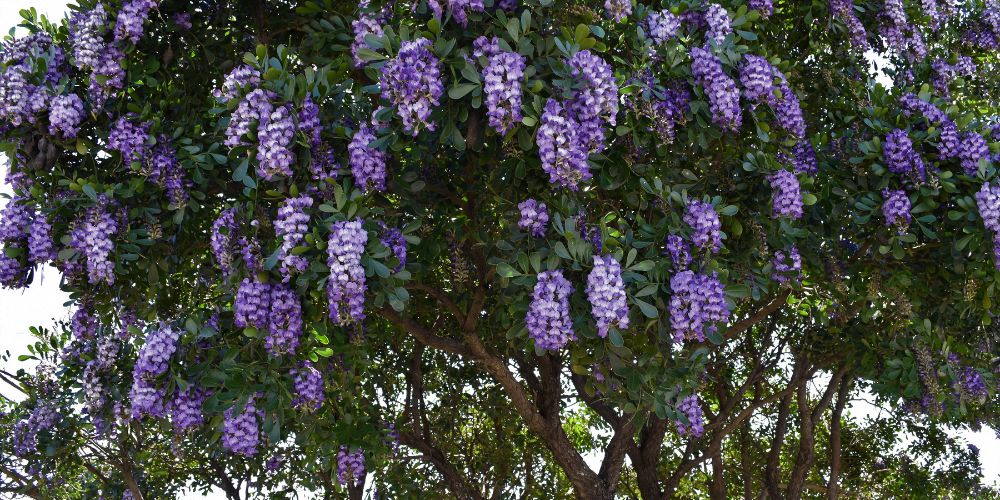
Blooming Season: Late winter to early spring
Texas Mountain Laurel is one of the most famous native Texas trees for landscaping, with its grape-odored purple flowers. It is small and evergreen, which is suitable in a small yard or patio. Being one of the low-maintenance trees for Texas, it is tolerant to drought and heat.
Care Tip: Rock and full-sun plants start to grow well with low water.
2. Crape Myrtle
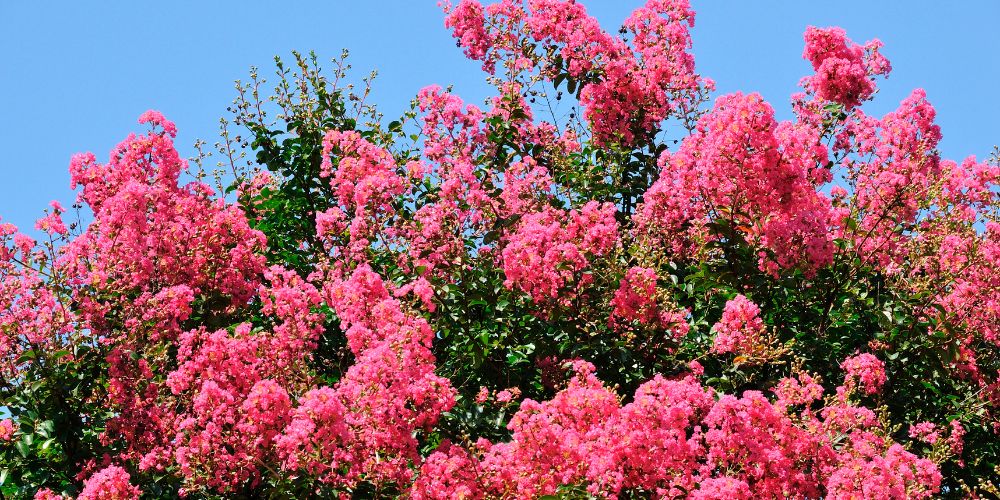
Blooming Season: Summer through fall
The crape myrtles are among the best flowering trees for Texas yards to be planted in the yard in Texas, where they offer amazing color in the hot months. They come in several trunk varieties and an array of colors so that they can be used both in the front and back of Texas landscape trees. Their bark even adds winter charm.
Care Tip: Avoid excessive pruning. Light maintenance encourages full flowering. Not all crape myrtles perform equally in Texas heat. ‘Natchez’ (white, 20–25 ft) resists powdery mildew and has attractive peeling bark. ‘Tuscarora’ (coral-pink, 16–20 ft) and ‘Sioux’ (dark pink, 15 ft) are two of the most reliable mildew-resistant purple and pink flowering trees for Texas yards.
3. Redbud (Eastern or Texas Redbud)
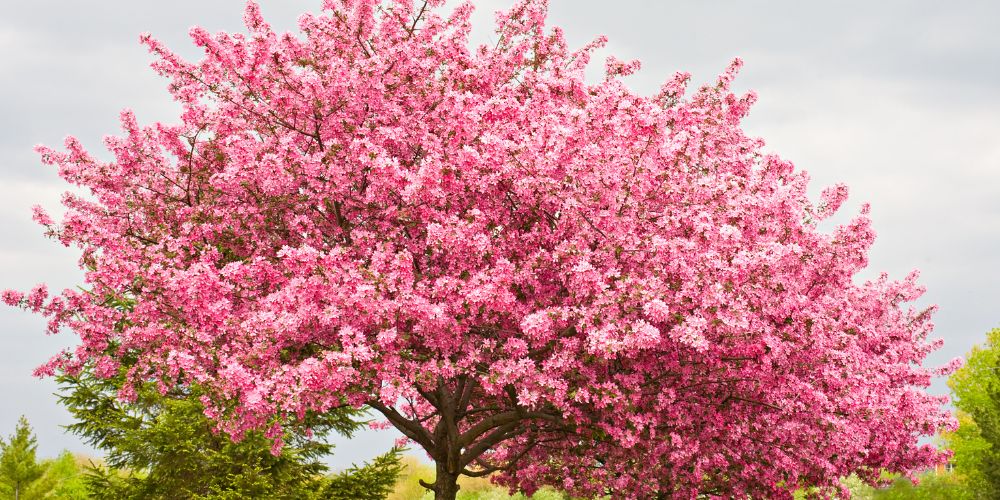
Blooming Season: Early spring
Redbuds are ideal trees that bloom in Texas early in spring. The heart-shaped leaves and cheerful flowers give the eye something to look upon before anything in the garden can show itself. Being low-maintenance trees for Texas, redbuds do not need much care after complete establishment.
Care Tip: Long-term success needs well-drained soil and partial sun if it is to be planted.
4. Mexican Plum
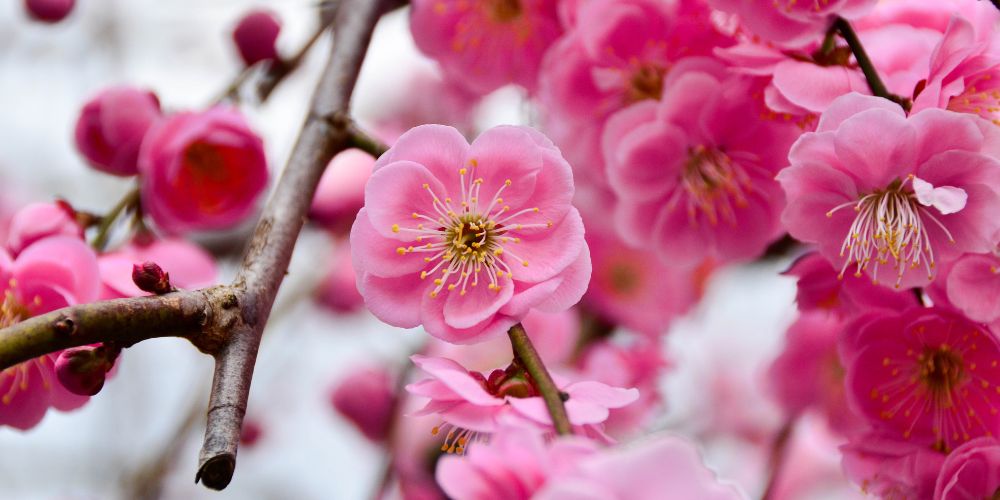
Blooming Season: Late winter to early spring
Need colorful trees for Texas yards with the added benefit of providing local wildlife with food? You have found them. Mexican plum trees produce fragrant flowers and edible fruits. These trees are sturdy and are also drought-tolerant flowering trees since they adapt well.
Care Tip: Grows in the sun and part-shade; pruning is not required much.
5. Desert Willow
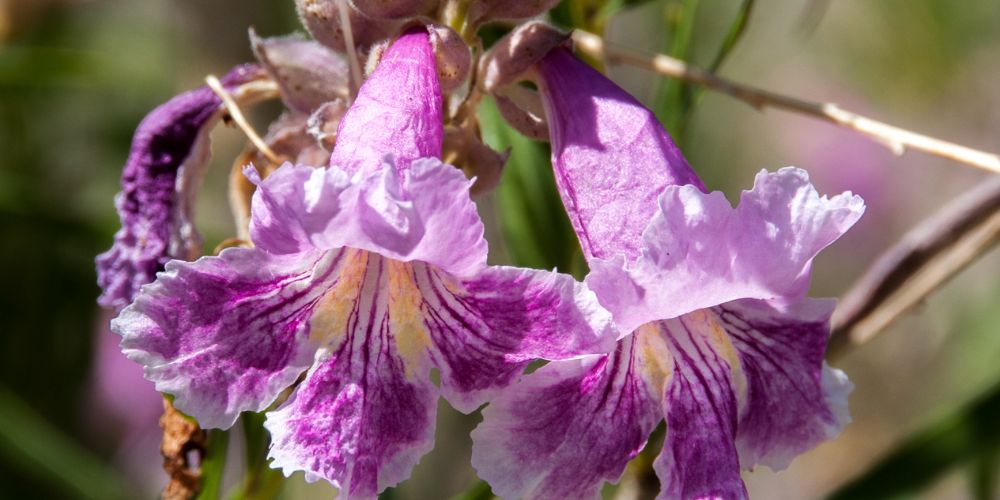
Blooming Season: Late Spring through fall
The Desert Willows are also drought-tolerant flowering trees, making them grow easily in dry and sunny locations. They are flowering trees with orchid-like flowers that attract pollinators and hummingbirds, and they are also ideal plant species because they are not only beautiful but also environmentally friendly to have in your Texas yard. They are the best flowering trees for Texas that prefer full sun conditions and lean soils.
Care Tip: To keep in shape and to stimulate a blooming summer, prune in the winter.
6. Vitex (Chaste Tree)
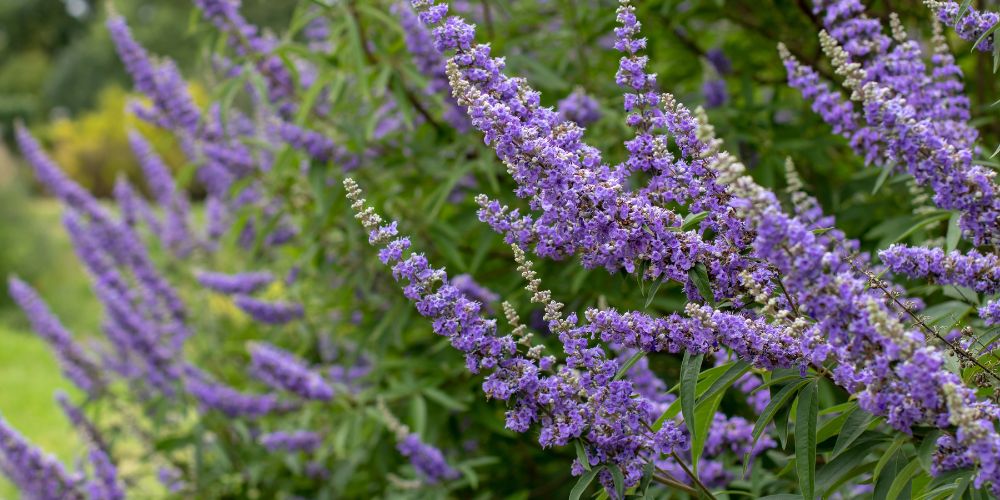
Blooming Season: Late Spring through summer
Vitex is an example of the trees that bloom in Texas with its thorny purple flowers and fast-growing rate. Not only does this low-maintenance tree for Texas provide repeated flowering, but it also offers a touch of motion and life to your landscape, especially because it is very popular among pollinators.
Care Tip: Best in full sun and sandy or loamy soils.
7. Anacacho Orchid Tree
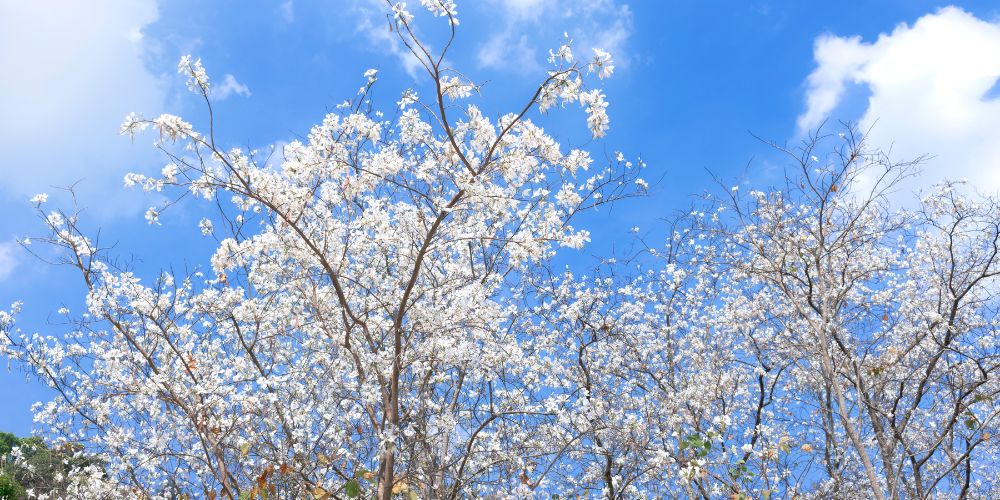
Blooming Season: Spring to early summer
One of the most distinctive, colorful trees in Texas is a small but beautiful Anacacho orchid tree. It has velvet-type flowers in an orchid shape and is small enough to fit into small areas and dark patios. This is also a proud native Texas tree for landscaping.
Care Tip: Give filtered light and guard against scorching summer heat when young.
8. Mexican Buckeye
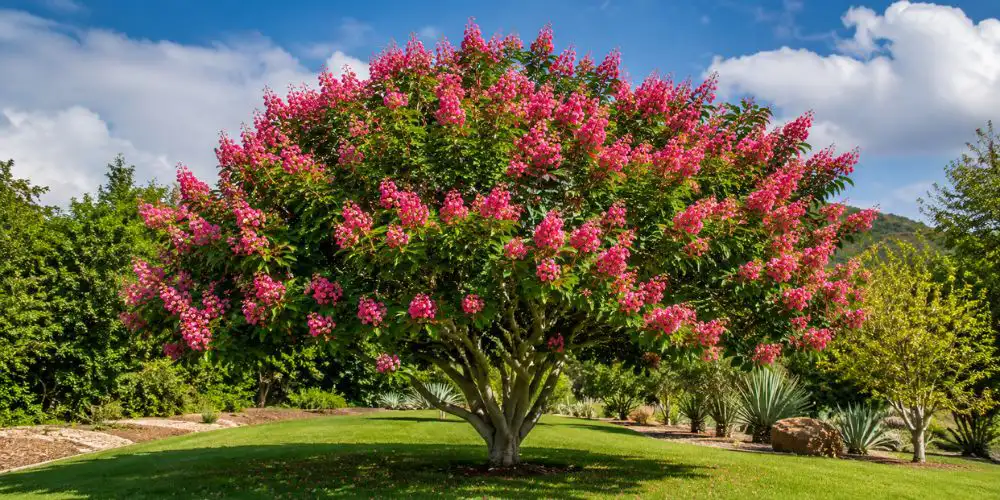
Blooming Season: March through June
Mexican Buckeye is an under-planted native Texas flowering tree with bright magenta-pink blooms in early spring, right alongside the redbuds. It’s one of the best purple-pink flowering trees for Texas Hill Country yards.
Care Tip: Seeds are toxic — keep an eye on kids and pets. Otherwise low-maintenance in rocky soil.
9. Esperanza (Yellow Bells)
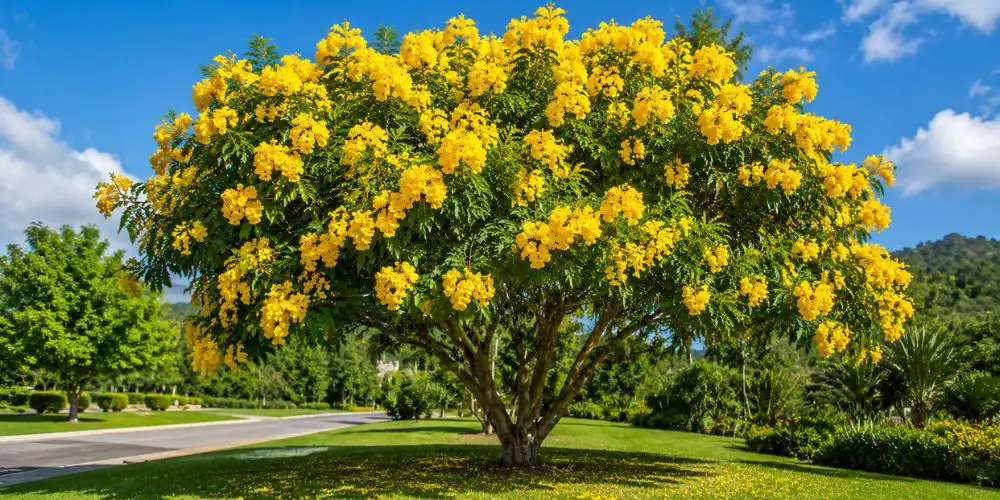
Blooming Season: Late spring through frost
Esperanza is a Texas Superstar–designated tree with bright yellow trumpet flowers that bloom nonstop through summer and fall. In San Antonio, it grows into a true small tree.
Care Tip: Full sun and fast-draining soil. May freeze back in hard winters but returns from the roots.
10. Retama (Jerusalem Thorn)
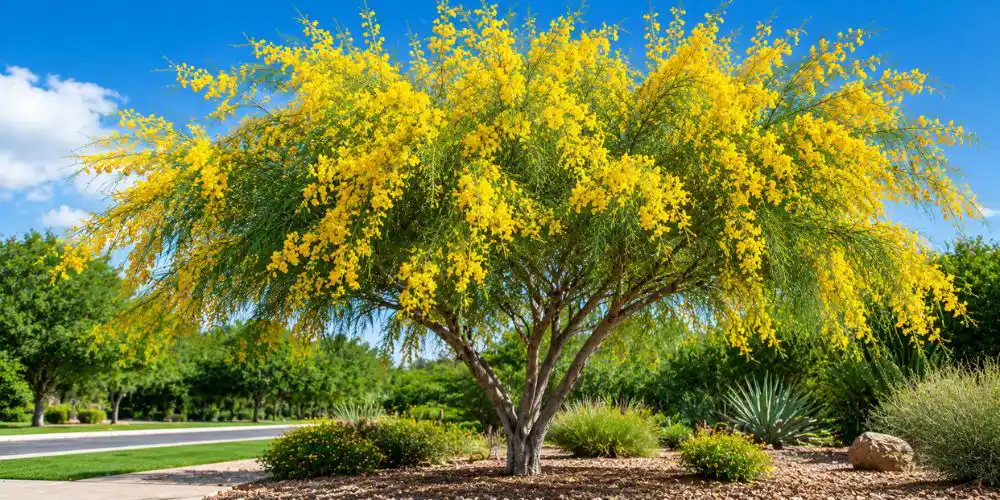
Blooming Season: Spring through fall
Retama brings bright yellow, fragrant blooms and a distinctive weeping, green-barked canopy that stays green even in drought.
Care Tip: Thorns are sharp — avoid planting near play areas. Can self-seed, so prune spent pods.
11. Goldenball Leadtree
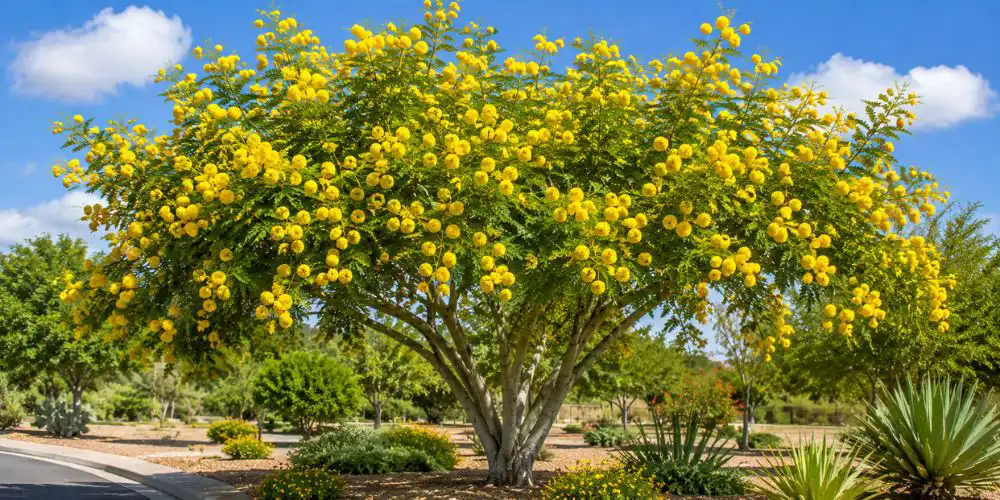
Blooming Season: April through September
One of the most underused native Texas flowering trees, Goldenball Leadtree produces golden-yellow puffball blooms on a fine, feathery canopy — and thrives in the poorest caliche soil.
Care Tip: Ask nurseries by name — it’s rarely stocked but ideal for rocky Hill Country lots.
12. Pomegranate
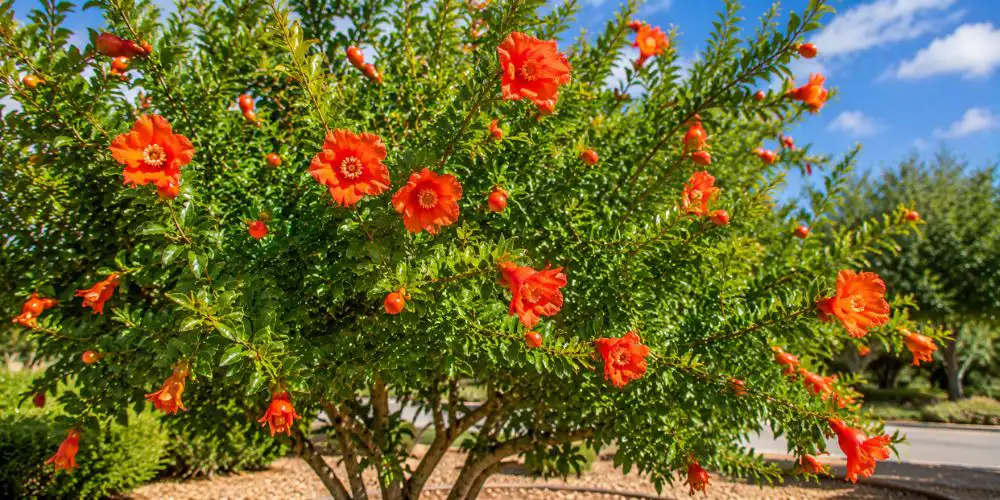
Blooming Season: Late May through fall
Pomegranate is a rare dual-purpose flowering tree for Texas — ornamental orange-red crepe-paper blooms followed by edible fruit in fall.
Care Tip: Handles alkaline soil well; choose ‘Salavatski’ or ‘Russian Red’ for North Texas cold-hardiness.
13. Little Gem Magnolia
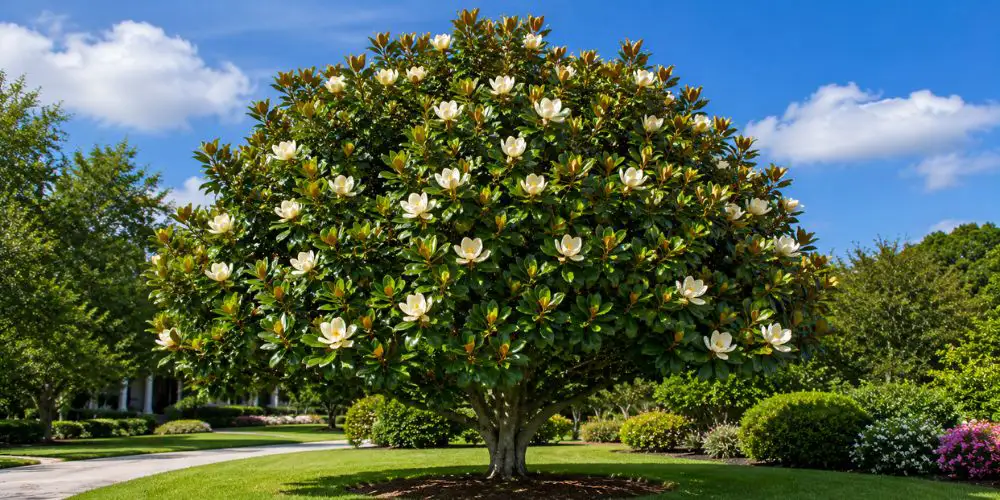
Blooming Season: Late spring through summer (intermittent)
For a smaller, more manageable magnolia, ‘Little Gem’ offers fragrant creamy-white blooms without the 60-foot size of a standard Southern Magnolia.
Care Tip: Prefers acidic soil — on San Antonio’s alkaline clay, watch for yellowing leaves and use an acidifying fertilizer if needed.
Best Flowering Trees for Front Yards in Texas
If you’re picking one of the best trees for your front yard in Texas, size and root spread matter more than anything else. These compact flowering trees stay small enough for foundations, sidewalks, and utility lines while still delivering big color:
- Anacacho Orchid Tree – tops out at 6–12 ft, ideal for tight spaces near a porch or patio
- Texas Redbud – 12–20 ft with a manageable root system, perfect as a single focal-point tree
- Texas Mountain Laurel – slow-growing and evergreen, so it doubles as a small ornamental screen
- Mexican Buckeye – 8–15 ft, great for narrow side yards
- Little Gem Magnolia – columnar growth habit fits small front-yard footprints better than a standard magnolia
For most San Antonio and Boerne front yards, redbuds and Texas Mountain Laurel remain the top picks — both are native, low-maintenance, and sized appropriately for typical suburban lots.
Native Texas Flowering Trees
If you want to support local pollinators and reduce long-term maintenance, native Texas flowering trees are the safest bet. Of the trees listed above, these are true Texas natives:
Texas Mountain Laurel, Redbud, Mexican Plum, Desert Willow, Anacacho Orchid Tree, Mexican Buckeye, Esperanza, Retama, and Goldenball Leadtree.
These trees evolved alongside Texas’s alkaline clay, caliche, and drought cycles, so once established, they typically need less water and fewer inputs than non-native ornamentals like crape myrtle, vitex, or magnolia.
Tips for Planting Flowering Trees in Texas
Be it the front yard or patio, planting with care adds beauty as well as protects your trees from the Texas climate. Here’s what you should know before planting flowering trees:
- Soil Needs: The ideal soil for flowering trees in Texas is well-drained and ranges from neutral to slightly alkaline. In case you do have heavy clay soil , add a mixture of compost or sand to help with drainage.
- Sunlight Requirements: The majority of the best flowering trees for Texas yards need at least full, direct sun. In more of a slightly shady area, Redbud and Anacacho Orchid will work well.
- Spacing: Provide your tree a space to grow to its full dimension. Excessive planting leads to a lack of airflow and health problems.
- Watering: New trees need to be watered every now and then in their initial year. The majority of drought-tolerant flowering trees, once planted, do not require a lot of watering.
- When to Plant: The optimum time to plant is when temperatures are colder, either in the fall or early spring. This assists the roots to grow before the more severe seasons come in.
Conclusion
One of the simplest methods to infuse colorful character and seasonal attraction into your landscape is to bring flowering trees to Texas. There are alternatives such as redbuds, vitex, and desert willow, with which you can easily have your low-maintenance trees for Texas, even when the weather gets tough. Whether you want colorful trees for Texas beauty or you want drought-tolerant flowering trees that make a statement over time, your ideal landscape is here.
From purple flower trees like Texas Mountain Laurel and Vitex to native Texas flowering trees like Mexican Buckeye and Goldenball Leadtree, there’s an option for every yard size and soil type.
Contact Tree Amigos Tree Service today to help plan the best flowering trees for Texas yards and build a beautiful, eco-friendly landscape in San Antonio or Boerne. Let’s plant beauty that lasts for seasons to come!