
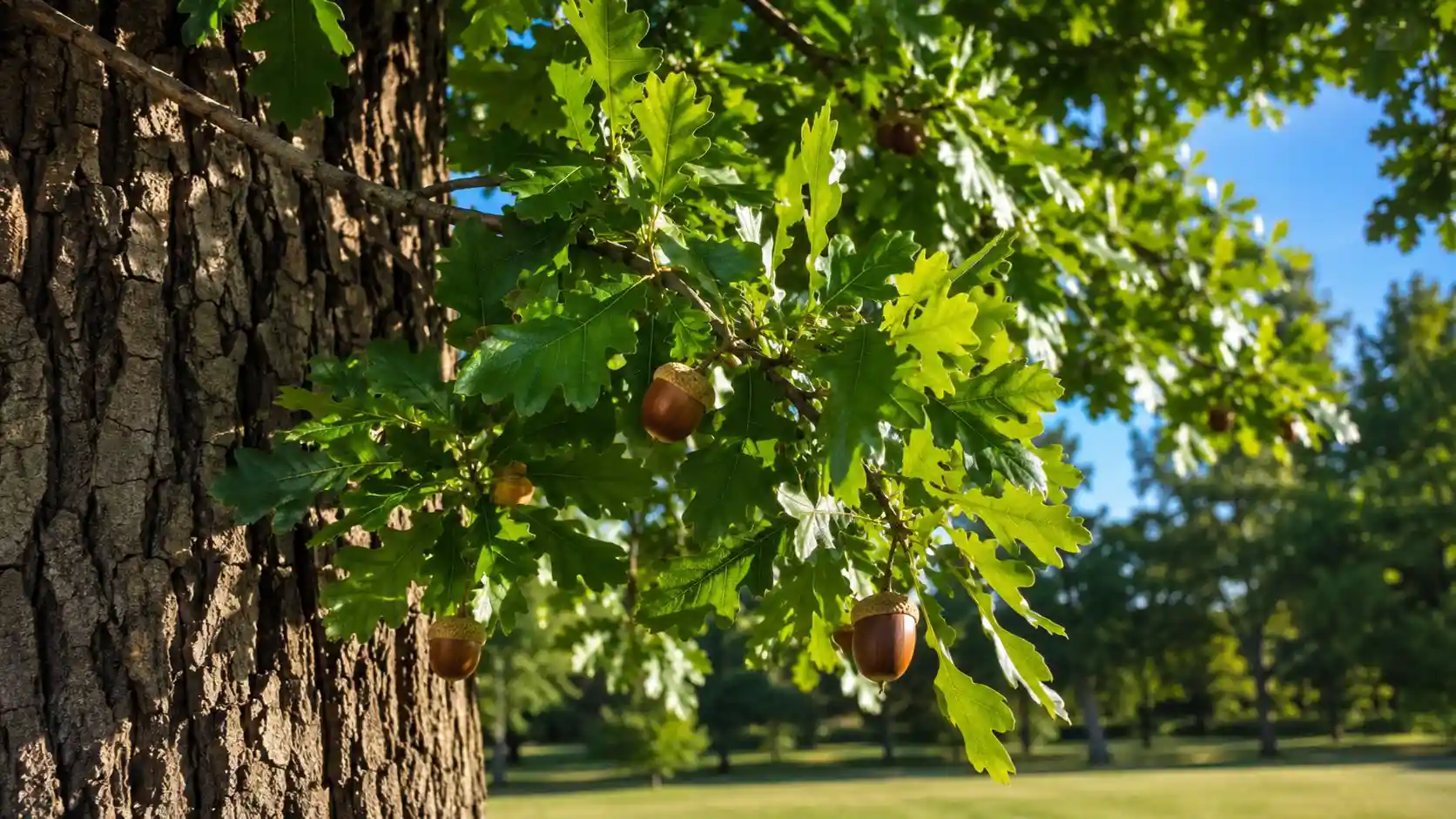
oak species worldwide and dozens native to North America alone, even experienced gardeners second-guess themselves. The good news is that oak tree identification comes down to a handful of reliable, repeatable checks, and once you know them, you’ll be able to confirm a tree is an oak in under a minute, then narrow down which type in just a little longer.
This guide walks through exactly how to identify oak trees, starting with the basics that confirm you’re looking at an oak at all, then moving into the visual details that tell you which type.
Step 1: Confirm It’s an Oak (Genus-Level Check)
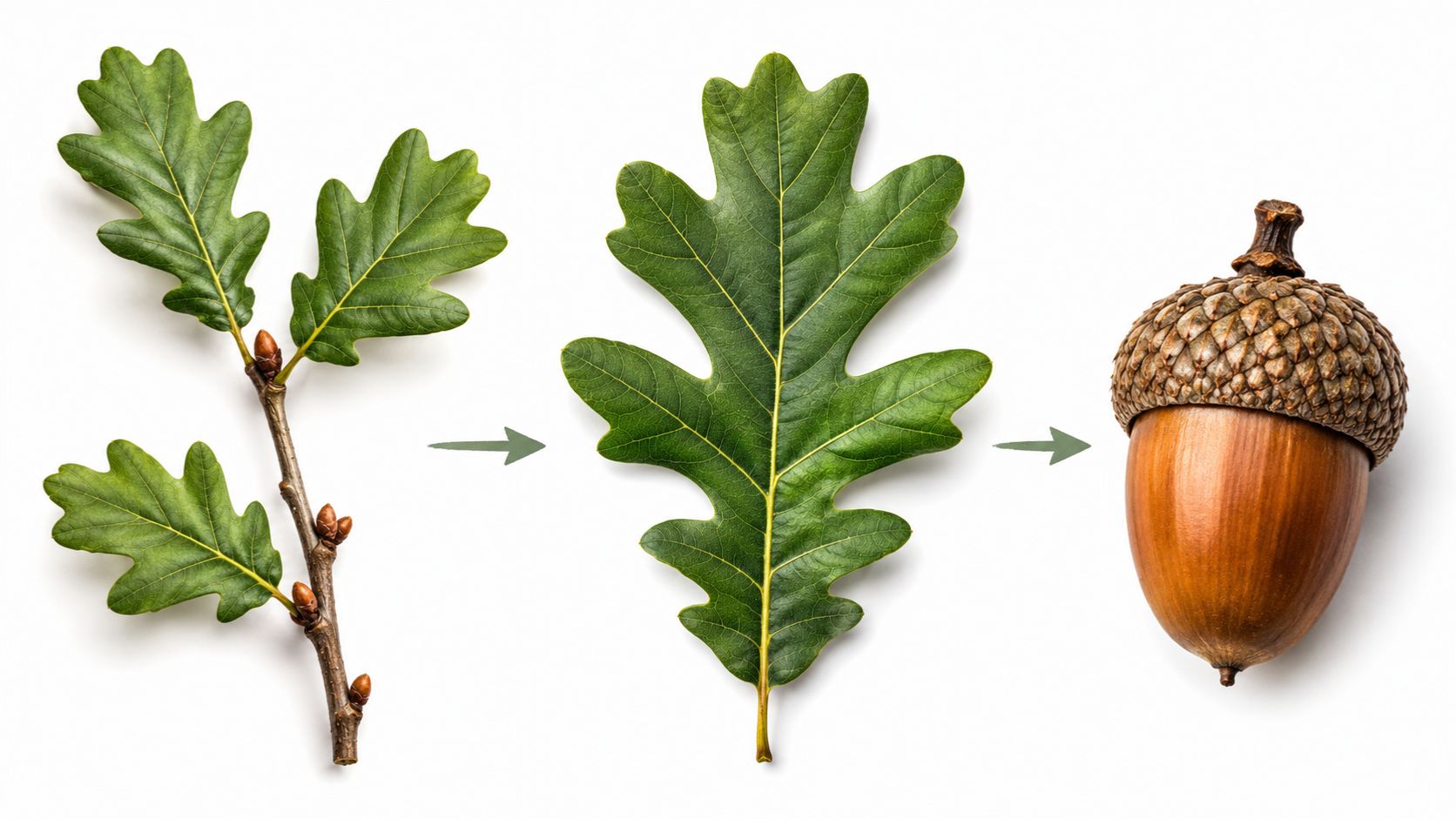
Before worrying about species, check for these three universal oak traits:
Alternate leaf arrangement. Look at how leaves attach to the twig. On an oak, only one leaf grows from each node, alternating sides as it goes up the stem. This is a defining trait that separates oaks from trees like maples, which have an opposite arrangement (two leaves per node, directly across from each other).
Lobed leaf margins. Most oak leaves have lobes, rounded or pointed projections extending out from the central vein, though a few oak species (like willow oak or shingle oak) break this pattern with smooth, unlobed leaves instead.
Acorns. This is the single most reliable confirmation. If the tree is producing acorns, a nut sitting in a scaly or fringed cap, it’s an oak. No other tree genus produces this exact seed structure.
If a tree checks these three boxes, you’re looking at an oak. From here, the fastest way to narrow things down further is one simple visual check.
Step 2: The One Feature That Splits Every Oak Into Two Groups
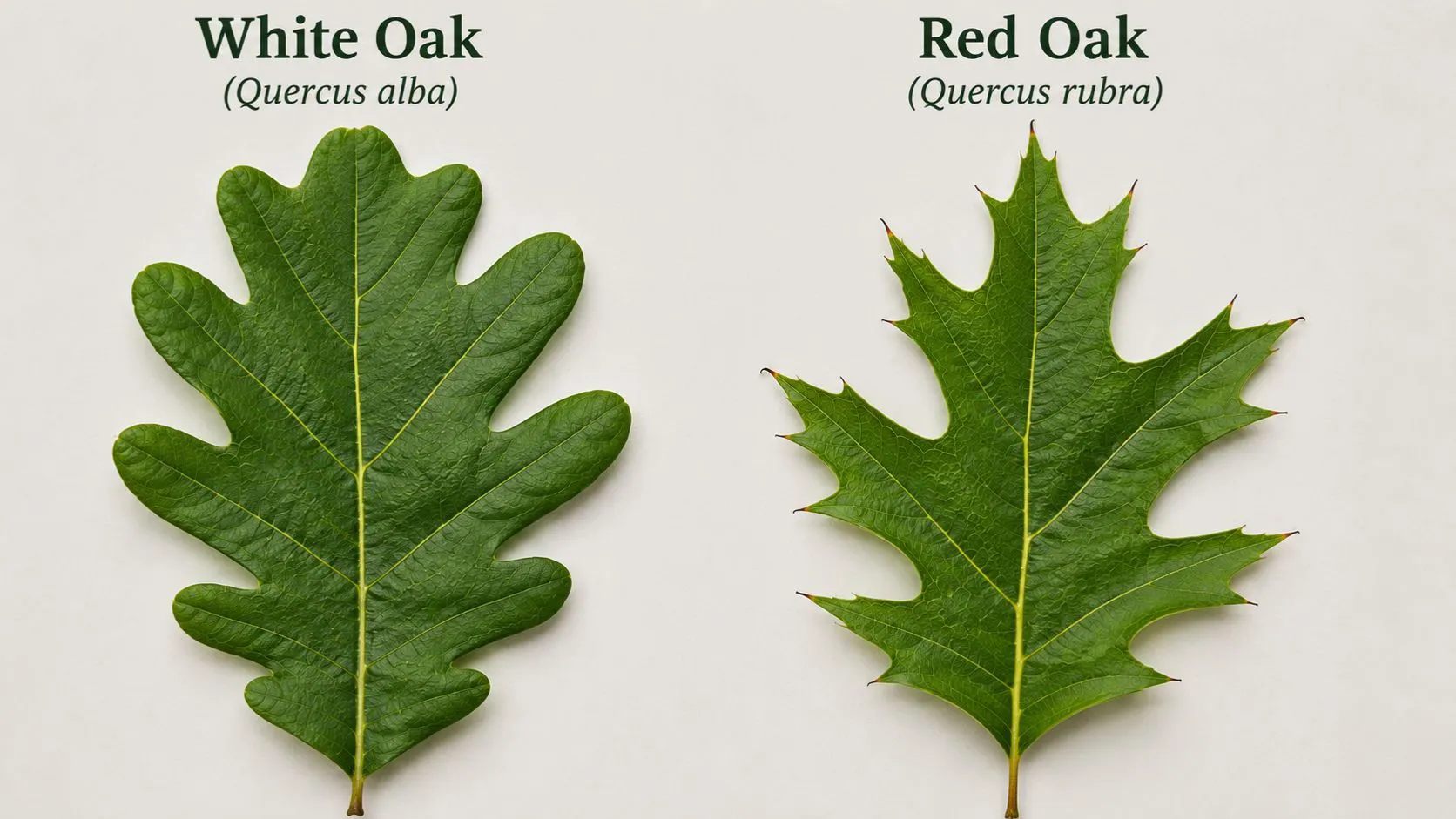
Every oak species falls into one of two major groups, White Oak Group or Red Oak Group, and a handful of visual details reliably tell you which one you’re looking at.
Leaf lobe tips. This is the fastest and most reliable check. Rounded, blunt lobe tips mean the tree belongs to the White Oak Group. Pointed lobe tips ending in a tiny bristle mean the tree belongs to the Red Oak Group. This bristle tip is one of the most trustworthy identification markers around, since it remains present and visible across nearly every species in the Red Oak Group, even on leaves with very shallow lobing.
Acorn maturity timing. White Oak Group acorns mature in a single growing season, so you’ll see fully formed acorns by their first fall. Red Oak Group acorns take two full growing seasons to mature, meaning you’ll often spot small, green, immature acorns still attached in their first year, only reaching full size and dropping the following autumn. If you’re looking at a tree in late summer with tiny, obviously unripe acorns still on it, that alone is a strong sign you’re looking at a Red Oak Group species.
Acorn shell lining. If you crack an acorn open, White Oak Group acorns have a smooth interior shell lining. Red Oak Group acorns have a shell lined with fine, velvety hairs, an easy confirmation check if the lobe tips are ambiguous or the tree has already dropped its leaves.
Acorn taste and tannin level. White Oak Group acorns are noticeably lower in tannins and less bitter, which is why wildlife, and historically, people, generally prefer them as a food source. Red Oak Group acorns are higher in tannins and much more bitter, usually requiring leaching before they’re palatable.
Taken together, these four checks, lobe shape, acorn maturity timing, shell lining, and tannin level, let you confirm which group a tree belongs to even if you only have access to one part of the tree (just leaves, just acorns, or just a cracked-open nut).
Once you’ve confirmed which group you’re looking at, the individual species within each group, white oak, red oak, live oak, bur oak, and more, come with their own care and growing needs worth knowing before you plant or maintain what you’ve found.
Oak Tree Bark: What to Look For
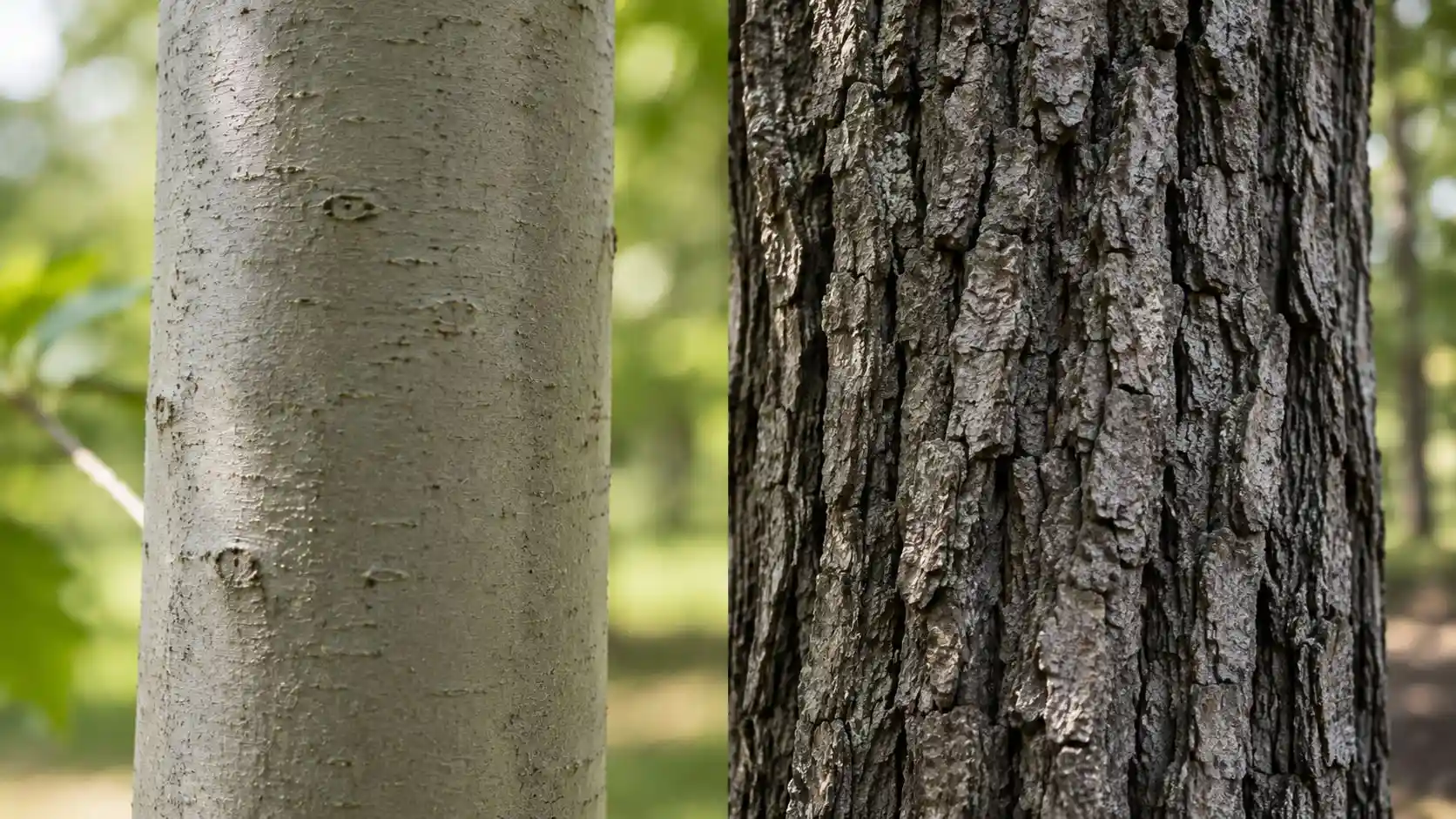
Bark is a useful secondary check, especially in winter when leaves aren’t available, though it’s generally less precise than leaves since bark patterns change significantly as a tree matures.
As a general rule, young oak bark tends to be smoother and grayer, while mature oak bark develops the tree’s more familiar look, typically a mix of vertical ridges, scaly plates, or blocky segments depending on the species. Color ranges from light ashy gray to dark, almost blackish-brown, and darker, deeply furrowed bark with blocky ridges is one clue pointing toward certain Red Oak Group species, though bark alone shouldn’t be your only identification method.
Oak Tree Sapling Identification
Young oak trees can be trickier to identify than mature ones, since their leaves and bark haven’t fully developed their adult characteristics yet. A few tips specifically for identifying oak saplings:
- Leaf shape is still the most reliable marker, even on young trees, look for the alternate arrangement and lobe pattern described above.
- Bark on saplings is usually smooth, thin, and light gray, not yet showing the rough furrows of a mature tree.
- Most oaks don’t begin producing acorns until around 20 to 25 years of age, so don’t rule out oak just because a young tree has none yet, what to expect at each life stage varies quite a bit between saplings and mature trees.
- Saplings often hold onto dried leaves through winter longer than mature trees do. University of Illinois Extension explains this trait, called marcescence, is especially common in juvenile oaks and tends to fade as the tree matures, so a young tree still covered in brown leaves in January is a normal oak trait, not a sign of a problem.
Different Oak Leaves You Might Encounter
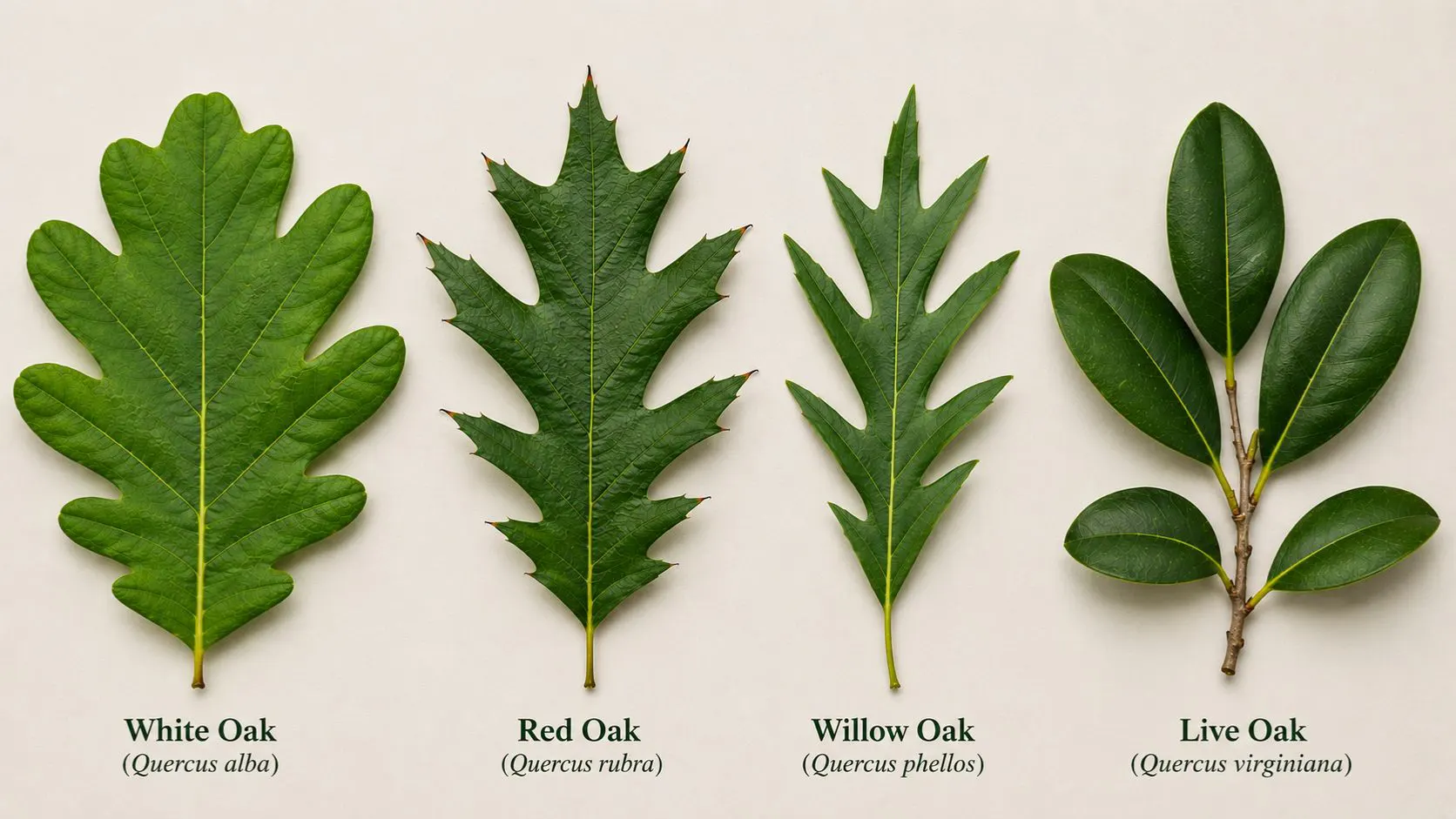
Not every oak fits the classic lobed-leaf image most people picture. A few different oak leaves worth knowing:
- Willow oak and shingle oak have smooth, unlobed, willow-like leaves, easy to mistake for a completely different tree species at a glance. Purdue Extension notes shingle oak is something of a rebel in the oak family for exactly this reason, its glossy leaves have no lobes and a complete margin, unlike most of its relatives.
- Live oak has small, thick, leathery, elliptical leaves with smooth edges, and stays evergreen rather than dropping leaves seasonally like most oaks.
- Chestnut oak has wavy-toothed leaf edges rather than deep lobes, closer in appearance to a chestnut tree’s foliage.
If your tree doesn’t match the typical lobed pattern, check for the other core traits, alternate leaf arrangement and acorns, before ruling out oak entirely.
Frequently Asked Questions
What does an oak tree look like?
Lobed leaves arranged alternately on the branch, rugged bark with ridges or scaly plates, and acorns. Exact look varies by species and age.
How do you identify oak trees?
Check for alternate leaf arrangement, lobed leaves, and acorns. No other tree genus produces the same acorn structure.
How do you ID oak trees down to white oak or red oak?
Look at the leaf lobe tips. Rounded and smooth means white oak group. Pointed with a small bristle means red oak group.
What are the different oak leaves I should know?
Most oaks have lobed leaves, either rounded (white oak group) or pointed with bristles (red oak group). A few, like willow oak and live oak, have smooth, unlobed leaves instead.
What does an oak tree look like when it’s young?
Saplings have thinner trunks, smoother gray bark, and smaller leaves. They typically won’t produce acorns until around 20 to 25 years old.
How do you identify an oak tree by its bark?
Look for rugged, ridged, or scaly bark, usually gray to dark brown. Young trees have smoother bark than mature ones, so it’s a less reliable check on saplings.
Can you identify an oak tree without leaves or acorns?
It’s harder, but bark texture and overall branching pattern, oaks typically have several large branches rather than one straight trunk, can still offer clues in winter.
How can you tell different oak trees apart from each other?
Start with the lobe tip test to sort white oak group from red oak group, then compare bark texture, leaf size, and acorn shape to narrow down the species.
Conclusion
Oak tree identification comes down to three checks: alternate leaf arrangement, lobed leaves, and acorns. Once you’ve confirmed it’s an oak, the lobe tip test settles which group you’re dealing with: rounded means White Oak Group, pointed with a bristle tip means Red Oak Group. From there, bark, sapling traits, and leaf variations can help you confirm what you’re looking at even further. If your tree doesn’t look quite right, unusual leaf spots, dieback, or thinning, that could point to a hidden disease issue rather than a normal seasonal change. Our certified arborists at Tree Amigos Tree Service can identify your tree and check its health in one visit. Contact us today for a consultation.