
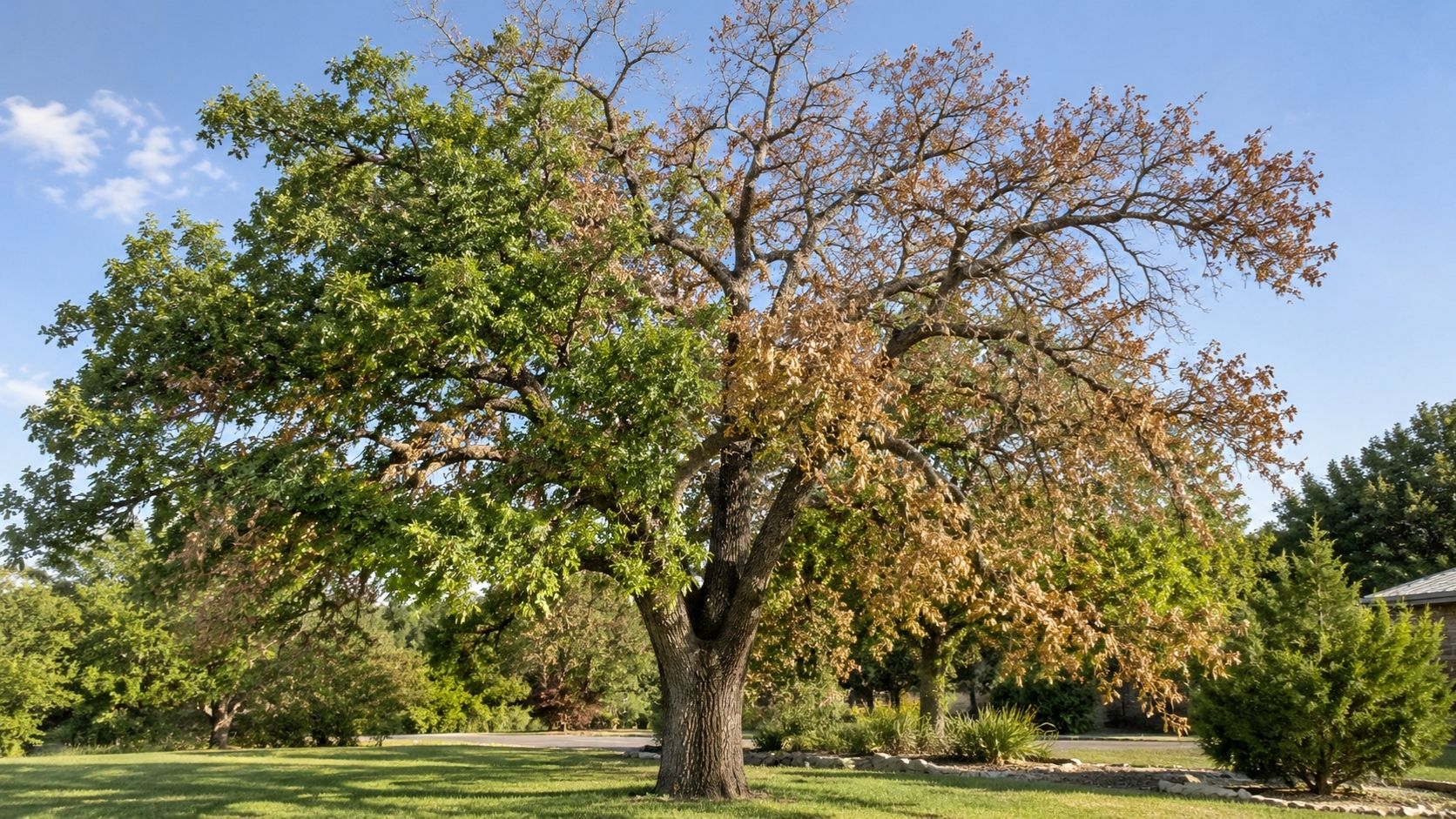
A healthy, decades old oak that was green and thriving all spring can suddenly start dropping leaves in the middle of summer. Within weeks, entire branches are bare. This isn’t drought stress or an unlucky season. It’s one of the fastest killing tree diseases in North America, and it can take down a mature oak in as little as a few weeks.
That disease is oak wilt, and if you’ve landed here, there’s a good chance you’re already worried about a tree. This guide covers exactly what oak wilt looks like, what causes it, how it spreads, and what actually works to treat it.
What Is Oak Wilt?
Oak wilt is a fungal disease caused by the pathogen Bretziella fagacearum (formerly known as Ceratocystis fagacearum), first documented in the United States in 1942. The Tennessee Division of Forestry calls it the most significant disease affecting oaks in the eastern United States, noting that few other forest diseases kill large, mature trees this fast.
The fungus invades a tree’s vascular system, blocking the flow of water and nutrients from roots to leaves. The tree tries to defend itself by plugging its own vessels to wall off the fungus, but that defense backfires, cutting off water flow entirely and causing the wilting, leaf drop, and death associated with the disease.
Before assuming the worst, it helps to first confirm you’re actually looking at an oak tree by checking its leaf shape, bark texture, and acorns.
Oak Wilt Risk by Tree Type
Not all oaks are affected equally. Here’s how different oak groups respond:
| Oak Group | Examples | How Fast It Progresses | Survival Outlook |
|---|---|---|---|
| Red oak group | Red oak, black oak, pin oak | Very fast, typically 3 to 8 months from infection to death per US Forest Service research | Poor once symptomatic |
| Live oak | Live oak | Moderate, spreads through interconnected root systems over years | Variable, depends on catch timing |
| White oak group | White oak, bur oak, post oak | Slow, sometimes over several years | Better than red oaks |
According to New York’s official oak wilt fact sheet, red group oaks, which have pointed leaf tips, tend to die much faster than white group oaks, which have rounded leaf tips. This is why quick identification matters most if you have red oaks on your property, and knowing how each type of oak grows and behaves can help you judge your own risk level early.
What Does Oak Wilt Look Like?
Here’s what to actually look for, broken down by what you’ll see with your own eyes.
Leaf Symptoms
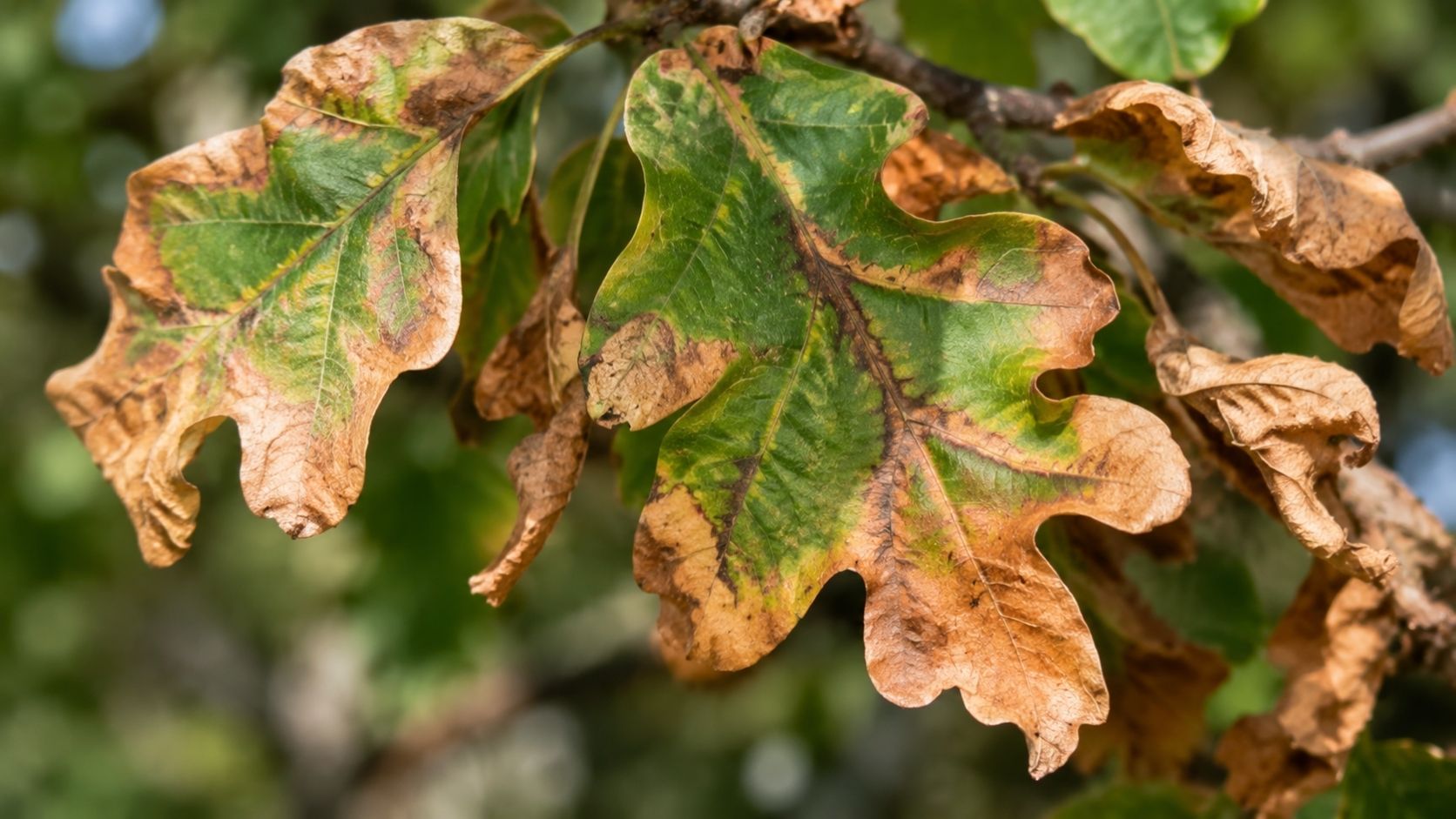
- Discoloration starting at the edges. Leaves often develop a bronze, tan, or dull yellow color that begins at the leaf margin and moves inward toward the vein.
- Veins turning brown or black while the leaf stays partly green. This mottled, water stained look is especially common on live oaks.
- Wilting that starts at the top of the canopy and moves downward.
- Sudden, heavy leaf drop, sometimes both green and discolored leaves falling well before the normal season.
Whole Tree Symptoms
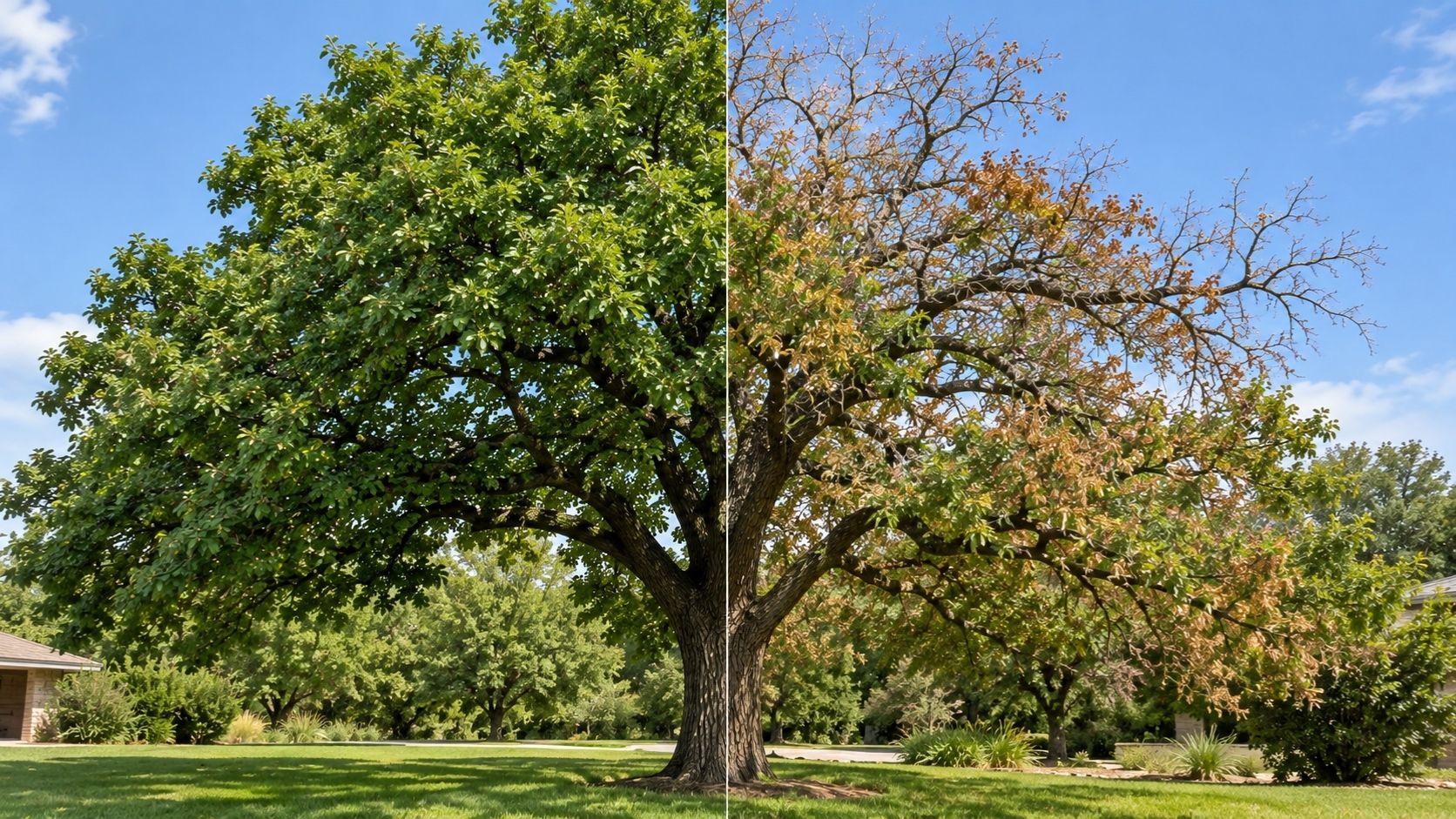
- Rapid, progressive thinning of the canopy over just a few weeks
- Branches dying back section by section rather than the whole tree wilting at once
- Vertical cracks in the bark with fungal mats underneath, sometimes giving off a faint fruity smell (this is what attracts the beetles that spread the disease)
- A tree that looked completely fine the previous year declining dramatically the next
These symptoms can look a lot like drought stress, root damage, storm injury, or other fungal problems, so it’s worth learning to spot hidden tree diseases before assuming the worst. Visual symptoms alone aren’t a guaranteed diagnosis. A lab test, usually a wood sample culture or a PCR test, is the only way to confirm oak wilt with certainty.
What Causes Oak Wilt and How Does It Spread?
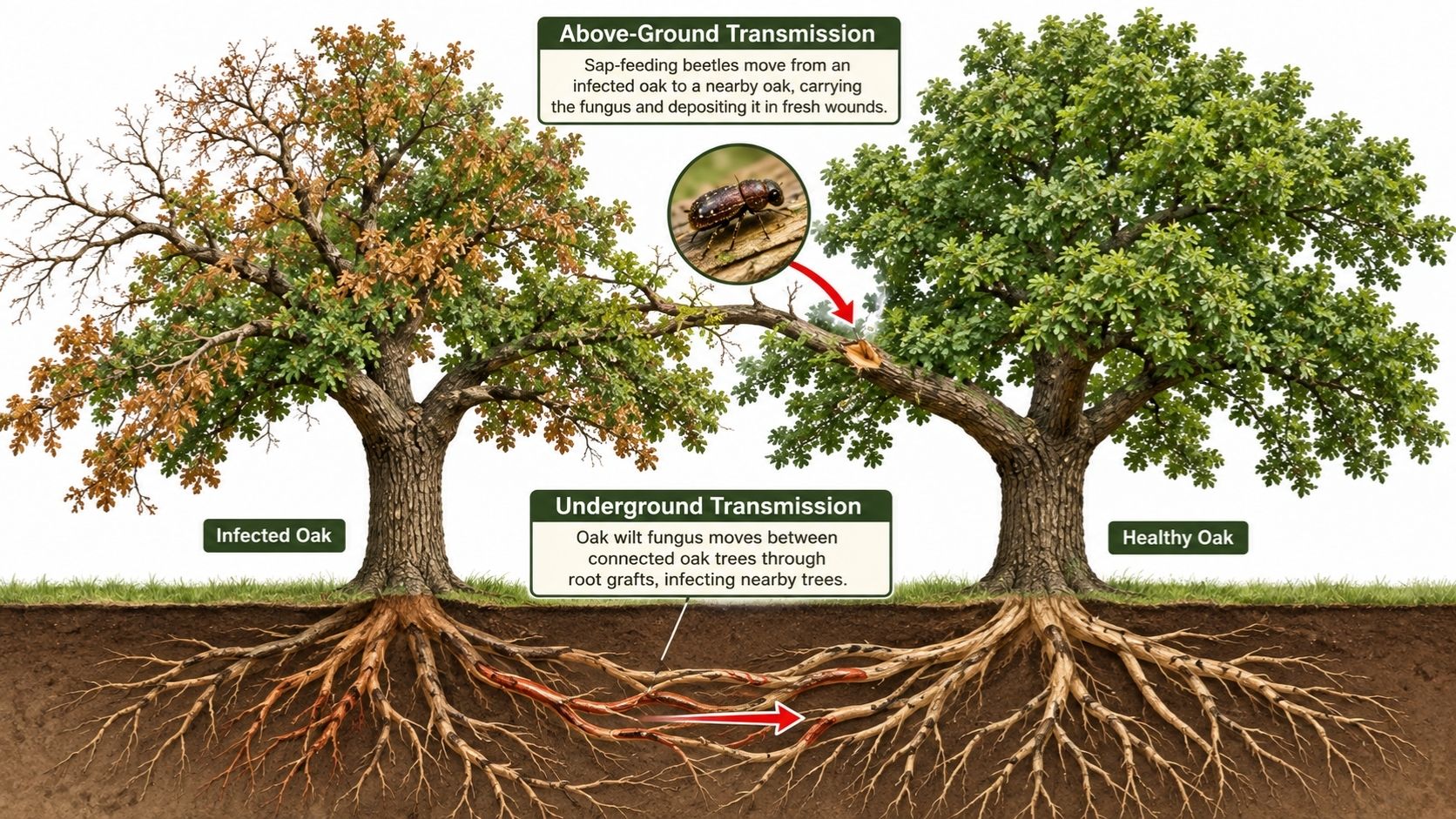
Oak wilt spreads two main ways.
- Underground through root grafts. Oaks growing close together, especially trees of the same species, often fuse their root systems underground. That creates a direct pipeline for the fungus to move from an infected tree straight into a healthy one. Texas A&M Forest Service puts the average rate of spread through connected root systems at 75 feet per year. This is the most common method of spread.
- Above ground through beetles. Sap feeding beetles are drawn to the fungal mats that form under the bark of recently killed oaks. Per Texas A&M Forest Service’s oak wilt page, these beetles pick up spores from the fungal mats and carry them to fresh wounds on other oaks, which is how entirely new disease centers get started. This is why pruning oaks during peak beetle season is discouraged, and why fresh wounds should always be sealed right away.
Firewood cut from an infected tree can also carry the fungus, which is why moving oak firewood long distances is discouraged in areas with active oak wilt. If a tree seems too far gone at this point, it’s worth understanding what actually causes trees to die so you can weigh disease against other possibilities before deciding next steps.
Oak Wilt Treatment: What Actually Works
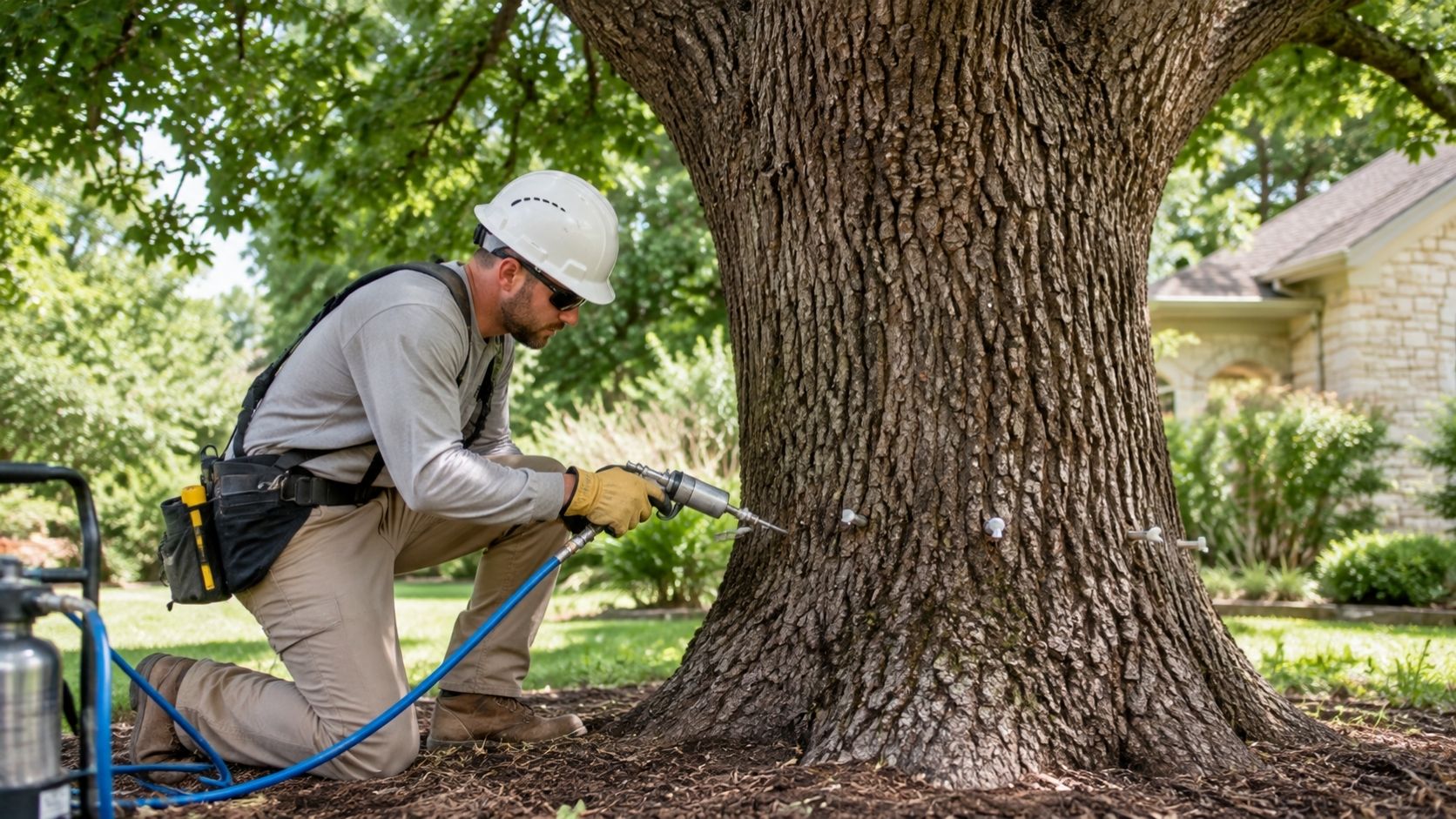
Treatment for oak wilt focuses on three goals: helping the individual tree if it’s still possible, stopping the spread to nearby trees, and preventing new infections.
| Treatment Method | What It Does | Best Used For |
|---|---|---|
| Fungicide injection | Delivers fungicide into the tree’s vascular system to fight the fungus | High value trees near an active infection, or trees caught very early |
| Root graft disruption (trenching) | Physically cuts underground root connections between trees | Stopping spread between clusters of oaks before infection reaches them |
| Sanitation | Removes dead or dying infected trees and handles wood properly | Reducing fungal mats that attract spore carrying beetles |
| Pruning practices | Avoids wounding oaks during high risk season and seals cuts immediately | Preventing new above ground infections year round |
Containment methods can genuinely work when applied early. A US Forest Service study on girdling and herbicide containment found the method successfully controlled underground spread in 55% of cases overall, and was as much as 81% effective when applied to small infection centers of four or fewer newly infected trees. That’s a meaningful reminder that timing matters more than almost anything else here.
There’s currently no complete cure once a tree is heavily infected with widespread canopy dieback. Michigan’s Department of Natural Resources confirms that once a red oak becomes infected, there is no treatment available to save that individual tree, though treatments can still protect the surrounding healthy oaks and stop further spread. At that point, the priority shifts from saving that individual tree to protecting the ones around it.
Can Oak Wilt Be Prevented?
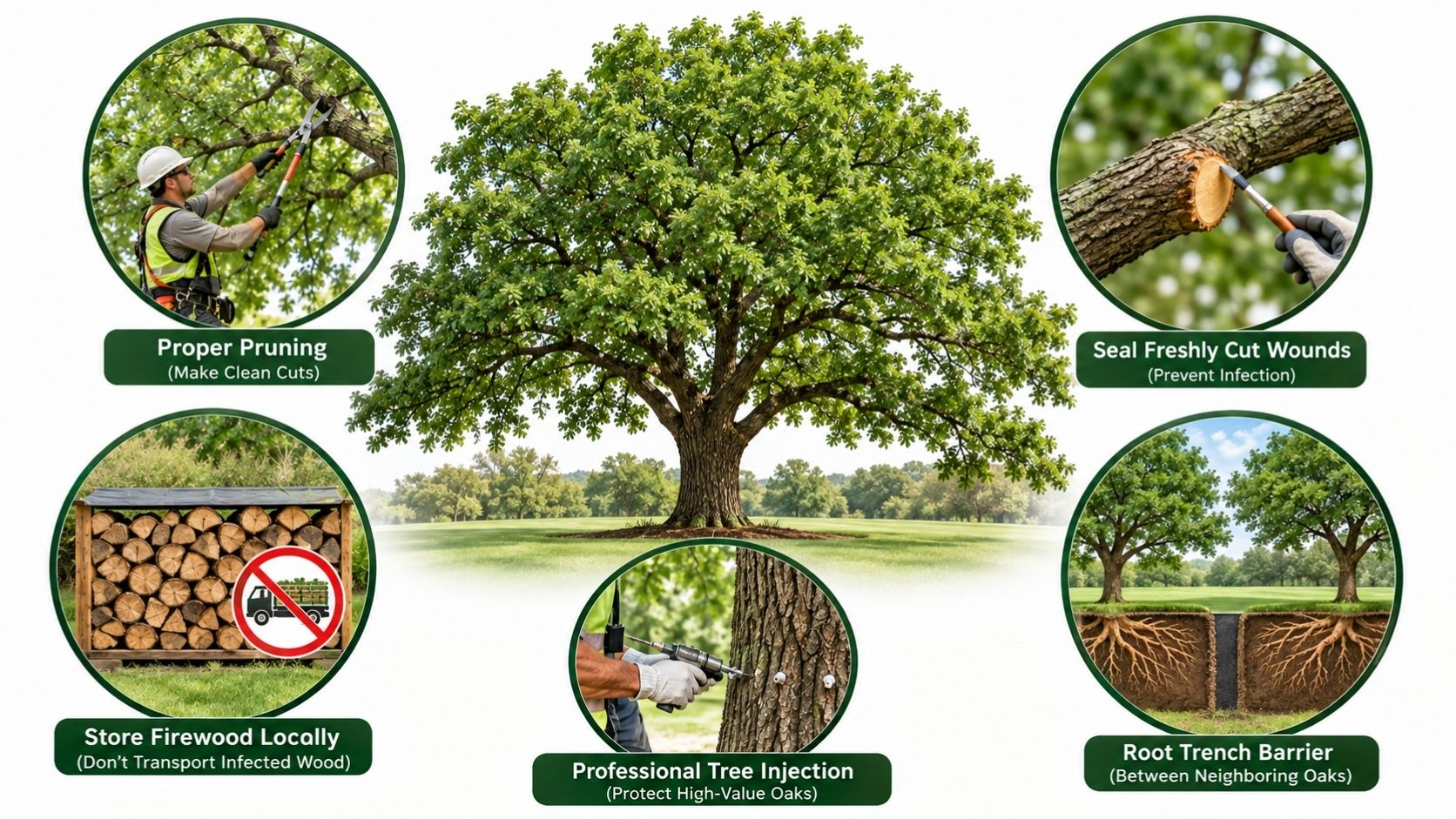
Prevention is far more effective than treating an active infection.
- Avoid pruning or wounding oaks during peak beetle activity periods
- Seal any accidental wounds on oaks right away
- Don’t move firewood from an area with known oak wilt activity
- Preventively inject high value oaks near a known infection
- Consider trenching as a barrier if oak wilt is confirmed nearby
- Schedule regular inspections with a certified arborist, especially with multiple oaks growing close together
If you’re planting new oaks and want to limit future root graft risk between trees, spacing matters just as much as it does when planting a red oak tree the right way from the start.
When Should You Call a Professional?
If you notice rapid leaf discoloration, unusual leaf drop, or branch dieback on an oak, especially if it’s happening fast or other nearby oaks show similar symptoms, get a professional diagnosis quickly. Oak wilt moves fast, and the window for effective intervention is much narrower than most people expect. Searching for oak wilt treatment near you is often the fastest way to find a certified arborist who can confirm the diagnosis, assess how far it may have already spread underground, and build a treatment and containment plan for your property. It also helps to know what a certified arborist actually checks for before you bring one in.
If you’re unsure whether the tree in question is already too far gone to save, it’s worth first learning to recognize the signs a tree is dying so you know what you’re working with before deciding next steps.
Frequently Asked Questions
Is oak wilt fatal?
For most infected trees, yes. Water transport shuts down before the tree can recover, and by the time symptoms are visible, much of the damage is already done.
Can oak wilt be cured?
No. It can be managed and slowed, but a heavily infected tree usually can’t be saved.
How fast does oak wilt kill a tree?
Red oaks can die within weeks to months. White oaks and live oaks decline much more slowly, sometimes over years.
Can oak wilt be confused with other tree problems?
Yes. Drought stress, herbicide injury, and other diseases can look similar, which is why lab testing helps when you’re unsure.
Do only red oaks get oak wilt, or are all oaks at risk?
All oaks are susceptible, but red oaks are hit hardest and decline fastest. White oaks are more tolerant.
Is it okay to prune oak trees right now?
It depends on the season. Avoid pruning during peak beetle activity months, and always seal any cut immediately.
Can I remove a tree with oak wilt myself?
It’s risky without guidance. Root grafts need to be severed first, and infected wood must be handled correctly to avoid attracting more beetles.
Conclusion
Oak wilt is aggressive, fast moving, and easy to mistake for something less serious until real damage has already been done. The good news is that it’s also well understood, with decades of research behind exactly how it spreads and what stops it. The single biggest factor in whether a tree, or a whole cluster of oaks, survives comes down to how quickly the problem is caught and acted on.
If you’re seeing any of the symptoms covered here, don’t wait it out. Get a professional opinion, confirm the diagnosis, and act while intervention still has a real chance of working. The team at Tree Amigos Tree Service can help you catch it early and put the right treatment plan in place before it spreads any further.